Will a Code Reader Detect a Bad Engine: Detailed Guide and Facts
Yes, a code reader can detect electronic faults linked to a bad engine, but it cannot identify every mechanical engine problem. It reads diagnostic trouble codes from the vehicle’s computer and can reveal issues involving sensors, ignition, fuel delivery, emissions, and engine performance.
The important distinction is that a code reader reports what the control module has detected, not necessarily the failed part itself. A misfire code may result from a worn spark plug, a failing ignition coil, low compression, a vacuum leak, or internal engine damage. Acting early can prevent a small fault from becoming expensive, yet replacing parts based only on a code can waste money when the underlying problem is mechanical or intermittent.
One vehicle may show a clear code for a faulty crankshaft sensor and need a straightforward repair; another may have severe oil consumption or low compression while displaying no useful code at all. This guide explains what scan tools can detect, where their limits matter, how to interpret common engine codes, which symptoms require caution, and when testing by a professional is the safer next step.
What a Code Reader Actually Detects
A code reader, often called an OBD-II scanner, communicates with the vehicle’s onboard diagnostic system. The engine control module monitors operating conditions through sensors and compares the readings with expected ranges. When a monitored value is missing, implausible, or outside a programmed limit, the module may store a diagnostic trouble code.
Those codes can point to faults affecting combustion, air intake, fuel control, ignition timing, emissions equipment, and engine speed or position. Some readers display only the code and a short description, while more capable scan tools show live data, freeze-frame information, readiness monitors, and manufacturer-specific details.
The tool does not “look inside” the engine. It cannot directly see damaged piston rings, a cracked cylinder head, a worn bearing, a broken timing chain guide, or a burned valve. It can sometimes identify the symptoms those failures create, but confirming the cause requires additional mechanical tests.
Engine Problems a Code Reader May Reveal
Misfires and combustion problems
Misfire codes are among the most useful engine-related results. A code such as P0300 indicates random or multiple-cylinder misfires, while codes such as P0301 or P0302 usually identify a misfire on a specific cylinder.
A misfire can come from an ignition coil, spark plug, injector, air leak, fuel-pressure problem, or compression loss. The code confirms that combustion is not occurring correctly; it does not automatically prove that the named cylinder needs a particular part.
A flashing check engine light generally signals an active misfire severe enough to potentially damage the catalytic converter. Continuing to drive under that condition can turn an ignition or fuel problem into a more expensive emissions-system repair.
Crankshaft and camshaft sensor faults
The crankshaft and camshaft position sensors help the computer determine engine speed, piston position, ignition timing, and injector timing. A failure may cause hard starting, stalling, poor acceleration, or a no-start condition.
Codes in the P0335–P0339 and P0340–P0349 families may suggest a position-sensor circuit or signal problem. However, wiring damage, a poor electrical connection, excessive sensor clearance, or a timing problem can produce similar codes.
Air, fuel, and mixture issues
Oxygen sensors, mass airflow sensors, manifold pressure sensors, throttle-position sensors, and fuel injectors all influence the air-fuel mixture. Codes may identify a lean condition, a rich condition, an implausible sensor signal, or a circuit fault.
For example, P0171 commonly indicates that the engine is running too lean on one bank. The cause might be unmetered air entering through a vacuum leak, insufficient fuel pressure, a dirty injector, or inaccurate airflow measurement. Replacing the oxygen sensor immediately is not a reliable diagnosis.
Overheating and coolant-related warnings
Some vehicles set codes when the coolant temperature sensor reports an implausible reading or when the engine takes too long to reach operating temperature. A code can therefore point toward a thermostat, sensor, wiring, or cooling-control issue.
It usually cannot confirm a coolant leak, failing water pump, restricted radiator, or head-gasket failure by itself. Temperature data combined with an overheating symptom requires prompt attention, because severe overheating can cause major internal damage.
Variable valve timing and timing faults
Modern engines often use variable valve timing controlled by oil pressure, solenoids, and camshaft actuators. Codes may indicate that commanded and actual camshaft timing do not match.
Possible causes include low or contaminated engine oil, a clogged control solenoid, wiring problems, a failed actuator, a stretched timing chain, or incorrect mechanical timing. A scanner can expose the control problem, but mechanical timing verification may be necessary before repair.
Serious Engine Damage That May Not Set a Code
A vehicle can have substantial mechanical damage while the check engine light remains off. The computer has no direct sensor for every internal component, and some failures do not immediately change a monitored value enough to trigger a fault.
Examples include worn piston rings, damaged connecting-rod bearings, a burned valve, a weak valve spring, a leaking head gasket, and low compression. An engine may also consume oil, make abnormal noises, or lose power without generating a specific code.
Mechanical wear can eventually cause secondary codes. Low compression may create a misfire code, for instance, but the code identifies the combustion result rather than proving the internal failure. A technician may need a compression test, leak-down test, vacuum test, oil-pressure test, or visual inspection to determine the cause.
Why a Code Is Not a Parts Replacement Instruction
A trouble code describes a monitored condition or circuit. It does not always name the failed component, even when the text appears specific. A code for an oxygen-sensor circuit can result from the sensor, its heater, a fuse, damaged wiring, an exhaust leak, or a computer-control issue.
Freeze-frame data can make interpretation more useful. This information records conditions such as engine speed, coolant temperature, load, and fuel-trim values when the code set. Comparing those details with the driver’s symptoms helps determine whether the fault occurs during startup, acceleration, cruising, or a hot restart.
Live data can provide additional clues. A technician may compare short-term and long-term fuel trims, oxygen-sensor activity, misfire counters, throttle position, airflow, and camshaft timing. The value of the scan depends on understanding how the readings relate to one another.
Common Code Reader Results and What They Mean
- P0300 or cylinder-specific P030x: The computer has detected a misfire, but the cause may be ignition, fuel, air, timing, or compression.
- P0171 or P0174: The mixture is too lean on one engine bank, often because of an air leak, fuel-delivery problem, or inaccurate sensor reading.
- P0420 or P0430: Catalyst efficiency is below the expected threshold. An aging catalytic converter is possible, but misfires, exhaust leaks, or mixture faults may damage or mislead the diagnosis.
- P0101: The mass airflow signal does not match expected airflow. Intake leaks, contamination, wiring, and airflow measurement problems are possible.
- P0016 and related timing codes: The relationship between crankshaft and camshaft signals is not within the expected range. Oil control, sensors, wiring, or mechanical timing may be involved.
- Low oil-pressure warnings: Some vehicles monitor oil pressure electronically, but a code reader does not replace a mechanical oil-pressure gauge test.
Code descriptions vary by vehicle, and manufacturer-specific codes may require a scanner with enhanced coverage. A basic reader may show only generic powertrain codes and miss body, transmission, or manufacturer data that could help explain the engine symptom.
How to Use a Code Reader Correctly
Start by recording the symptoms before clearing anything. Note whether the engine is hard to start, stalls, shakes, overheats, loses power, uses oil, smells of fuel, or produces smoke. These observations can be as important as the stored code.
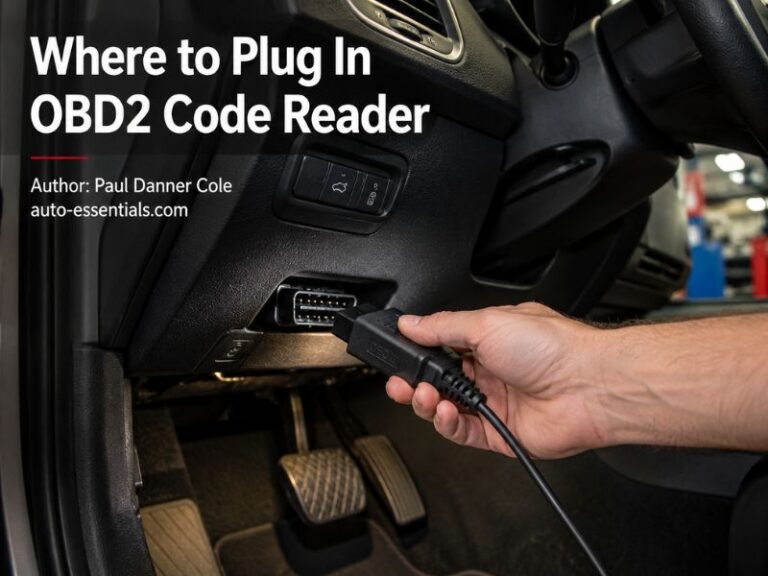
- Park safely, switch off unnecessary electrical loads, and connect the scanner to the diagnostic port.
- Read stored, pending, and permanent codes, then save the code numbers and descriptions.
- Review freeze-frame data if the tool provides it.
- Inspect obvious issues such as loose connectors, damaged wiring, disconnected hoses, low oil, and low coolant.
- Use the code as a direction for testing rather than as proof that a part has failed.
- Repair the confirmed cause, clear the code if appropriate, and verify that the fault does not return.
Do not clear codes before writing them down if diagnosis is still needed. Clearing them can erase useful freeze-frame information and reset emissions readiness monitors, making it harder to understand what happened.
A recently disconnected battery can also erase stored information. In that situation, a vehicle may have no current codes even though a problem remains. The absence of a code is not evidence that the engine is healthy.
When a No-Code Engine Problem Still Needs Testing
Strong mechanical symptoms deserve attention even when a scan tool reports nothing. Knocking, deep tapping, severe vibration, persistent blue smoke, white exhaust with coolant loss, low oil pressure, and rapidly worsening power loss can indicate conditions that a code reader cannot confirm.
Starting problems can also be misleading. A weak battery, poor ground, low fuel pressure, restricted exhaust, or loss of compression may prevent the engine from starting without setting a code. Checking battery voltage and cranking speed is often an early practical step.
If the engine overheats, has very low oil pressure, or makes a sudden internal noise, stop driving when safe. A scan result should not justify continued operation when physical symptoms suggest immediate damage or a safety risk.
When Professional Diagnosis Is Appropriate
Professional help is especially appropriate when codes return after a repair, several codes appear at once, the engine has a flashing check engine light, or symptoms point to internal damage. A shop can combine electronic diagnosis with fuel-pressure testing, smoke testing, compression measurements, and mechanical timing checks.
Some repairs also require bidirectional controls or manufacturer-level data. A capable scan tool may command a solenoid, injector, throttle actuator, or cooling fan and observe the response. Basic code readers generally cannot perform these tests.
Seek prompt diagnosis for an engine that stalls in traffic, loses power unexpectedly, overheats, leaks fuel, or produces heavy smoke. These conditions can create fire, collision, or severe engine-damage risks beyond the question of whether a code is present.
FAQ: Code Readers and Bad Engines
Will a code reader detect a bad engine?
It may detect electronic symptoms of engine trouble, but it cannot identify every mechanical failure. The scanner can reveal misfires, sensor faults, mixture problems, and timing-related issues, while compression loss, bearing damage, and some head-gasket failures require mechanical testing.
Can a code reader tell me which part to replace?
No, a trouble code usually identifies a system or monitored condition rather than a guaranteed failed part. Testing the wiring, connectors, related components, and operating data prevents unnecessary parts replacement.
Can a bad engine have no check engine light?
Yes, serious mechanical problems can exist without a check engine light. Internal wear, low oil pressure, some coolant leaks, and compression problems may not trigger a code until secondary symptoms develop.
What code commonly indicates an engine misfire?
P0300 indicates random or multiple-cylinder misfires, while P0301 through P0308 commonly identify a misfire on a particular cylinder. The code narrows the investigation but does not distinguish automatically between a plug, coil, injector, air leak, or compression problem.
Should I keep driving if the check engine light is
A flashing light generally means the engine is misfiring severely enough to risk catalytic-converter damage. Reduce driving, avoid heavy acceleration, and arrange prompt diagnosis; stop if the vehicle is shaking badly, overheating, or losing power.
Can clearing codes fix an engine problem?
Clearing a code only erases stored information and turns off the warning temporarily; it does not repair the cause. If the fault remains, the code and warning will usually return after the computer reruns its checks.
What test confirms internal engine damage?
Compression, leak-down, oil-pressure, and related mechanical tests help confirm internal damage. The appropriate test depends on the symptoms and the code results, and abnormal noises or overheating may require immediate inspection.
Conclusion: Use the Code as a Starting Point
A code reader can detect many electronic and performance-related engine faults, but it cannot certify that an engine is good or bad on its own. Treat each code as a diagnostic clue, compare it with the symptoms, and confirm the suspected cause before replacing parts.
The major limitation is safety: a no-code result does not rule out dangerous mechanical damage. Record the codes, avoid driving with severe symptoms or a flashing warning light, and obtain professional testing when the engine misfires, overheats, loses oil pressure, or shows signs of internal failure.