No, regular windshield washer fluid is generally not bad for car paint when used as directed. However, you should clean up spills and avoid letting fluid dry on the finish for long periods. The exact risk depends on the product, its ingredients, the condition of the paint, and how long the fluid remains on the surface.
Across the United States, drivers use windshield washer fluid to clear road dust, bugs, salt, pollen, and other debris from their windshields. Whether you drive through a snowy New England winter, a dusty Texas summer, or a rainy stretch of the Pacific Northwest, washer fluid helps keep your view clear. Still, many drivers wonder whether the liquid can harm their car’s paint when it runs over the hood or splashes onto the body.
The good news is that standard automotive windshield washer fluid is made for routine use in vehicles. A small splash on sound factory paint will not normally cause lasting damage. Most concerns involve spills that remain on the surface, unsuitable chemicals, an already damaged finish, or confusion between washer fluid and engine coolant.
The safest approach is simple: use a suitable automotive washer fluid, follow the instructions on its label and in your owner’s manual, and rinse accidental spills with clean water. If the paint changes color, becomes rough, or develops a lasting mark after cleaning, inspect the area before trying stronger cleaners or abrasive products.
In normal use, windshield washer fluid is not expected to damage a vehicle’s paint. It is designed to help remove dirt and other material from automotive glass. During ordinary driving, some fluid may run from the windshield onto the hood, roof, or nearby body panels.
That brief contact is generally not a cause for concern on sound factory paint. However, this does not mean every formula is harmless under every condition. The product’s ingredients, its concentration, the surface temperature, and the condition of the clear coat can affect the result.
Modern vehicles commonly have a colored base coat covered by a clear coat. The clear coat helps protect the color layer and gives the finish its shine. A compatible washer fluid should not normally strip or dissolve this coating during routine use, but damaged paint may be more vulnerable to staining and other surface problems.
Vehicle manufacturers provide guidance on washer fluid in their owner’s manuals. For example, Hyundai and Kia warn against putting engine coolant or radiator antifreeze into the washer reservoir because coolant can damage paint and body trim. This warning concerns the wrong fluid, not ordinary washer fluid used for its intended purpose.
Brief contact
A small splash of standard automotive washer fluid on intact paint usually presents little risk. Rinse it off if you notice it.
Long exposure
A dried spill or repeated buildup should be cleaned rather than left on the finish. The effect depends on the formula and the condition of the paint.
Wrong chemical
Engine coolant, concentrated cleaners, and other unsuitable fluids may create a different risk from regular windshield washer fluid.
Why Washer Fluid Usually Does Not Harm Automotive Paint
Windshield washer fluid commonly contains water, cleaning agents, and ingredients that help the liquid remain usable in cold weather. Depending on the product, it may also contain alcohols, dyes, fragrances, or other additives.
These ingredients help loosen grime or lower the fluid’s freezing point. Their presence does not automatically mean that the fluid will damage paint. What matters is the finished product’s formula and how it interacts with the surface under real conditions.
A product intended for automotive washer systems should be used according to its label. Do not assume that a concentrated product, industrial cleaner, or homemade mixture will behave in the same way.
When the Risk May Be Higher
Paint that is peeling, cracked, badly scratched, or already failing deserves extra care. A damaged clear coat may expose the layers below it, making the area more sensitive to moisture, dirt, and cleaning chemicals.
A hot hood can also cause liquid to dry quickly. Although this does not prove that washer fluid will damage the paint, rapid drying can leave visible residue and make it harder to tell whether a mark comes from the fluid, road grime, or another substance.
Damaged finish
Clean gently and avoid vigorous rubbing over peeling or cracked paint.
Hot body panels
Allow the surface to cool before washing, and do not let cleaning products dry on it.
What Is in Windshield Washer Fluid?
Windshield washer fluid is a formulated cleaning liquid, not simply colored water. Its ingredients vary by brand, season, intended freezing protection, and product type. Reading the label is the best way to understand what you are using.
Water often forms much of the mixture. Cleaning agents help lift dirt and oily road film, while alcohols may help prevent freezing. Dyes can give the liquid its familiar blue, pink, green, or other color, but color alone does not identify its chemical composition.
Some products are ready to use, while others are concentrates that require dilution. Winter formulas may have different ingredients or concentrations from summer formulas. A concentrate should never be treated as interchangeable with a ready-to-use product unless the manufacturer says so.
Water
Acts as the main carrier in many washer fluid formulas and helps distribute the cleaning ingredients.
Cleaning agents
Help loosen dirt, insects, and road film from the windshield.
Alcohols or other freezing-point depressants
Help some formulas resist freezing in cold weather. The exact ingredients vary by product.
Dyes and additives
May provide color or other product features. A dye’s presence does not by itself establish that a product will stain paint.
Does Blue Windshield Washer Fluid Stain Paint?
Blue washer fluid does not automatically stain car paint. Its color comes from added dye, but the presence of dye alone is not evidence that the product will permanently discolor a vehicle’s finish.
If blue or another colored liquid dries on the hood, wash the area with clean water and a paint-safe car shampoo. Check the surface after rinsing and drying it with a clean microfiber towel.
If the mark remains, it may be dried residue, mineral deposits, road grime, or an unrelated paint defect. Do not assume that the dye has penetrated the clear coat, and do not reach for a strong solvent without identifying the problem.
Are Winter and Summer Washer Fluids Different?
Yes. Summer washer fluid is generally intended for warmer conditions and routine cleaning, while winter formulas provide protection against freezing at a stated temperature. Their chemical compositions may differ.
For paint care, neither the season nor the color is enough to determine compatibility. Follow the label, select a product suitable for your climate, and avoid leaving spills to dry on body panels.
Can Windshield Washer Fluid Damage Clear Coat?
Ordinary windshield washer fluid is not generally expected to damage an intact automotive clear coat when used as directed. Still, the answer should not be treated as a guarantee for every formula, every painted surface, or every exposure.
The clear coat is the outer protective layer over the colored paint on many vehicles. It helps resist everyday wear and gives the paint its gloss. A healthy clear coat can handle routine exposure to products intended for automotive use, but it can become damaged through age, sunlight, abrasion, poor repairs, or incompatible chemicals.
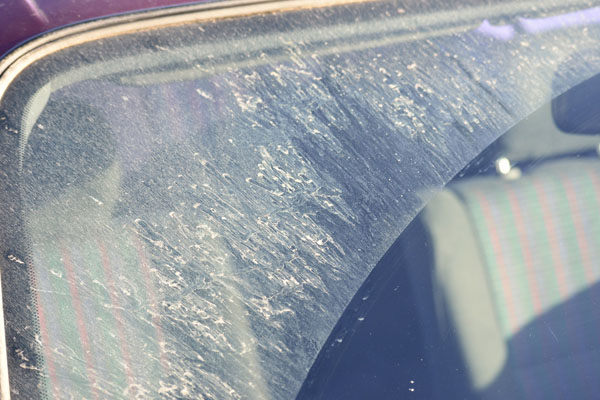
A dull patch after a spill does not necessarily mean the clear coat has been chemically damaged. It could be residue sitting on the surface, a water spot, a scratch, or an existing defect that became easier to see after cleaning.
Begin with a gentle wash and inspect the area in good light. If the surface still looks cloudy, rough, discolored, or uneven after the residue has been removed, do not assume that more rubbing will fix it. A detailer or body shop can determine whether the issue is surface contamination or actual coating damage.
Residue
May appear as a film or streak and can often be removed by washing and rinsing.
Water spots
May remain after liquid evaporates, especially if the water contains dissolved minerals.
Clear-coat damage
May present as persistent haze, peeling, or changes in gloss. A professional inspection may be needed to identify the cause.
Does Repeated Exposure Change the Answer?
Repeated exposure is a reason to keep the vehicle clean, but it does not establish that standard washer fluid will wear away the clear coat. Routine use and a prolonged, concentrated spill are different conditions.
If fluid regularly runs over the same part of the hood, rinse the area during your normal car wash. Also check that the washer nozzles and hoses work properly, because a leak may keep the body panel wet and create a recurring mess.
How to Remove Windshield Washer Fluid From Car Paint
The safest way to remove a washer fluid spill is to use water and, when needed, a car shampoo made for painted automotive surfaces. In most cases, there is no need for a special chemical cleaner.
If the spill is fresh, clean it promptly. If it has dried, soften the residue with water before wiping so that trapped dirt does not scratch the paint.
Step 1: Let the panel cool
Park in a safe place and allow a hot hood or body panel to cool. Do not apply cleaners to a very hot surface.
Step 2: Rinse with clean water
Use a gentle flow of water to remove loose fluid and dirt. Avoid forceful rubbing while grit remains on the surface.
Step 3: Wash if needed
Use a car shampoo intended for automotive paint and follow its directions. A clean wash mitt is preferable to a rough cloth.
Step 4: Rinse thoroughly
Remove all soap and loosened residue. Check the area before drying it.
Step 5: Dry gently
Use a clean, soft microfiber drying towel. Blot or glide gently rather than scrubbing the surface.
Step 6: Inspect the finish
Look at the area in natural light. If the mark has disappeared, no further treatment is needed. If it remains, seek advice before using stronger products.
What If the Washer Fluid Has Already Dried?
A dried spill does not automatically mean the paint is damaged. Start by wetting the area with clean water and allowing the residue to soften. Then wash it with a paint-safe car shampoo and rinse well.
Do not scrape the residue with a fingernail, razor, or hard plastic tool. These methods can scratch the finish, even when the original spill was harmless.
If the mark remains after a gentle wash, stop and reassess. A persistent mark may have another cause, and an aggressive cleaning attempt could make the problem worse.
Should You Use Wax or Polish After Cleaning?
Wax or a paint sealant is not normally needed just because washer fluid touched the vehicle. If washing removes the residue and the paint looks normal, routine care is enough.
Polish can remove a small amount of clear coat, depending on the product and method. Do not use it simply because you suspect a stain. First determine whether a mark remains and whether it is actually a paint defect.
If the vehicle has a ceramic coating, paint protection film, or a matte finish, check the care instructions for that surface. Some products and methods suitable for standard gloss paint may not be suitable for specialized finishes.
Windshield Washer Fluid vs. Engine Coolant: Know the Difference
Windshield washer fluid and engine coolant serve different purposes and should never be confused. Washer fluid cleans the windshield, while engine coolant helps regulate engine temperature and protect the cooling system.
Automaker guidance specifically warns that coolant or radiator antifreeze can damage paint and body trim if spilled. Coolant can also leave a slippery or hazy film on glass, which may reduce visibility if it reaches the windshield.
If you spill coolant on the bodywork, follow the vehicle and coolant manufacturer’s cleanup instructions promptly. Wear suitable protection, avoid skin contact, and keep the product away from children and animals. Do not mix up the cleanup guidance for coolant with the simpler approach normally used for a small washer fluid spill.
Windshield washer fluid
Made to clean automotive glass and intended for use in the washer system.
Engine coolant
Made for the engine cooling system and may damage paint or trim when spilled.
Radiator antifreeze
Must not be substituted for washer fluid. Use only the correct product in each vehicle reservoir.
What Happens If You Put Coolant in the Washer Reservoir?
Do not operate the washer system if you know that engine coolant has been added by mistake. The mixture may impair visibility when sprayed onto the windshield and could create a driving hazard.
Consult the owner’s manual or a qualified service technician for safe correction of the mistake. Do not assume that adding more washer fluid will make the mixture suitable for use.
Common Mistakes That Can Harm Car Paint
The cleaning method can create more risk than the washer fluid itself. Rubbing grit across the paint, using an unsuitable solvent, or cleaning a hot panel can leave marks even when the original spill would have caused no lasting harm.
Treat a spill as a simple cleaning task first. Use the least aggressive method that works, and do not apply several different chemicals in an attempt to remove a mark of unknown origin.
Scrubbing dry residue
Dry wiping can drag dust and grit across the finish. Rinse first, then wash gently.
Using household solvents
Paint thinner, strong degreasers, and other harsh products may affect paint, trim, or protective coatings. Avoid them unless the vehicle or product manufacturer specifically approves the method.
Cleaning in direct heat
Hot panels can cause water and cleaning products to dry quickly, leaving streaks or deposits. Work in shade on a cool surface.
Using a dirty towel
A towel containing grit can scratch the finish. Use clean microfiber materials and replace them when dirty.
Assuming every mark is chemical damage
Road film, hard-water deposits, bird droppings, and existing clear-coat defects can look like stains. Identify the problem before choosing a treatment.
How to Prevent Future Spills
Prevention starts when you refill the washer reservoir. Park safely, read the owner’s manual, identify the correct reservoir, and use a product suited to the vehicle and local climate.
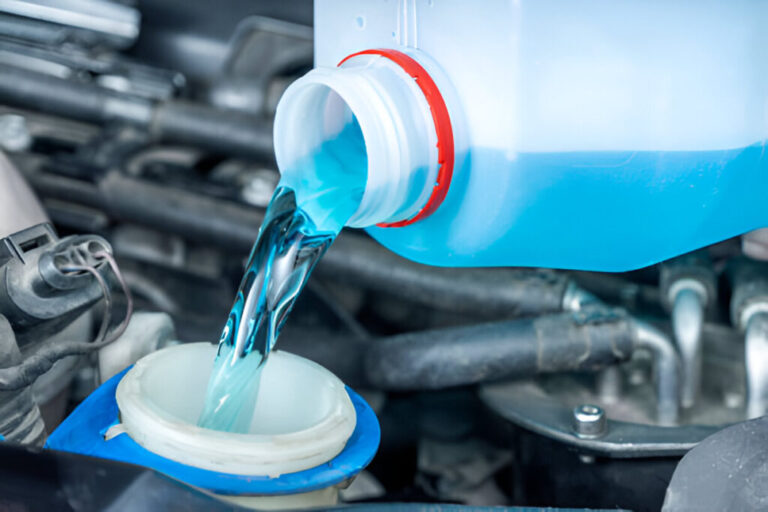
Pour slowly and avoid overfilling. If fluid lands on the hood, fender, or nearby trim, rinse it off rather than waiting for the next wash. Keep the container closed and store it according to its label.
Choose a winter formula with suitable freezing protection in places where temperatures fall below freezing. In warmer regions, use a product suited to local conditions and the vehicle manufacturer’s recommendations.
How to Tell Whether Washer Fluid Actually Damaged Your Paint
A lasting mark after a spill does not prove that washer fluid caused paint damage. The best first step is to remove the surface residue, dry the panel gently, and inspect the area under good lighting.
Compare the affected spot with nearby paint. Look for a change in color, gloss, texture, or coating condition. Do not rely on one sign alone, because lighting, dirt, and water deposits can change how a finish looks.
The mark disappears after washing
This is consistent with surface residue. Normal car washing should be enough.
The mark remains but feels smooth
It may be a stain, water deposit, or another surface issue. More assessment may be needed before treatment.
The surface looks hazy or has lost gloss
Check for existing wear or coating damage. Avoid abrasive products until the cause is clearer.
The paint is peeling, cracked, or visibly lifting
The finish may already be failing. A body shop can assess whether repair is needed.
When to Ask a Professional
Seek help from a qualified automotive detailer or body shop if the mark remains after gentle cleaning, the clear coat appears to be peeling, or the paint has a persistent change in texture or color.
Tell the technician which product was spilled, how long it remained on the surface, and what cleaning steps you tried. If the product label or safety data sheet is available, provide it as well.
Avoid repeated polishing or solvent use while waiting for an assessment. These steps can remove paint or coating material and may complicate a simple repair.
Choosing a Washer Fluid That Is Suitable for Your Vehicle
Choose a windshield washer fluid intended for automotive use and suitable for the weather in your area. The owner’s manual and product label should guide your choice.
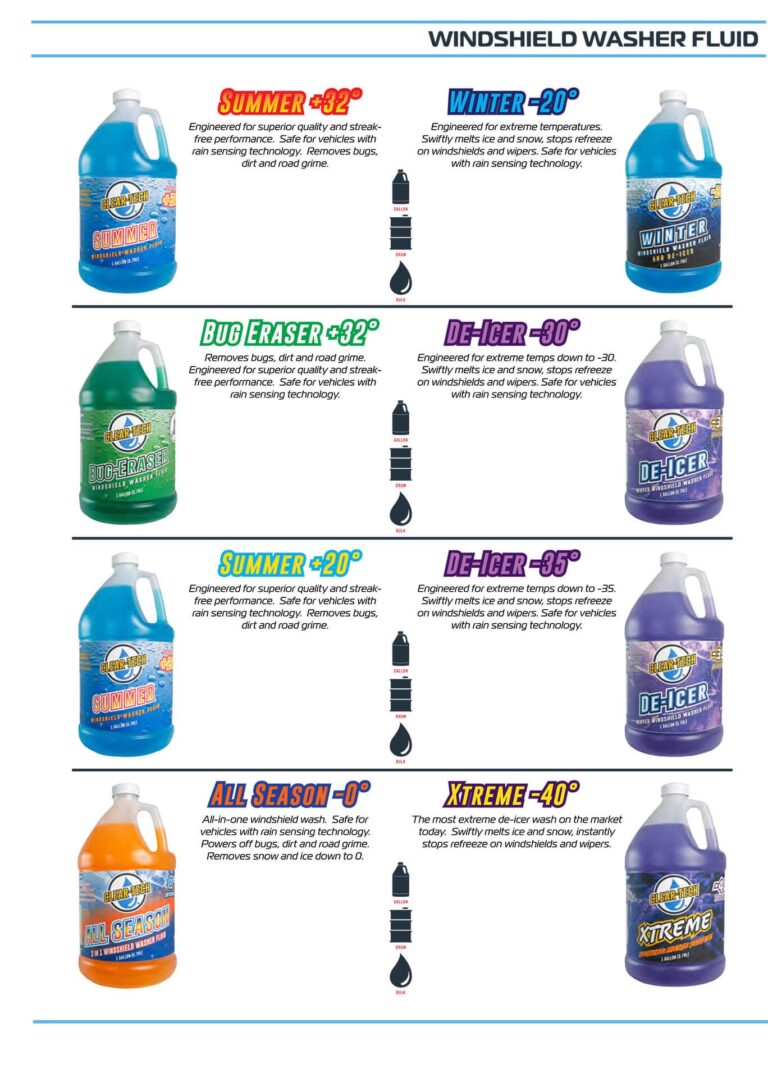
In colder parts of the United States, a winter formula with an appropriate freezing rating can help prevent the fluid from freezing in the reservoir, lines, or nozzles. In warmer areas, a suitable summer formula may meet routine cleaning needs.
Do not choose a product based only on its color, smell, or marketing claims. Check the intended use, dilution instructions, freezing protection, and any surface-care warnings. If you need to assess a specific formula, its safety data sheet can provide more information about listed hazards and ingredients, although it may not establish paint compatibility under every condition.
Follow the vehicle manual
Use a product that meets the vehicle manufacturer’s guidance.
Check the climate rating
Choose suitable freezing protection when the vehicle will face cold weather.
Follow dilution instructions
Never guess how much water to add to a concentrate.
Keep products in their proper systems
Never pour coolant, engine oil, or an unrelated cleaner into the washer reservoir.
Is Homemade Washer Fluid Safe for Car Paint?
Homemade mixtures are not automatically safe for paint or the washer system. Household detergents, vinegar, and other ingredients may be unsuitable for the pump, hoses, seals, glass, or exterior surfaces.
Some vehicle manuals specifically warn against using vinegar-and-water mixtures in the washer reservoir because they may damage the pump. Use a commercially formulated product that meets the vehicle’s requirements rather than relying on an unverified recipe.
Frequently Asked Questions
Q
Can windshield washer fluid ruin car paint?
Regular automotive windshield washer fluid is unlikely to ruin sound car paint when used as directed. Clean up spills and avoid letting residue remain on the surface for long periods. A different or unsuitable chemical may present a greater risk.
Q
Can windshield washer fluid stain a car hood?
It may leave visible residue or streaks if it dries on the hood, but that does not mean the paint is permanently stained. Rinse the area, wash it with automotive shampoo, and dry it gently. If the mark remains, investigate the cause before using stronger cleaners.
Q
Does washer fluid damage clear coat?
Ordinary washer fluid is not generally expected to damage an intact clear coat during normal use. Results can vary with the formula, exposure, and condition of the finish. Persistent haze, peeling, or a lasting change in gloss deserves further inspection.
Q
Is dried windshield washer fluid harmful to paint?
Dried washer fluid is not automatically harmful, but residue should be removed rather than left on the paint. Soften it with clean water, wash gently, and rinse thoroughly. Avoid scraping or scrubbing the dry deposit.
Q
What should I do if windshield washer fluid spills on my car?
Rinse the affected area with clean water as soon as practical. If needed, wash it with a car shampoo made for painted surfaces, rinse again, and dry it with a clean microfiber towel. If the product was not ordinary washer fluid or the paint looks damaged, check the product instructions and seek professional advice.
Q
Is blue windshield washer fluid more harmful than clear fluid?
Color alone does not show whether a washer fluid is more harmful to paint. Different products use different dyes and formulas. Read the product label and use a formula intended for your vehicle’s washer system.
Q
Can I use water instead of windshield washer fluid?
Some vehicle manuals allow plain water when washer fluid is unavailable, but water does not provide the same cleaning performance or freezing protection as a suitable washer fluid. In freezing conditions, water can freeze in the system. Follow your owner’s manual and use an appropriate automotive product when needed.
Q
Can I use car wax to remove washer fluid stains?
Wax is not a cleaning solution for every type of stain. Wash and rinse the area first. If the mark remains, identify its cause before applying wax, polish, or another treatment. Polishing can remove some clear-coat material, so it should not be the first step for an unknown mark.
✦ Wrapping Up
Conclusion
Windshield washer fluid is generally safe for car paint when it is made for automotive use and used as directed. A brief splash on a sound factory finish is unlikely to cause permanent harm, but cleaning spills promptly is a sensible part of vehicle care.
The key distinction is between standard washer fluid and other automotive chemicals. Engine coolant and radiator antifreeze can damage paint and trim, so they should never be used as substitutes in the washer reservoir. Product ingredients, exposure conditions, and the state of the paint also matter.
If a spill leaves a mark, begin with clean water and a gentle car wash. Avoid harsh solvents, abrasive scrubbing, and unnecessary polishing. When a mark persists or the coating appears damaged, ask a qualified detailer or body shop to inspect the finish.
💡 Key Takeaway
If windshield washer fluid gets on your car’s paint, rinse it with clean water, wash gently if needed, and dry the area with a clean microfiber towel. Use the correct automotive fluid and seek professional advice if the finish remains marked.