Yes, you can usually mix windshield washer fluids if they are compatible and provide the protection your local weather requires. However, avoid mixing products with different temperature ratings, special treatments, or chemical ingredients unless their labels confirm compatibility.
Drivers across the United States face very different weather conditions. A car in Florida may need fluid that removes bugs and road grime, while a vehicle in Minnesota needs washer fluid that can withstand freezing winter temperatures. If you have half a tank of one product and want to add another, the safest choice depends on the labels, the expected temperature, and the type of fluid already in the reservoir.
Most standard, ready-to-use windshield washer fluids are made for the same basic job: cleaning the windshield through the vehicle’s washer system. This means some products can be mixed without causing an immediate problem. Still, similar purpose does not guarantee identical ingredients or equal performance, especially when winter protection, concentrated formulas, water-repellent treatments, or other special features are involved.
Before adding a second product, check both labels and your vehicle owner’s manual. Look for the minimum operating temperature, dilution instructions, and any compatibility warnings. If you cannot identify the fluid already in the tank, adding a known compatible product may not be enough to restore the required freeze protection. In that case, the more reliable option is to have the reservoir drained and refilled with a suitable fluid.
Can You Mix Windshield Washer Fluid From Different Brands?
Yes, different brands of windshield washer fluid can often be mixed when the products have compatible formulas and temperature ratings. For example, combining two standard ready-to-use washer fluids intended for the same season is generally less concerning than combining a summer cleaner with a concentrated winter formula. The label remains the best guide because brands can use different ingredients and additives.
There is no general rule that says every brand must remain separate. Standard products are designed to clean automotive glass and work with a vehicle’s washer pump, hoses, and spray nozzles. Even so, the products may differ in their cleaning agents, alcohol content, water-repellent additives, and resistance to freezing.
If you are topping off a nearly empty reservoir, check the current product if you know what it is. Compare its intended use and minimum temperature rating with those of the new fluid. When the labels do not reveal whether the products are compatible, avoid mixing them and use one known suitable formula after removing the unknown mixture if necessary.
Source: canyoumix.com
Standard fluid with standard fluid
Usually the simplest combination, provided both products have compatible uses and suitable temperature ratings.
Different brands with different additives
Check the labels for compatibility, water-repellent treatments, and special cleaning features before combining them.
Unknown fluid with a new product
Do not assume the mixture will perform as expected. Identify the old product or have the reservoir drained and refilled.
Does the Brand Matter More Than the Formula?
Usually, the formula matters more than the brand name. Two products from different manufacturers may be suitable for mixing if they have similar uses and compatible ingredients. Two products from the same manufacturer may still have different properties if one is a summer cleaner and the other is a concentrated winter product.
Read the product instructions instead of relying on brand familiarity. If either label says not to mix the product with other fluids, follow that warning. The same applies to products that require a particular dilution or are designed for a specific washer system.
Compare intended use
Make sure both products are designed for the same general cleaning task and vehicle application.
Compare temperature ratings
Choose a mixture that provides adequate protection for the lowest temperatures you expect.
What Happens When You Mix Different Types of Washer Fluid?
The outcome depends on the products being combined. Mixing compatible standard fluids may cause no obvious change, but combining products with different temperature ratings or special additives can change how well the mixture cleans, resists freezing, or behaves on glass. A mixture can look normal and still provide less protection than you need.
The most useful distinction is between standard ready-to-use fluid, summer cleaner, winter fluid, concentrated fluid, and products with water-repellent treatments. These categories can overlap, so read the actual label rather than relying on a product’s color or front-panel name.
If the car will be driven in cold weather, give freeze protection priority. A frozen reservoir, pump, or washer line can stop the system from working when you need a clear windshield. In winter conditions, a product with a verified temperature rating suitable for the local climate is a safer choice than an unknown mixture.
Source: garagesee.com
Summer washer fluid
Often formulated to remove insects, dust, pollen, and road film. It may not provide adequate protection during freezing weather.
Winter washer fluid
Designed to resist freezing within the temperature limits stated on its label. Mixing it with a weaker product may reduce that protection.
All-season washer fluid
May suit a broad range of conditions, but its actual temperature rating and cleaning claims should still be checked.
Water-repellent washer fluid
Contains ingredients intended to help water bead on glass. Mixing it with another formula may change the intended treatment or cleaning result.
Concentrated washer fluid
Requires the dilution specified by its manufacturer. Do not assume it can be poured into a reservoir containing another product without affecting the final mixture.
Can You Mix Summer and Winter Washer Fluid?
You can physically combine summer and winter washer fluids, but that does not mean the result will retain the winter product’s full freeze protection. The final temperature rating depends on the ingredients, concentrations, and amounts of the fluids involved. Without verified mixing instructions or reliable specifications, you cannot determine the resulting protection from the two labels alone.
For example, suppose a driver in Colorado has summer fluid left in the reservoir when the first hard freeze is forecast. Adding a winter product does not automatically turn the tank into a mixture rated for the winter product’s lowest stated temperature. The summer fluid may dilute the ingredients that help prevent freezing.
The safer approach is to use a winter-rated product appropriate for the expected temperatures and follow its instructions. If a substantial amount of summer fluid remains, draining the reservoir and refilling it can provide a more predictable result. Do not rely on a mild-weather test to prove that the mixture will remain liquid overnight.
Before freezing weather
Check the reservoir contents and use a product with a suitable winter rating before temperatures fall.
When the mixture is uncertain
Do not estimate its freeze point by averaging the ratings printed on the bottles.
Can You Mix Concentrated and Ready-to-Use Washer Fluid?
Only do so when the concentrate’s instructions support the combination. Ready-to-use fluid already contains the proportions intended for direct use, while concentrated fluid may require a specified amount of water. Adding concentrate to ready-to-use fluid can alter the final composition and temperature rating.
More concentrate does not always mean better results. A formula can become unsuitable for the washer system or glass when used outside its stated dilution range. Follow the manufacturer’s directions and use only the recommended dilution water when the label calls for it.
Check the dilution ratio
Use the ratio printed on the product label rather than guessing by volume.
Do not add concentrate blindly
First identify what is already in the reservoir and confirm the new product’s mixing instructions.
Does Windshield Washer Fluid Color Matter When Mixing?
Color alone does not tell you whether two windshield washer fluids are compatible. Manufacturers may use blue, green, pink, orange, or other dyes to distinguish products, but there is no universal color standard that guarantees a particular formula or freeze rating.
Two blue products may have different ingredients, while a blue and a pink product may have compatible uses. Neither observation is enough to confirm that mixing is safe. The product label, technical information, and temperature rating provide more useful information than the dye.
Mixing different colors may create a new shade or a cloudy appearance, but a color change is not a dependable chemical test. Likewise, a clear and uniform mixture does not prove that it will resist freezing or work properly with special additives.
Source: garagesee.com
Do not judge by color
Identify the product by its label and specifications, not by the color of the liquid.
Watch for unexpected changes
Cloudiness, visible particles, or separation after mixing can be reasons to stop using the mixture and seek product guidance.
Avoid tasting or direct contact
Never taste washer fluid or deliberately smell it closely to identify its ingredients. Follow the safety instructions on the container.
What If Two Fluids Have the Same Color?
Matching colors do not prove matching ingredients. One blue washer fluid may be designed for summer cleaning, while another blue product may provide winter freeze protection or include a water-repellent treatment.
If you have discarded the bottle or cannot read its label, do not treat its color as a substitute for product identification. In areas where freezing is possible, the uncertainty may justify draining the reservoir and using a known winter-rated product.
Read the bottle
Look for the intended season, temperature rating, dilution requirements, and compatibility warnings.
Can Mixing Washer Fluid Damage Your Car?
Mixing compatible washer fluids does not usually cause damage simply because they come from different brands. The risk comes from incompatible ingredients, an unsuitable concentration, inadequate freeze protection, or using a liquid that was never designed for the washer system.
Windshield washer systems include a reservoir, electric pump, hoses, spray nozzles, and sometimes heated components or headlight washers. The fluid must flow through these parts and reach the glass without creating an avoidable problem. A mixture that freezes, leaves deposits, or changes how a special treatment behaves may reduce system performance.
A dirty windshield can be a safety issue because glare, road spray, insects, and dust can reduce visibility. If the washer system stops spraying or leaves a film on the glass, pull over when safe to do so and restore clear visibility before continuing. Do not keep driving when your view of the road is impaired.
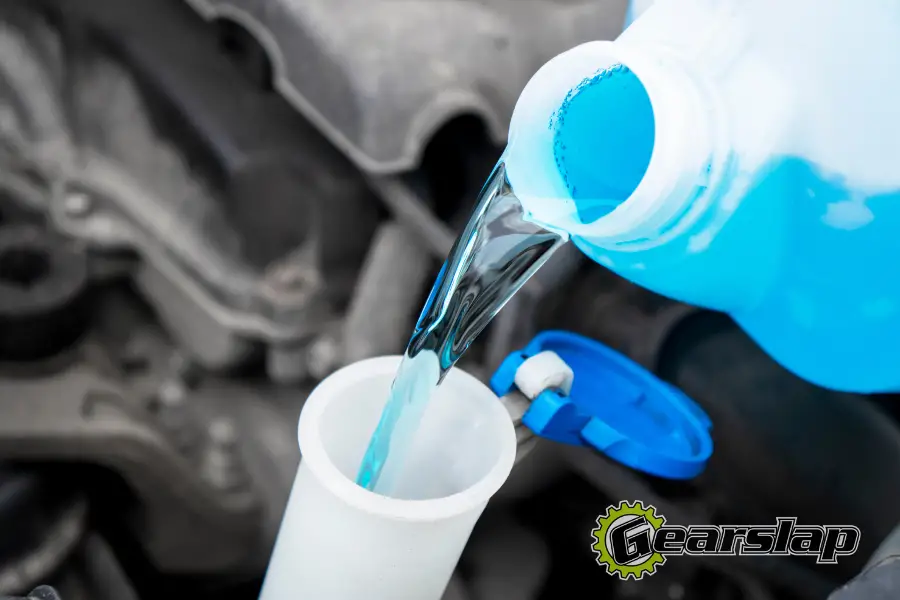
Source: gearslap.com
Pump and hose problems
Fluid that freezes can block the system and may stress components when the washer pump is operated.
Poor cleaning
An unsuitable mixture may leave streaks or fail to remove road grime, insects, or oily film.
Nozzle blockage
Deposits or contamination can interfere with spray patterns. A mixture that looks normal may still be unsuitable.
Reduced winter protection
Adding a weaker fluid may raise the mixture’s freezing temperature, leaving the system vulnerable in cold weather.
Can Washer Fluid Mixing Harm Paint or Wipers?
Products intended for automotive windshields are generally formulated for their stated vehicle use, but not every formula has the same additives or cleaning properties. Follow the label’s instructions and avoid allowing concentrated products to dry on paint or trim when the manufacturer advises against it.
If a mixture causes persistent streaking, residue, or an unusual film, stop using it until you confirm the product’s suitability. Clean the windshield and wiper blades according to the vehicle and product instructions. Do not assume that every visible streak means permanent damage; dirt, worn blades, and a contaminated windshield can cause similar symptoms.
Check the glass
Look for a persistent film or residue after using the mixture, especially at night when glare can be more noticeable.
Inspect the wipers
Clean the blades as directed and replace them if they are worn, cracked, or unable to clear the glass.
Which Automotive Fluids Should Never Be Mixed Into Washer Fluid?
Do not use engine coolant, brake fluid, engine oil, transmission fluid, fuel, or household cleaning chemicals as substitutes for windshield washer fluid. These liquids have different purposes and may harm components, contaminate the washer system, or create a visibility hazard. A product being safe for one part of a car does not make it suitable for another.
Engine coolant and windshield washer fluid are especially easy to confuse because some automotive products use similar terms such as antifreeze or winter protection. Coolant is designed for the engine’s cooling system, while winter washer fluid is designed to clean glass and resist freezing in the washer system. They are not interchangeable.
Household glass cleaner and dish soap may also be unsuitable for a vehicle’s washer system, depending on their ingredients and concentration. They may foam, leave residue, or affect the performance of the system. Use a product specifically labeled for automotive windshield washers unless your vehicle manufacturer expressly approves an alternative.
Source: vehiclefreak.com
Engine coolant
Never add it to the washer reservoir. If coolant is added by mistake, do not operate the washer system; seek service guidance.
Brake fluid or engine oil
These are not windshield cleaning fluids and can contaminate the reservoir and washer components.
Dish soap and household cleaners
They may cause excess foam, streaks, residue, or compatibility issues. Use only an alternative approved for the vehicle.
Plain water
Water may be suitable for certain temporary warm-weather uses when the manufacturer permits it, but it lacks the cleaning additives and freeze protection of proper washer fluid.
What If You Accidentally Add the Wrong Fluid?
If you pour the wrong automotive fluid into the windshield washer reservoir, stop before activating the washer pump. Do not try to fix the problem by adding more washer fluid, because dilution may not remove the contamination or restore safe operation.
Contact a qualified repair shop and explain what was added, approximately how much entered the reservoir, and whether the pump was operated. The appropriate response depends on the substance and amount. The shop may need to drain and clean the reservoir and related components before refilling the system.
If the spill reached your skin or eyes, follow the product’s safety label and seek appropriate medical advice. Keep the container available so the product can be identified accurately. Never mix chemicals in an attempt to neutralize the spill.
Stop using the system
Do not spray a contaminated fluid onto the windshield or continue running the pump.
Identify the product
Keep its packaging or product name available for the repair professional.
Arrange proper cleaning
Have the system serviced when the wrong substance may affect the pump, hoses, nozzles, or glass.
How to Safely Top Off Your Windshield Washer Reservoir
You can reduce the chance of a mixing problem by identifying the fluid, checking the weather, and following a simple refill process. The task is usually straightforward, but using the wrong reservoir or the wrong fluid can cause avoidable trouble.
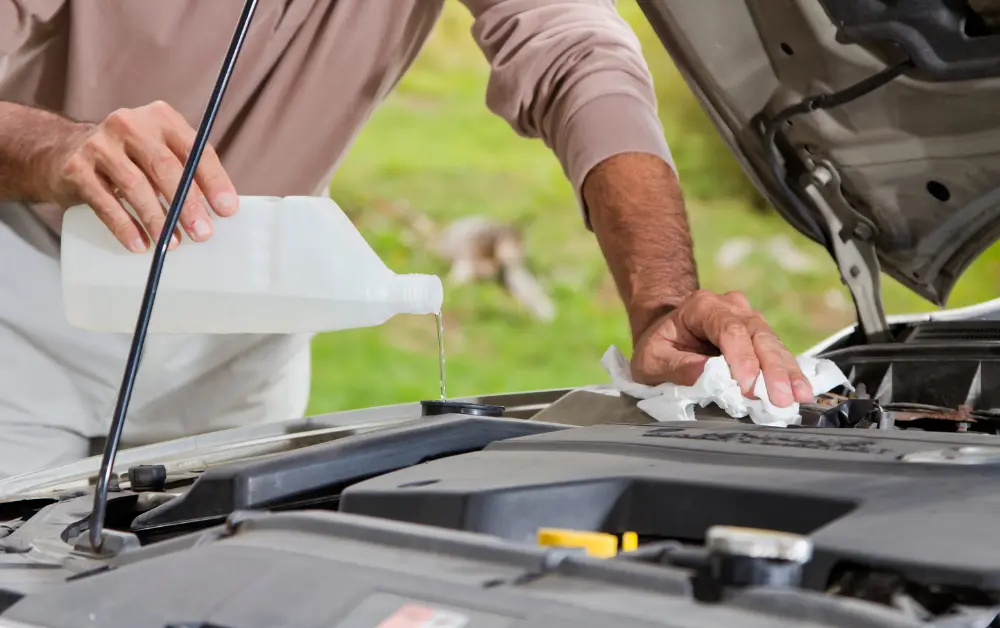
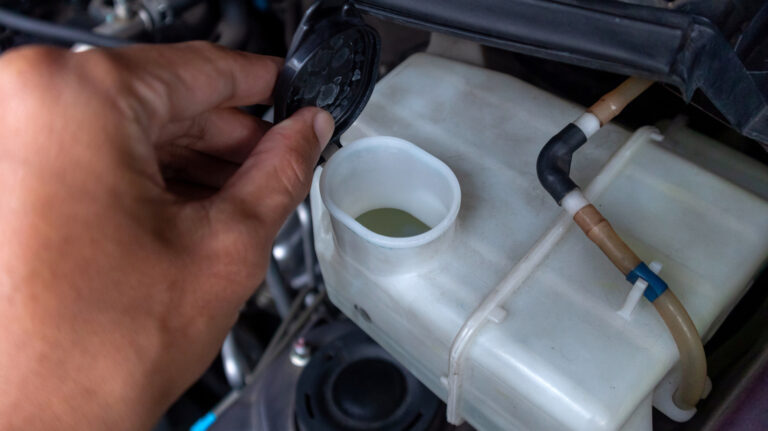
Before starting, park on level ground, switch off the engine, and let hot components cool as needed. Consult the owner’s manual to locate the windshield washer reservoir and confirm any special requirements. The washer cap often has a windshield-and-spray symbol, but do not rely on appearance alone when you are unsure.
Use a clean funnel if needed and keep dirt out of the tank. Avoid spills and follow the label’s handling precautions. If the fluid is concentrated, prepare it as directed instead of guessing at the correct ratio.
Source: carsescort.com
Step 1: Identify the current fluid
Check the bottle, maintenance records, or previous refill information. If the contents are unknown, do not assume they match the new product.
Step 2: Check the temperature rating
Compare the product’s stated minimum temperature with the coldest conditions expected during use.
Step 3: Read both labels
Look for mixing restrictions, dilution instructions, and warnings about special additives or vehicle compatibility.
Step 4: Add compatible fluid
Pour slowly into the confirmed washer reservoir and avoid overfilling it.
Step 5: Test the spray
With the vehicle safely parked and the area clear, briefly operate the washers and check for a normal spray pattern and effective cleaning.
Step 6: Check for problems
Stop if the fluid looks contaminated, the nozzles fail to spray, the glass develops a persistent film, or the system makes an unusual sound.
How to Decide Whether to Mix or Drain the Reservoir
The decision should depend on how much you know about the existing fluid and the conditions the car will face. If both products are known, compatible, and rated for the expected temperatures, topping off is generally reasonable. If one product is unknown or its label conflicts with the new fluid’s intended use, a full refill may offer a more predictable result.
Do not use a homemade freezing test or the appearance of the liquid to decide whether the mixture will survive a cold night. Product labels may describe performance under stated test conditions, and the resulting mixture may not have a verified rating. If you need dependable winter protection, use a known product whose specifications fit your climate.
Mixing may be reasonable
Both products are identified, compatible, and suitable for the expected temperature range.
Draining is the better option
The old fluid is unknown, the products have conflicting instructions, or the mixture may not provide adequate freeze protection.
Professional help is appropriate
The wrong fluid entered the reservoir, the system is contaminated, or the pump and nozzles stop working after the refill.
Common Mistakes to Avoid When Mixing Washer Fluid
The most common mistake is assuming that any liquid labeled windshield washer fluid will work equally well in every season. A product suited to warm weather may not provide the protection needed during a northern winter. Always match the fluid to the actual weather and follow the manufacturer’s temperature rating.
Another mistake is adding a second product without checking the first. If you do not know what is in the reservoir, you cannot reliably predict the mixture’s freeze protection or compatibility. Adding more fluid does not automatically correct an unsuitable mixture.
Finally, do not confuse visual appearance with chemical compatibility. Matching colors, a clear liquid, or a normal-looking spray cannot prove that the fluid meets its stated performance requirements. Use product information and the vehicle manual as the basis for your decision.
Source: i.ytimg.com
Mistake: Mixing by color
Correction: Read the labels and compare the formulas, intended uses, and temperature ratings.
Mistake: Ignoring winter weather
Correction: Choose a product rated for the lowest expected temperatures and avoid diluting its protection with an unsuitable fluid.
Mistake: Adding concentrate without measuring
Correction: Follow the specified dilution ratio and preparation instructions.
Mistake: Using engine antifreeze
Correction: Use only fluid intended for the windshield washer system.
Mistake: Continuing after a problem appears
Correction: Stop using the system if it produces a persistent film, shows signs of contamination, or fails to spray correctly.
A Quick Compatibility Guide for Common Washer Fluid Combinations
The following table summarizes common combinations and the checks that matter most. These are general guidelines, not a guarantee that every product within a category is compatible. The specific label and vehicle requirements take priority over the category name.
Source: garagesee.com
Two standard ready-to-use fluids
Often compatible when both are intended for the same conditions. Check the labels for restrictions and temperature ratings.
Summer fluid and winter fluid
May mix physically, but winter protection can be reduced. Avoid relying on the mixture in freezing conditions unless its rating is verified.
Two winter fluids with different ratings
Do not assume the mixture retains the lower temperature rating. Use the manufacturer’s guidance or replace the mixture with a known suitable fluid.
Concentrate and ready-to-use fluid
Check the concentrate’s instructions. The final mixture may not have the intended concentration or freeze protection.
Water-repellent fluid and standard fluid
Compatibility and treatment performance may vary. Follow the labels, especially if either product warns against mixing.
Windshield washer fluid and engine coolant
Do not mix intentionally. If coolant enters the washer reservoir, stop using the system and arrange proper cleaning.
Windshield washer fluid and household cleaner
Avoid unless the vehicle manufacturer explicitly approves the product. Household formulas may cause foam, residue, or compatibility problems.
Why the Temperature Rating Deserves Special Attention
A washer fluid’s temperature rating is a practical limit, not a decorative number on the bottle. It tells you the conditions for which the manufacturer specifies the product, subject to the label’s stated directions and limitations. If you combine it with another formula, the original rating may no longer describe the mixture.
For example, a driver in North Dakota preparing for a severe cold snap should not assume that a small amount of winter fluid will make a tank of summer fluid suitable for freezing temperatures. The result depends on the amount and formulation of both products, and a precise rating cannot be calculated reliably from the labels alone unless the manufacturer supplies suitable mixing guidance.
When dependable cold-weather operation matters, replacing an uncertain mixture with a product rated for the expected low temperature is the clearest course. This helps reduce the risk of a frozen reservoir or blocked spray system when road salt and grime make frequent windshield cleaning necessary.
Choose for the coldest expected conditions
Consider the actual forecast and normal winter conditions where the vehicle will be driven.
Avoid unsupported calculations
Do not average the temperature ratings of two bottles to estimate the mixture’s freezing point.
What to Do If Mixed Washer Fluid Stops Working Properly
If the washer system behaves differently after a refill, start with simple and safe checks. A weak spray, streaking, or a failure to spray can have several causes, including low fluid, clogged nozzles, frozen lines, worn wiper blades, or a contaminated mixture. The timing may suggest a connection to the refill, but it does not prove that mixing caused the fault.
Park safely before inspecting the vehicle. Check the reservoir level and confirm that the fluid is suitable for the current temperature. If freezing is possible, allow the vehicle to warm in a suitable place rather than repeatedly operating a potentially frozen pump. Never use an open flame or other unsafe heating method to thaw the system.
If the reservoir contains the wrong substance, visible debris, or a mixture that has separated, stop using the washers and seek repair guidance. A technician can determine whether draining the tank is enough or whether the pump, lines, and nozzles also need attention.
Source: garagesee.com
Symptom: No spray in freezing weather
Possible cause: Frozen fluid or lines. Stop operating the pump and allow safe thawing or seek service.
Symptom: Weak or uneven spray
Possible cause: Low fluid, clogged nozzles, frozen lines, or a pump issue. Check the level and inspect the system safely.
Symptom: Persistent streaks
Possible cause: Dirty glass, worn wiper blades, residue, or an unsuitable fluid. Clean the glass and blades according to their instructions.
Symptom: Cloudiness or separation in the tank
Possible cause: Contamination or incompatible products. Stop using the mixture and contact the product manufacturer or a repair professional.
Symptom: Pump noise without spray
Possible cause: An empty reservoir, blocked system, frozen fluid, or a fault. Avoid repeated operation and have the cause checked.
Frequently Asked Questions
Q
Can you mix windshield washer fluid from different brands?
Yes, you can often mix different brands if the formulas are compatible and intended for the same conditions. Check the product labels for temperature ratings, dilution requirements, and mixing restrictions. Do not assume that products are compatible simply because both are labeled windshield washer fluid.
Q
Can you mix blue and orange windshield washer fluid?
Color does not determine compatibility. Blue and orange products may have different formulas, but their colors alone cannot tell you whether they can be mixed. Compare the labels and use the products only when their intended uses and instructions are compatible.
Q
Can you mix summer and winter windshield washer fluid?
The fluids may mix, but the summer product can reduce the winter mixture’s freeze protection. Do not assume the result will retain the winter fluid’s stated rating. Before freezing weather, use a known product suitable for the expected temperature and drain an uncertain mixture if needed.
Q
Can you add water to windshield washer fluid?
Only add water when the product label permits it and gives suitable dilution instructions. Adding water to ready-to-use fluid may reduce cleaning performance and freeze protection. In freezing climates, an improperly diluted mixture can freeze in the reservoir or washer lines.
Q
Can you mix windshield washer fluid with antifreeze?
Do not mix windshield washer fluid with engine coolant or cooling-system antifreeze. These products have different purposes and are not interchangeable. If engine coolant enters the washer reservoir by mistake, stop using the washer system and have it properly drained and cleaned.
Q
What happens if you mix two windshield washer fluids that are not compatible?
The mixture may clean poorly, leave residue, behave differently on glass, or provide inadequate freeze protection. In some cases, incompatibility may be visible as cloudiness or separation, but a normal appearance does not prove that the mixture is suitable. Stop using a questionable mixture and consult the product manufacturer or a repair professional.
Q
Do you need to empty the reservoir before changing washer fluid brands?
Not always. If the old and new products are known to be compatible and have suitable temperature ratings, topping off may be reasonable. If the existing fluid is unknown, the labels conflict, or winter protection is uncertain, draining and refilling the reservoir is the more predictable option.
Q
Can mixing windshield washer fluid damage the pump?
Mixing compatible products does not normally damage the pump just because the brands differ. Problems are more likely when the fluid freezes, contains contamination, or is replaced with an unsuitable substance. If the pump runs without spraying or makes an unusual sound, stop operating it and have the system checked.
✦ Wrapping Up
Conclusion
You can usually mix windshield washer fluid from different brands when the formulas are compatible and suitable for the same weather conditions. The brand name and liquid color matter less than the product’s intended use, additives, dilution instructions, and temperature rating. Standard fluids may work together, but special treatments and winter formulas deserve closer attention.
The biggest concern is reducing freeze protection when mixing summer and winter products. A mixture can look normal and still freeze at a higher temperature than expected. In cold regions of the United States, using a known winter-rated product and replacing an uncertain mixture can help keep the washer system working when road spray, salt, and grime affect visibility.
Never substitute engine coolant, brake fluid, oil, or an unapproved household cleaner for windshield washer fluid. If the wrong substance enters the reservoir or the system stops working after a refill, avoid further use until the problem has been assessed. Following the label and vehicle manual is a simple way to reduce avoidable repair risks.
💡 Key Takeaway
Before topping off your reservoir, identify the existing fluid, compare both labels, and confirm that the mixture will suit the coldest temperatures you expect. If you cannot verify compatibility or freeze protection, replace the uncertain mixture with a known suitable windshield washer fluid.
Can you mix summer and winter windshield washer fluid? Learn the risks, how mixing affects freeze protection, and how to prepare your car for cold weather.
Learn how to fold a round windshield sun shade correctly without bending the frame. Follow these simple steps, avoid common mistakes, and store it neatly.
Learn how to turn on the Tesla Model 3 windshield washer, spray washer fluid, activate wipers, troubleshoot spray problems, and improve visibility safely.