What Is the Device That Reads Car Codes: Key Facts and Guidance
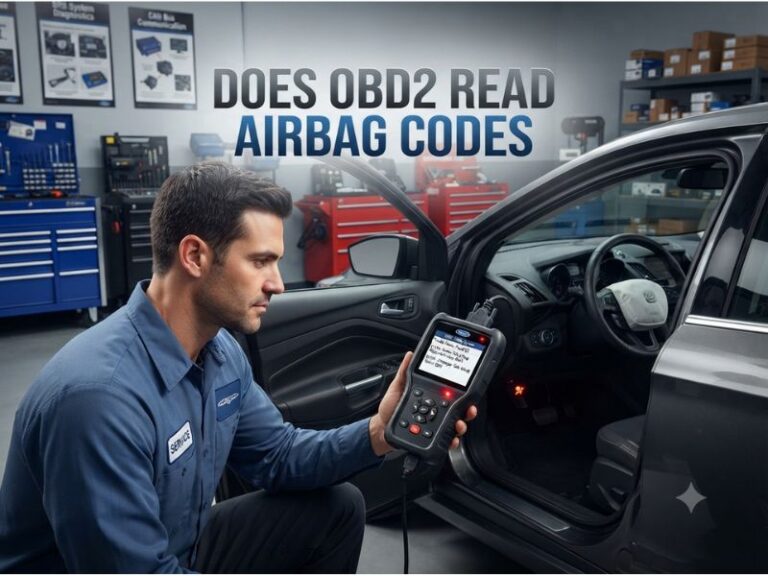
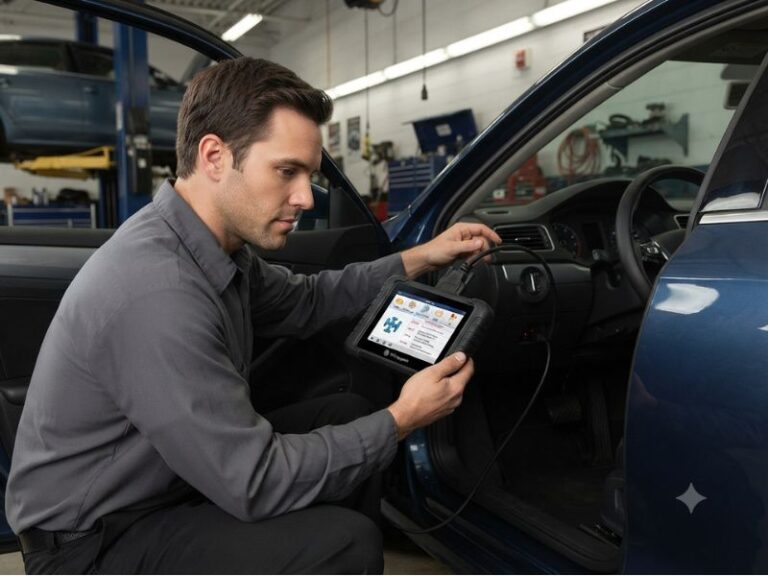
An OBD2 scanner, also called a diagnostic scan tool or code reader, is the device that reads car trouble codes. It plugs into the vehicle’s OBD2 port and communicates with the onboard computer to display diagnostic trouble codes (DTCs) linked to problems detected by the engine, transmission, emissions, or other systems.
That simple answer has important limits. A basic code reader may show only a generic engine or emissions code, while a more capable scan tool can access manufacturer-specific information, live sensor data, ABS faults, airbag faults, transmission data, and service functions. The device identifies what the computer noticed; it does not automatically prove which part has failed.
Understanding the difference between reading a code and diagnosing a vehicle prevents unnecessary parts replacement. This guide explains the types of scanners, where to connect one, what the results mean, why a warning light can return after clearing, and when professional testing is safer or more appropriate. After reading, you should be able to choose the right tool, interpret its limits, and decide what to do next.
What an OBD2 Scanner Does
An OBD2 scanner is an electronic diagnostic device that connects to a vehicle’s onboard diagnostics system. The vehicle’s control modules monitor sensors, circuits, emissions equipment, and operating conditions. When the system detects a fault that meets its criteria, it stores a code and may turn on the check engine light.
The scanner requests that stored information and translates the computer’s numerical codes into descriptions. For example, a code may indicate that the oxygen sensor signal is outside an expected range, that the engine misfired, or that an evaporative emissions leak may exist.
Most scanners can perform some combination of these functions:
- Read stored, pending, and sometimes permanent trouble codes.
- Display a plain-language description of a code.
- Clear codes and switch off the check engine light.
- Show freeze-frame data captured when a fault occurred.
- Display live data from sensors and control modules.
- Check emissions readiness monitors before an inspection.
Code readers and scanners are often treated as identical terms, but they may offer different abilities. A basic code reader generally reads and clears powertrain codes. A full scan tool may communicate with several vehicle modules and provide graphs, test commands, adaptations, or repair information.
Where the Device Plugs Into a Car
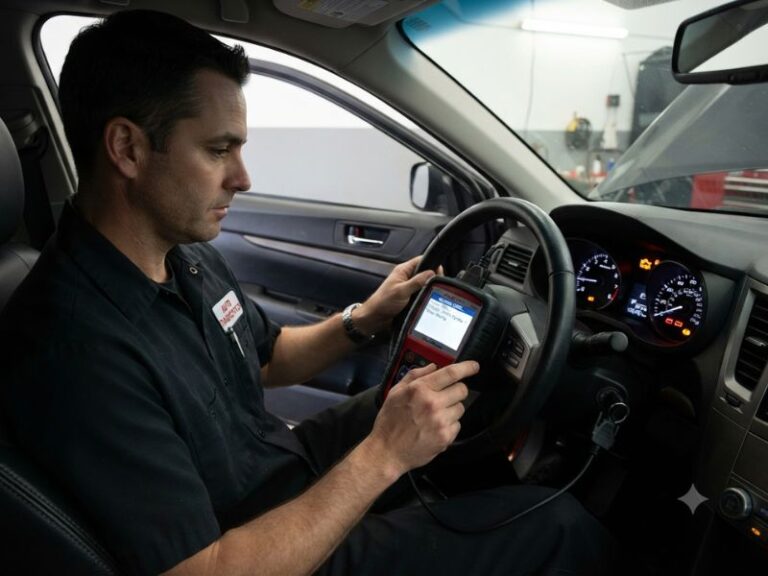
Cars and light trucks sold in the United States generally have a standardized OBD2 connector. It is usually located beneath the driver’s side dashboard, near the steering column, although some vehicles place it behind a small panel or lower trim piece.
The connector is a trapezoid-shaped, 16-pin socket. It should be accessible without removing major interior components. Consult the owner’s manual if it cannot be found easily, and do not force the scanner into the port because a bent terminal or damaged connector can create additional electrical problems.
A typical connection process is straightforward:
- Park the vehicle safely and switch the ignition off unless the scanner’s instructions state otherwise.
- Plug the scanner firmly into the OBD2 port.
- Turn the ignition to the on position without starting the engine, or start the engine if live data is needed.
- Allow the tool to communicate with the vehicle.
- Record the codes and related information before clearing anything.
Some scanners receive power through the diagnostic port. Wireless Bluetooth or Wi-Fi adapters use the port for power and send data to a phone or tablet through an app. The adapter alone may not interpret codes; its features depend on the software connected to it.
What Car Trouble Codes Mean
Diagnostic trouble codes usually contain one letter followed by four numbers. The first letter identifies the general system: P commonly refers to powertrain, B to body systems, C to chassis systems, and U to network or communication faults.
The first number indicates whether the code is generic or manufacturer-specific. The remaining characters narrow the reported area or condition. A code is therefore a starting point for diagnosis, not a complete repair instruction.
Consider a code associated with an oxygen sensor. It may result from a failed sensor, damaged wiring, an exhaust leak, an intake problem, a fuel mixture issue, or an electrical fault. Replacing the sensor immediately may not correct the underlying cause.
Scanners may separate codes into several categories:
- Stored codes: faults recorded during a previous or current drive cycle.
- Pending codes: conditions detected once or not yet confirmed enough to turn on the warning light.
- Permanent codes: emissions-related records that cannot be removed simply by pressing “clear.”
- History codes: faults recorded in some systems that may no longer be active.
Freeze-frame data can be especially useful. It may show engine speed, vehicle speed, coolant temperature, fuel-trim information, or load when the fault was stored. Comparing that snapshot with current symptoms can help determine whether the problem happens during cold starts, acceleration, idling, or another operating condition.
Code Reader Versus Full Diagnostic Scan Tool
A low-cost code reader is appropriate when the goal is to find out why the check engine light is illuminated. It can help a driver decide whether a problem appears minor enough for prompt scheduling or serious enough to stop driving.
A full-function scan tool is more useful when the issue involves systems beyond basic engine emissions. Depending on the vehicle and tool, it may access the transmission control module, anti-lock braking system, supplemental restraint system, body control module, or all-wheel-drive system.
More advanced tools may also provide:
- Bi-directional controls that command a component to operate for testing.
- Manufacturer-specific data and enhanced trouble codes.
- Graphing for sensor signals and fuel-trim changes.
- Battery, charging, and starting-system information.
- Electronic parking brake, steering-angle, or service-reset functions.
- Module coding or programming on supported vehicles.
Not every tool supports every car. Compatibility can depend on the model year, engine, software version, diagnostic protocol, and subscription. Before buying or borrowing one, confirm that it can access the system being investigated rather than assuming every device reads every code.
How to Use the Results Correctly
Start by writing down every code exactly as shown, including whether it is stored or pending. Note the mileage, warning lights, recent repairs, driving conditions, and symptoms. That context often matters as much as the code description.
Next, research the code’s likely diagnostic path using reliable repair information or a qualified technician. Check obvious causes such as loose connectors, damaged wiring, low fluid levels, vacuum leaks, or a loose fuel cap only when those possibilities fit the code and symptoms.
Do not clear the code before recording the data. Clearing can erase freeze-frame information and reset emissions readiness monitors. It may also make an intermittent fault harder to reproduce or temporarily hide a warning without fixing anything.
If the code is cleared, the vehicle’s computer must run its self-checks again. Some monitors complete quickly, while others require specific combinations of cold starts, steady-speed driving, idling, and deceleration. Until the monitors run, the vehicle may show a not ready status for emissions testing.
A code can return immediately if the fault is currently present. It can also return after several trips if the computer needs repeated evidence before confirming the problem. The timing does not necessarily identify the failed part; it indicates when the monitoring strategy recognized the condition.
Warning Lights and Driving Safety
A steady check engine light generally indicates that the computer has detected a fault that should be diagnosed soon. The car may still drive normally, but reduced fuel economy, increased emissions, poor performance, or eventual component damage can result if the problem is ignored.
A flashing check engine light requires greater caution. It commonly signals a severe misfire that can overheat and damage the catalytic converter. Reduce load, avoid hard acceleration, and stop driving if the vehicle runs roughly, loses power, smells strongly of fuel, or seems unsafe.
A scan tool cannot replace attention to other warning indicators. Oil-pressure, brake, coolant-temperature, charging-system, and airbag warnings may require immediate action even if an inexpensive code reader reports no powertrain code.
Use these practical precautions while scanning:
- Keep the vehicle stationary and secured during setup.
- Do not operate a phone or scanner while driving.
- Avoid probing unknown terminals or applying external voltage to the diagnostic port.
- Follow the tool’s instructions for ignition position and battery connection.
- Do not erase airbag or safety-system faults without understanding the repair procedure.
Why a Scanner May Not Find the Problem
A vehicle can have a real mechanical or electrical problem without storing a readable code. The computer may not monitor that condition, the fault may not have met its detection threshold, or the problem may be intermittent.
Examples include a worn suspension component, a weak fuel pump that still operates within a broad range, a vacuum leak that has not triggered a mixture code, or a mechanical noise unrelated to an electronic control system. A scanner reports computer-detected information; it does not inspect every physical component.
Communication problems can also interfere with scanning. A weak vehicle battery, blown diagnostic-port fuse, damaged wiring, incompatible tool, aftermarket electronics, or a failed control module may prevent communication. If the scanner will not power on, first verify the vehicle battery and port fuse rather than assuming there are no codes.
Generic tools may miss manufacturer-specific codes or systems. For example, a basic powertrain reader may not access a fault stored in the airbag or ABS module. A shop may need a vehicle-specific scan tool, wiring diagram, multimeter, oscilloscope, pressure gauge, smoke machine, or other equipment to continue the diagnosis.
When to Get Professional Help
Professional diagnosis is sensible when the vehicle has a flashing warning light, severe drivability symptoms, overheating, low oil pressure, brake problems, electrical burning smells, or an airbag-related fault. Safety-related systems should not be treated as ordinary check-engine repairs.
It is also wise to seek help when a code returns after a repair, several codes appear at once, the vehicle loses communication with a module, or the repair requires programming. Multiple codes can share one root cause, such as low voltage or a damaged network circuit.
A technician does more than read the code. The diagnostic process may include verifying the complaint, checking technical service information, inspecting connectors, testing circuit voltage and resistance, comparing live data, performing component tests, and confirming the repair through a road test.
Ask for the actual code numbers and the proposed diagnostic findings. A trustworthy explanation should distinguish between what the computer reported, what testing confirmed, and what remains a possibility.
FAQ: Devices That Read Car Codes
What is the device that reads car codes called?
It is usually called an OBD2 scanner, code reader, or diagnostic scan tool. “Code reader” often describes a basic device, while “scan tool” can refer to equipment with broader module access and advanced testing features.
Can a phone read car codes?
A phone can read codes when paired with a compatible OBD2 adapter and diagnostic app. The adapter plugs into the car, and the app interprets the information. Features vary widely, so confirm that the adapter supports the vehicle and the code types you need.
Will an OBD2 scanner tell me exactly what to replace?
No, a trouble code identifies a detected condition rather than guaranteeing a failed part. Wiring, connectors, leaks, software, mechanical problems, and related components can produce the same code. Testing is needed before replacing an expensive component.
Can a basic code reader read ABS or airbag codes?
Usually not, because many basic readers are limited to engine and emissions-related powertrain codes. ABS, airbag, body, and transmission systems may require an enhanced or manufacturer-capable scan tool.
Does clearing a code fix the car?
Clearing a code only removes or resets certain stored information; it does not repair the fault. The warning may return when the vehicle repeats the monitoring test, and clearing can erase useful freeze-frame data or reset emissions monitors.
Can I drive after reading a check engine code?
A steady light with normal operation often permits cautious driving to a repair location, but a flashing light or serious symptom calls for immediate caution. Stop or arrange assistance for severe shaking, major power loss, overheating, low oil pressure, unsafe braking, or other conditions that could cause damage or injury.
Why does my scanner say there are no codes when
The tool may be incompatible, connected incorrectly, unable to access the relevant module, or the fault may not be stored in the system being scanned. Check the scanner’s vehicle coverage, the diagnostic-port fuse, battery voltage, and whether the light is actually a non-engine warning.
Conclusion: Choose the Right Scanner and Verify the Cause
The device that reads car codes is an OBD2 code reader or diagnostic scan tool. It can reveal valuable information from the vehicle’s computer, but the major limitation is that a code is not the same as a confirmed failed part. Record the code and freeze-frame details, avoid clearing information prematurely, and treat flashing warnings or safety-system faults seriously.
For a recurring, complex, or safety-related problem, use the scan results as a starting point for professional diagnosis.