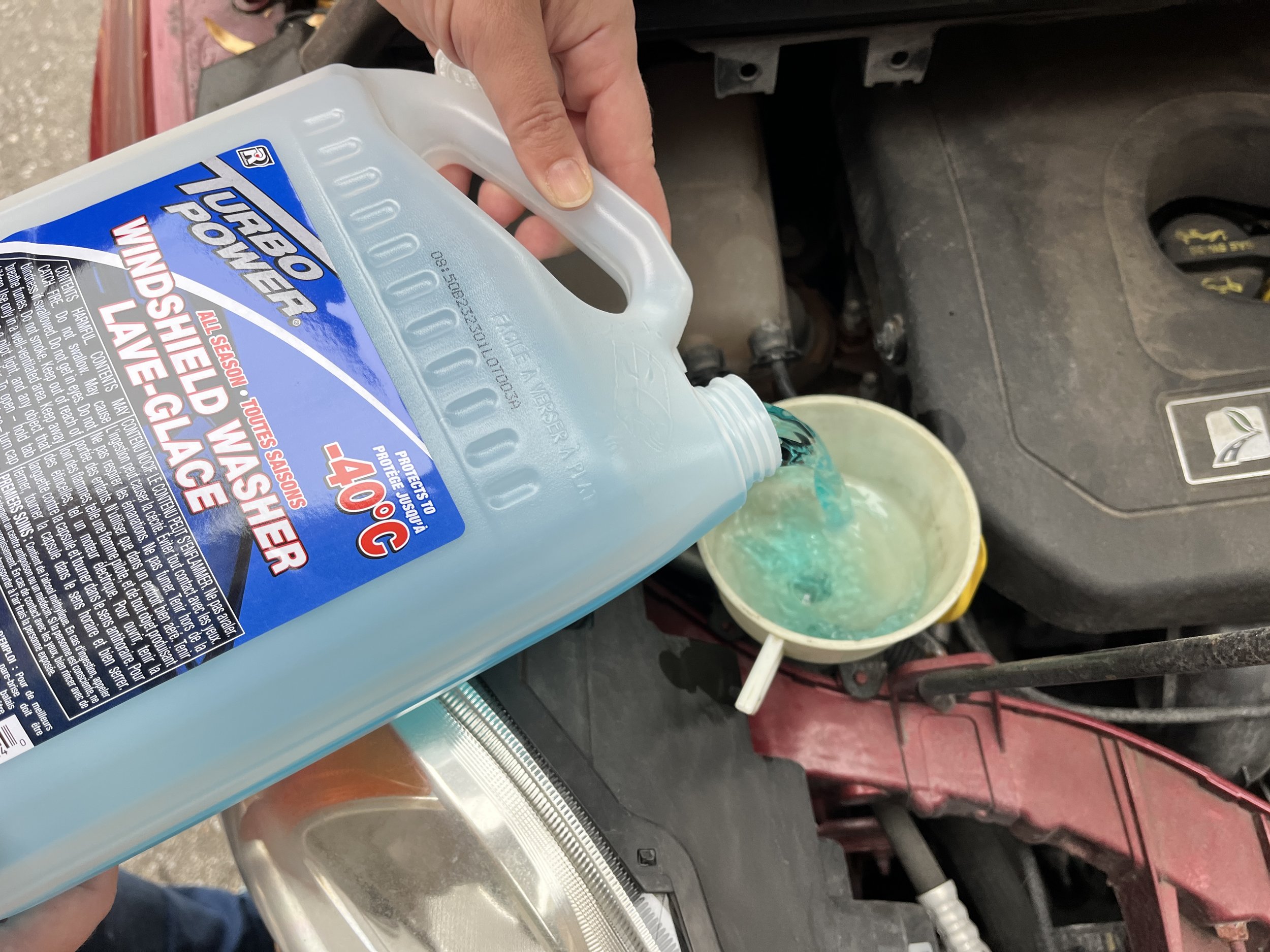
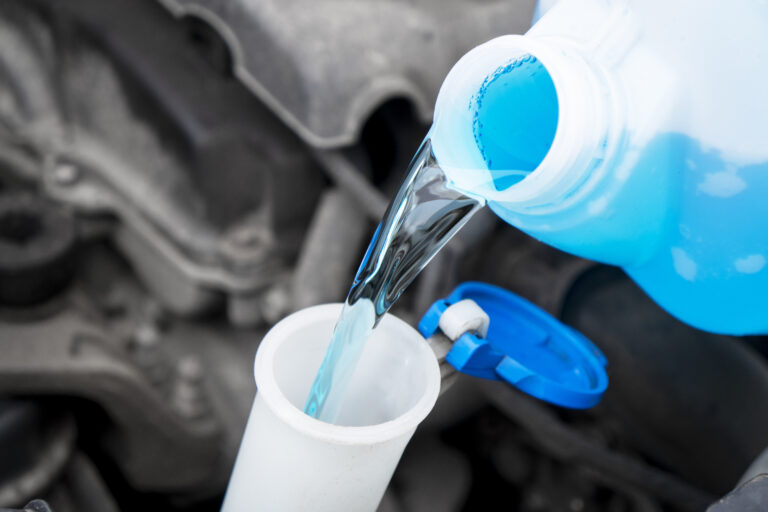
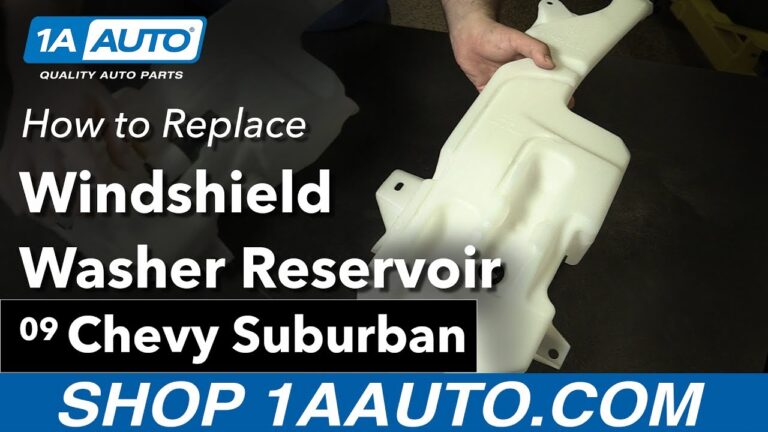
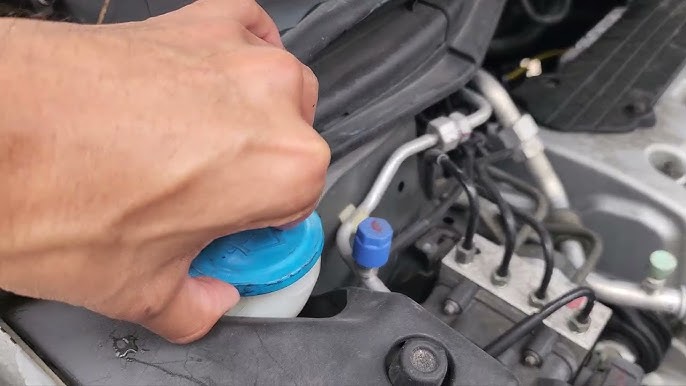
Yes, summer and winter windshield washer fluids can sometimes be mixed, but the result depends on their formulas and compatibility. Mixing them may reduce freeze protection, so use a winter-rated product that meets your local temperature needs before cold weather arrives.
Across the United States, windshield washer fluid needs change with the seasons. Drivers in Florida may deal with bugs, pollen, and road grime, while drivers in Minnesota, Michigan, or New York may face freezing rain, snow, and icy roads. A fluid that works well in summer may not protect a car’s washer system during a winter cold snap.
The main concern is not just whether two liquids can blend. It is whether the final mixture can still clean the glass, flow through the washer lines, and resist freezing at the temperatures your vehicle will face. A summer formula may have little or no freeze protection, while a winter formula is made to work in colder conditions.
If you have summer fluid left in the reservoir, do not assume that adding a little winter fluid will make the entire system safe for freezing weather. Check both product labels and your vehicle owner’s manual. When the formulas are unknown or their instructions do not allow mixing, replacing the remaining fluid with a compatible winter product is the more reliable choice.
Can You Mix Summer and Winter Windshield Washer Fluid?
You can sometimes mix summer and winter windshield washer fluids, but it is not a universal recommendation. Some formulas may blend without an obvious problem, while others may not be suitable for mixing. The product instructions and your vehicle manufacturer’s guidance should determine what you use.
Summer washer fluid is generally made to remove dirt, dust, pollen, insect residue, and road film. Some summer products contain cleaning agents but provide limited protection against freezing. Winter washer fluid usually includes ingredients that lower the liquid’s freezing point and may help loosen frost or light ice.
When you combine these formulas, the summer fluid may dilute the ingredients that give the winter product its cold-weather protection. The mixture may still look normal and spray from the nozzles in mild weather, yet freeze when temperatures fall further.
There is also a compatibility issue. In its owner guidance for certain vehicles, Mercedes-Benz warns that mixing its specified summer and winter washer products with other washer fluids can block spray nozzles. That warning applies to the products and vehicles covered by the guidance, not automatically to every vehicle on the road. It shows why the label and owner’s manual matter.
Source: mycarmakesnoise.com
Mixing is not the same as compatibility.
Two fluids may blend but still produce a mixture with poor cleaning, reduced freeze protection, or unwanted deposits.
The winter rating may no longer apply.
A winter product rated for a specific low temperature does not automatically protect the same way after it is diluted with summer fluid.
The vehicle manual comes first.
Follow any manufacturer limits on washer fluid type, material compatibility, and mixing.
What happens when the two fluids combine?
The outcome depends on the ingredients and the amount of each fluid. A small amount of summer fluid in a large volume of winter fluid may have a different effect from a reservoir that is nearly full of summer fluid with only a small winter top-off.
However, there is no single dilution rule that works for all brands. Products can differ in alcohol content, cleaning agents, additives, and instructions. Without product-specific data, you cannot know the exact freezing point or guarantee that the mixture will perform as intended.
Possible outcome
The fluids blend and continue to spray normally, but the final freeze protection may be lower than the winter label suggests.
Another possible outcome
An incompatible mixture may cause deposits, poor spray patterns, or blocked nozzles.
How Summer and Winter Washer Fluids Differ
The key difference between summer and winter windshield washer fluid is the performance each formula is designed to provide. Summer formulas focus on removing common road grime and organic residue, while winter formulas place greater emphasis on staying liquid and helping clear winter buildup.
Summer fluid may work well during warm weather, when the reservoir, hoses, and spray nozzles are unlikely to freeze. It can help remove bugs, dust, pollen, and oily film that collects on a windshield during daily driving. Some summer products also include water-repellent ingredients or other specialized cleaners.
Winter washer fluid is formulated to provide freeze protection. Its label may list a temperature rating, such as protection to a stated number of degrees below zero Fahrenheit. That rating applies to the product when used as directed and should not be assumed to remain valid after mixing.
Not every product fits neatly into a summer or winter category. All-season fluids are also available, and some products are concentrates that require dilution. Read the instructions carefully because a ready-to-use fluid and a concentrate have different handling and mixing requirements.
Source: modernmississauga.com
Summer washer fluid
Usually focuses on removing insects, pollen, dust, and road film. Its protection against freezing varies by product and should never be assumed.
Winter washer fluid
Uses a formula designed for colder conditions. The listed temperature rating is a key factor when choosing a product for winter driving.
All-season washer fluid
May offer cleaning and freeze protection across a range of conditions. Check the stated temperature limit rather than relying on the all-season label alone.
Concentrated washer fluid
Requires the dilution method specified by its manufacturer. Adding the wrong amount of water or another fluid may reduce performance.
Why freeze protection matters
When washer fluid freezes, it may stop flowing through the reservoir, pump, hoses, and nozzles. Ice can also interfere with the ability of the system to deliver fluid to the windshield when you need it most.
A second concern is what happens on the glass. Fluid that freezes when sprayed onto a cold windshield can leave an icy film instead of clearing dirt. That can reduce visibility at a time when snow, spray from other vehicles, and short winter daylight already make driving harder.
A suitable winter formula helps reduce these risks, but it does not replace scraping ice, using the defroster, or clearing snow from the vehicle before driving.
Protect the whole system.
The fluid must remain suitable for the reservoir, pump, hoses, and nozzles, not just the windshield surface.
Match the local climate.
Choose a product whose stated protection fits expected temperatures, including colder conditions along your route.
What Happens to Freeze Protection When You Mix the Fluids?
Mixing summer and winter washer fluid can reduce the final mixture’s resistance to freezing. The size of that change depends on the formulas, their starting concentrations, and the proportions used. You should not assume that the mixture will retain the temperature rating printed on the winter bottle.
For example, imagine a reservoir that is half full of summer fluid. You add winter fluid labeled for use down to minus 20 degrees Fahrenheit. The resulting mixture is not automatically protected to minus 20 degrees Fahrenheit because the summer fluid may have diluted the winter formula.
The exact protection cannot be established from those two facts alone. The temperature rating of each product does not provide enough information to calculate the final freezing point. A simple average of the two label temperatures would not be a reliable method.
The practical rule is straightforward: if freezing weather is expected, do not depend on an unknown summer-and-winter mixture. Use a compatible winter product according to its label, and have the old mixture removed or replaced if you cannot establish that it offers adequate protection.
Source: itsoverflowing.com
A little winter fluid may not be enough.
Topping off a mostly full summer reservoir may leave too much low-protection fluid in the system.
Color is not a temperature test.
Blue, green, pink, or other colors do not reliably identify a fluid’s freezing point or compatibility.
Do not guess at the final rating.
Use documented product instructions or choose a suitable winter fluid instead of relying on an estimated temperature.
How cold should your washer fluid withstand?
Choose the temperature rating based on the lowest conditions your car is likely to face, not just the usual daytime temperature where you live. An overnight freeze, a mountain trip, or a sudden cold front may expose the vehicle to colder conditions than expected.
Drivers in warmer parts of the southern United States may need a different level of freeze protection from drivers in northern states. Even within one state, mountain roads and inland areas can have different winter conditions.
Read the complete label and follow any instructions about dilution. If the label’s temperature rating is unclear, contact the product manufacturer rather than estimating the protection from color, smell, or thickness.
Check the lowest expected temperature.
Consider overnight lows and travel destinations, not only the current temperature.
Leave a sensible margin.
Avoid choosing a rating that barely matches the forecast when colder conditions are possible.
How to Switch From Summer to Winter Washer Fluid
The most reliable way to switch to winter washer fluid is to check the existing product, confirm compatibility, and follow the new product’s directions. If you know that summer fluid remains in the reservoir, avoid treating a winter top-off as a guaranteed seasonal change.
You do not need to panic if the weather is still mild and you have not yet changed the fluid. Plan the change before temperatures fall below the existing fluid’s protection range. If freezing weather is already near, deal with an unknown mixture promptly instead of waiting for the first frozen spray nozzle.
Source: hitchesguide.com
Step 1: Check the current fluid.
Look for the original container, service records, or product information. Do not identify the formula by color alone.
Step 2: Read the owner’s manual.
Check whether your vehicle requires a particular type of fluid or warns against mixing products.
Step 3: Select a suitable winter formula.
Choose a product with a stated temperature rating that fits the expected conditions and is compatible with your vehicle.
Step 4: Replace the old mixture if needed.
If the reservoir contains summer fluid or an unknown blend, arrange for suitable removal or replacement when necessary. Do not dismantle the system unless you have the correct skills and instructions.
Step 5: Refill as directed.
Follow the label for ready-to-use fluid or concentrate. Do not add water to a ready-to-use product unless the manufacturer specifically permits it.
Step 6: Check system operation.
When conditions permit, test the washer system briefly with a clear windshield. Confirm that the spray reaches the glass and that the wipers clear it properly.
How to replace an uncertain mixture safely
If you have a large amount of summer fluid left and winter temperatures are approaching, use the vehicle’s normal washer function only while conditions are safe and the fluid can flow properly. Do not keep operating the pump when the system appears frozen or fails to spray.
If the reservoir needs to be emptied, consult the owner’s manual or ask a qualified service professional to remove the old fluid. Collect and dispose of it according to the product label and local rules. Do not drain automotive chemicals onto the ground, into a storm drain, or into a household sink.
After refilling, briefly operate the washers in suitable conditions so the new fluid can reach the lines and nozzles. If the vehicle has a rear washer, check that system too. A full reservoir does not guarantee that the fluid throughout the system has been replaced.
Do not force a frozen system.
Stop if the pump makes unusual noises or fluid does not spray. Allow safe thawing or seek service instead of repeatedly running the pump.
Keep chemicals in their original containers.
Store unused washer fluid with its label and safety information intact, away from children and pets.
Never use engine coolant as a substitute.
Radiator antifreeze is not windshield washer fluid and can create visibility and vehicle-system hazards.
Can You Mix Different Brands or Types of Washer Fluid?
Different brands of washer fluid should not be assumed to be interchangeable in every situation. Two products may serve a similar purpose yet use different cleaning agents, solvents, additives, or temperature ratings. Their labels may also give different directions for dilution and use.
Mixing two winter fluids with similar temperature ratings may seem less risky than mixing summer and winter products, but the labels still matter. Similar ratings do not prove that the formulas are compatible. The same caution applies when combining all-season fluid with a specialized bug-removal or de-icing formula.
If both manufacturers permit mixing and your vehicle manual does not prohibit it, follow their instructions. If either product warns against mixing, or the instructions are missing, use a compatible single product rather than experimenting in the reservoir.
There is no need to choose the same brand forever if your vehicle does not require a specific product. The more useful checks are the stated purpose, temperature rating, compatibility guidance, and whether the product is ready to use or concentrated.
Source: garagesee.com
Same brand, different formula
A summer product and a winter product from the same brand may still have different instructions or compatibility limits.
Different brands, similar ratings
Matching temperature labels alone do not establish that two formulas should be combined.
Specialty washer fluids
Bug-removal, water-repellent, and de-icing products may have specific instructions that should be checked before mixing.
Does washer fluid color matter?
Washer fluid color is not a reliable guide to its ingredients, freeze protection, or ability to mix with another product. Manufacturers may use different dyes for products with similar purposes, and products of the same color can have different formulas.
Do not use color changes as proof that two fluids have reacted badly or mixed safely. A change in appearance can be a reason to check the product information, but the label and manufacturer guidance provide more useful evidence.
If you cannot identify a fluid already in the reservoir, treat its performance as uncertain. Before winter travel, replace it with a known, compatible product if its freeze protection cannot be verified.
Read the label.
Look for the temperature rating, intended use, dilution instructions, and any warning against mixing.
Do not judge by appearance.
A clear or brightly colored liquid may still lack the freeze protection your climate requires.
What If You Already Mixed Summer and Winter Washer Fluid?
If you have already mixed the two types of washer fluid, there is no reason to assume that the vehicle has been damaged. The next step is to determine whether the mixture is suitable for the temperatures you expect and whether the products are compatible.
If the weather is warm and the washer system works normally, check the product labels and your owner’s manual before deciding what to do next. A mixture that works in mild conditions may still be unsuitable when freezing temperatures arrive.
If temperatures are below freezing or a hard freeze is expected, do not rely on an unknown mixture. If the system sprays poorly, the fluid looks unusual, or the pump runs without producing a spray, stop using it until you can identify the problem. A qualified service professional can help assess the system if necessary.
Do not add more concentrated winter fluid at random to correct the mixture. Without documented instructions for the specific products, you cannot know how much to add or what temperature protection the final blend will provide.
Source: garagesee.com
If the system works normally
Check the formulas and temperature rating, then replace the mixture before freezing weather if its suitability cannot be established.
If the fluid does not spray
Do not keep running the pump. The cause may be a frozen line, blocked nozzle, empty reservoir, or another fault.
If the fluid freezes
Do not use force or repeated pump operation to clear it. Arrange safe thawing and inspect the system for damage if it still fails to work.
If a warning light appears
Check the owner’s manual and fluid level. Seek service if the warning remains or the system does not operate correctly.
Signs that the washer system needs attention
A weak spray, uneven coverage, or no spray can signal a problem with the fluid or washer system. These symptoms do not prove that mixing caused the issue, so check the simplest and safest possibilities first.
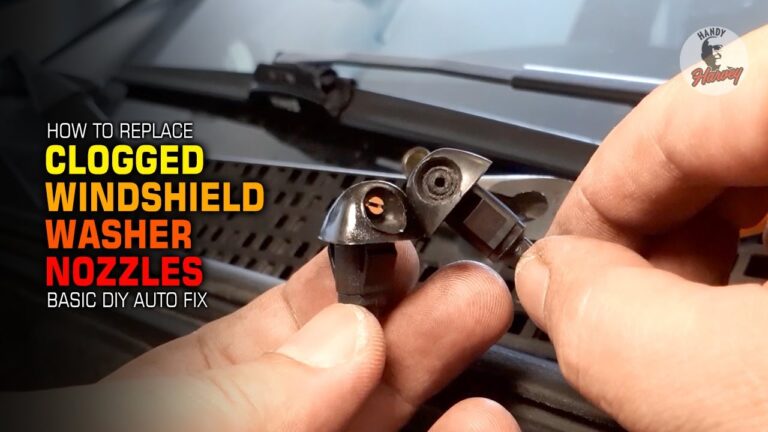
Look at the fluid level and confirm that the nozzles are not visibly obstructed. If the temperature is below freezing, consider whether the mixture may have frozen. Avoid poking the nozzles with sharp objects or using excessive force, which could damage the system.
If the system remains blocked after safe thawing, or you suspect a damaged reservoir, hose, or pump, have it checked. Do not drive in conditions where you may need the washers if you cannot maintain a clear windshield.
Weak or uneven spray
Possible causes include blocked nozzles, a low fluid level, or an unsuitable or frozen mixture.
No spray during freezing weather
The fluid or lines may be frozen, but an electrical fault or failed pump can cause a similar symptom.
Poor cleaning or streaking
The fluid may not suit the residue on the glass, or the wiper blades may be dirty or worn.
Common Mistakes to Avoid When Changing Washer Fluid
The biggest mistake is assuming that any washer fluid will work in every season. A product that cleans well on a warm summer day may not provide the protection needed during a winter cold snap. Check the actual product rating before you rely on it.
Another mistake is assuming that adding a small amount of winter fluid transforms the entire reservoir. If a large amount of summer fluid remains, the final mixture may have much less freeze protection than expected. The only reliable basis for a temperature rating is the product information and documented mixing guidance.
Drivers should also avoid adding substances that are not approved for the washer system. Engine coolant, dish soap, household glass cleaner, and improvised chemical mixtures can create problems with visibility, materials, or system operation. Use automotive washer fluid that is suitable for your vehicle.
Finally, do not wait until the windshield is already covered with ice or road grime to discover that the washers do not work. A seasonal check gives you time to select the right fluid and fix a blocked nozzle or other fault before you need the system on a busy road.
Source: YouTube
Mistake: relying on color
Different products can share a color while having different temperature ratings and formulas.
Mistake: diluting ready-to-use fluid
Adding water or summer fluid without permission can reduce freeze protection.
Mistake: using engine antifreeze
Engine coolant is not designed to clean the windshield and can impair visibility when sprayed onto the glass.
Mistake: ignoring the owner’s manual
Vehicle-specific requirements may limit which washer products you can use or mix.
Mistake: testing a frozen system repeatedly
Stop if the washers fail to spray in freezing conditions. Repeated operation may strain the pump without fixing the blockage.
Washer fluid safety and storage
Some windshield washer fluids contain methanol or other hazardous ingredients. Swallowing methanol can cause severe poisoning, including blindness and death, so keep the product in its original labeled container and away from children and pets.
Follow the label’s handling and storage directions. Avoid transferring washer fluid to a drinking bottle, cup, or food container. Never mix it with household chemicals or products that the manufacturer does not approve.
If washer fluid is swallowed or a serious exposure occurs, seek immediate guidance from a poison center or emergency medical service. In the United States, Poison Control can be reached at 1-800-222-1222. Follow the product label for other exposure instructions.
Store it securely.
Keep the original cap closed and the container out of the reach of children and pets.
Prevent spills.
Follow the product label and avoid spilling concentrated fluid near hot engine parts.
Follow local waste rules and product instructions rather than pouring unused fluid onto soil or into a drain.
Frequently Asked Questions
Q
Can I add winter windshield washer fluid to summer fluid that is already in the tank?
Sometimes, but only when the product instructions and vehicle guidance allow it. The winter fluid may blend with the summer fluid, yet the final mixture may have less freeze protection than the winter product’s label rating. If freezing weather is approaching and the mixture’s protection is unknown, replace it with a compatible winter product rather than guessing.
Q
Can mixing summer and winter washer fluid damage my car?
Mixing does not automatically damage a vehicle. However, incompatible products may affect spray nozzles or system performance, and a mixture with insufficient freeze protection may freeze in the reservoir, hoses, or nozzles. Check the owner’s manual and the product labels. If the washers stop working or the system appears frozen, do not keep running the pump.
Q
Can I mix two winter windshield washer fluids with different temperature ratings?
Do not assume that two winter fluids are compatible just because both are made for cold weather. Different formulas may contain different ingredients and concentrations. Check both labels and follow the manufacturers’ instructions. The final mixture’s freezing point cannot be reliably calculated by averaging the temperature ratings printed on the bottles.
Q
Does summer windshield washer fluid freeze in winter?
It depends on the specific product and its stated temperature rating. Some summer fluids provide limited freeze protection, while others may be unsuitable for freezing conditions. Read the label rather than assuming that every summer formula freezes at the same temperature. Before winter weather arrives, use a product rated for the lowest conditions your vehicle is likely to encounter.
Q
Can I use water to dilute winter windshield washer fluid?
Only dilute a product if its label specifically instructs you to do so, and use the stated ratio. Many ready-to-use winter fluids are designed to be poured directly into the reservoir. Adding water can reduce freeze protection and make the mixture unsuitable for cold weather. Never assume that a dilution intended for warm conditions will work safely in winter.
Q
What should I do if my windshield washer fluid freezes?
Do not keep operating the pump or attempt to force the fluid through frozen lines. Park safely and allow the vehicle and washer system to thaw under suitable conditions. If the system still does not spray afterward, have it inspected for blocked nozzles, damaged hoses, or pump problems. Replace the unsuitable mixture with a compatible winter product before driving in conditions that require working windshield washers.
Q
Is all-season windshield washer fluid a good alternative?
All-season fluid can be useful if its stated temperature rating matches your climate and the product is compatible with your vehicle. The name alone does not guarantee protection against every winter temperature. Check the label, follow the instructions, and choose a stronger winter-rated formula if the expected cold exceeds the product’s stated limit.
✦ Wrapping Up
Conclusion
You can sometimes mix summer and winter windshield washer fluid, but doing so does not guarantee a safe or effective result. The most important concern is that summer fluid may dilute the ingredients that protect the winter mixture from freezing. Product compatibility also matters, and some vehicle manufacturers specifically warn against mixing certain washer fluid formulas.
Before cold weather arrives, check the fluid already in your reservoir, read your owner’s manual, and choose a winter product with a suitable temperature rating. If you have already mixed the two types, do not assume the vehicle is damaged, but do not rely on an unknown mixture during freezing conditions. Replace it when needed and have the system inspected if it fails to spray properly.
💡 Key Takeaway
Check your current washer fluid and its temperature rating today. If you cannot verify that the mixture will withstand the coldest temperatures on your route, use a compatible winter-rated product according to its instructions before the next freeze.