No. Do not use engine antifreeze as windshield washer fluid. The two products serve different purposes, and engine coolant is not made to clean glass or work safely in a windshield washer system.
Across the United States, drivers face very different winter conditions. A car in Minnesota may need strong freeze protection, while a vehicle in Florida may mainly need help removing bugs, dust, and road grime. In either case, the windshield washer system needs a fluid made for cleaning glass.
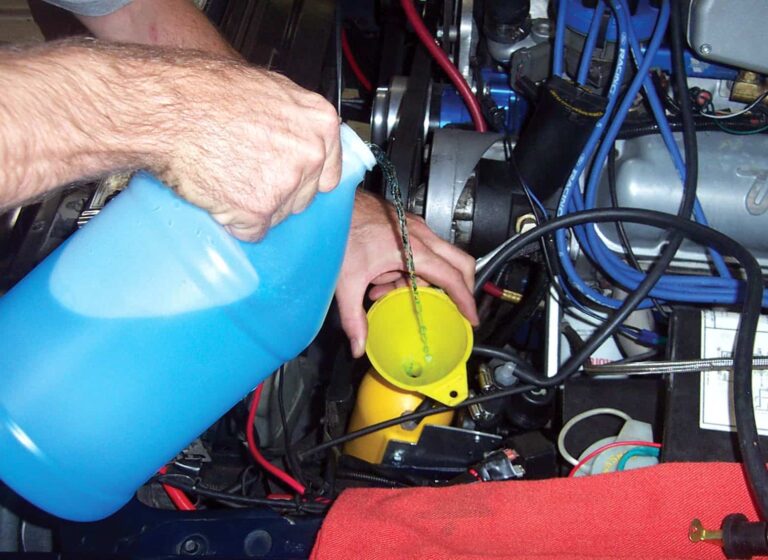
Engine antifreeze, also called engine coolant, protects the engine and cooling system from freezing, overheating, and corrosion. Windshield washer fluid removes dirt and helps keep the driver’s view clear. Putting engine coolant in the washer reservoir can leave a film on the glass, reduce visibility, and expose nearby people, pets, and the environment to harmful chemicals.
The safest choice is a windshield washer fluid rated for the lowest temperatures you expect in your area. If you have already added antifreeze to the washer reservoir, stop using the system until the wrong fluid can be removed and the system can be checked. The correct response depends on the product used and how much entered the reservoir.
Why You Should Not Use Antifreeze as Windshield Washer Fluid
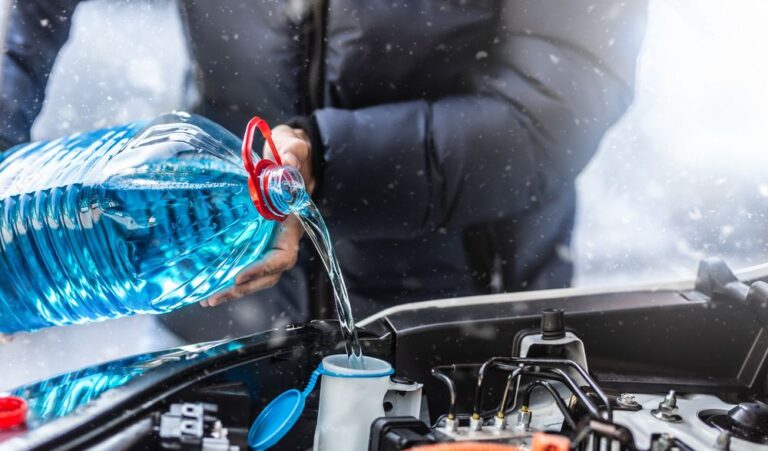
You should not use engine antifreeze as windshield washer fluid because the products have different formulas and jobs. Engine coolant is made to circulate through the engine and cooling system. Washer fluid is made to spray onto glass, loosen dirt, and help the wipers clear the windshield.
Engine coolant may contain ethylene glycol or propylene glycol, corrosion inhibitors, dyes, and other additives. These ingredients are selected for cooling-system needs, not for cleaning a windshield. The formula does not have the same cleaning purpose as a proper washer fluid.
A windshield must stay clear for safe driving. Coolant residue can smear across the glass, and the wipers may spread the residue rather than remove it. In rain, at night, or when facing bright headlights, even a thin film can make it harder to see the road.
There is also a safety concern beyond the driver. Some engine coolants are toxic if swallowed, and spilled coolant can harm animals and contaminate soil or water. Keeping engine coolant out of the washer system reduces the chance of unwanted exposure and makes cleanup easier.
Source: c8.alamy.com
Poor glass cleaning
Engine coolant is not designed to remove road film, bug residue, dust, or other common windshield dirt.
Possible windshield haze
Coolant residue can smear when the wipers move, reducing clarity and creating glare.
Chemical exposure
Coolant can contain harmful substances. Spraying it onto glass can spread droplets and residue outside the washer system.
Potential system contamination
Coolant may leave residue in the reservoir, hoses, pump, and nozzles. The degree of risk depends on the product and the vehicle.
Can Antifreeze Damage the Windshield Washer System?
It can cause problems, but the exact risk depends on the coolant formula, the amount added, and the washer system materials. Engine coolant contains additives intended for cooling-system metals and seals. Those additives have not necessarily been tested for every part of a washer system.
Possible concerns include residue, poor spray performance, blocked nozzles, and contamination of the washer pump or hoses. It would be inaccurate to claim that every accidental addition will destroy the system. However, there is no good reason to expose the system to a fluid that was not designed for it.
If coolant has entered the reservoir, do not run the washer pump to test it. Have the reservoir emptied and the system cleaned with an appropriate method. A mechanic can check for damage if the pump has already been used or if the system does not work properly afterward.
Do not keep testing the spray
Repeated use can spread coolant across the windshield and send more of the wrong fluid through the system.
Check the product label
Identify the exact coolant type so a repair professional can choose an appropriate cleanup method.
Antifreeze vs. Windshield Washer Fluid: What Is the Difference?
Although both products may help protect against freezing, they are not interchangeable. Their ingredients, intended uses, and performance requirements differ. Knowing the difference helps prevent a simple maintenance mistake from becoming a visibility or repair problem.
Engine antifreeze is usually mixed with water according to the vehicle manufacturer’s specifications and used in the engine cooling system. Many modern vehicles use a particular coolant type that must meet the manufacturer’s requirements. The correct product depends on the vehicle, not simply on the coolant’s color.
Windshield washer fluid is made for the washer reservoir, pump, hoses, spray nozzles, wiper blades, and automotive glass. Depending on the formula, it may contain water, cleaning agents, and alcohols or other ingredients that help lower its freezing point. The label states the product’s intended use and, for winter products, its claimed temperature protection.
Source: c8.alamy.com
Primary purpose
Engine antifreeze protects the cooling system. Washer fluid cleans the windshield and supports clear visibility.
Where it belongs
Engine coolant belongs in the specified engine cooling system. Washer fluid belongs in the windshield washer reservoir.
Cleaning performance
Washer fluid is designed to remove common windshield dirt. Engine coolant is not a glass-cleaning product.
Freeze protection
Both product categories may offer freeze protection, but their ratings and intended operating conditions are not equivalent.
Chemical hazards
Both products require careful handling, but engine coolant may contain ingredients that pose serious risks if swallowed.
Does the Color of Antifreeze Matter?
Color does not make antifreeze safe for use in a windshield washer reservoir. Engine coolants may be green, orange, pink, blue, yellow, or another color, depending on the product. Color is not a reliable way to determine chemical compatibility or intended use.
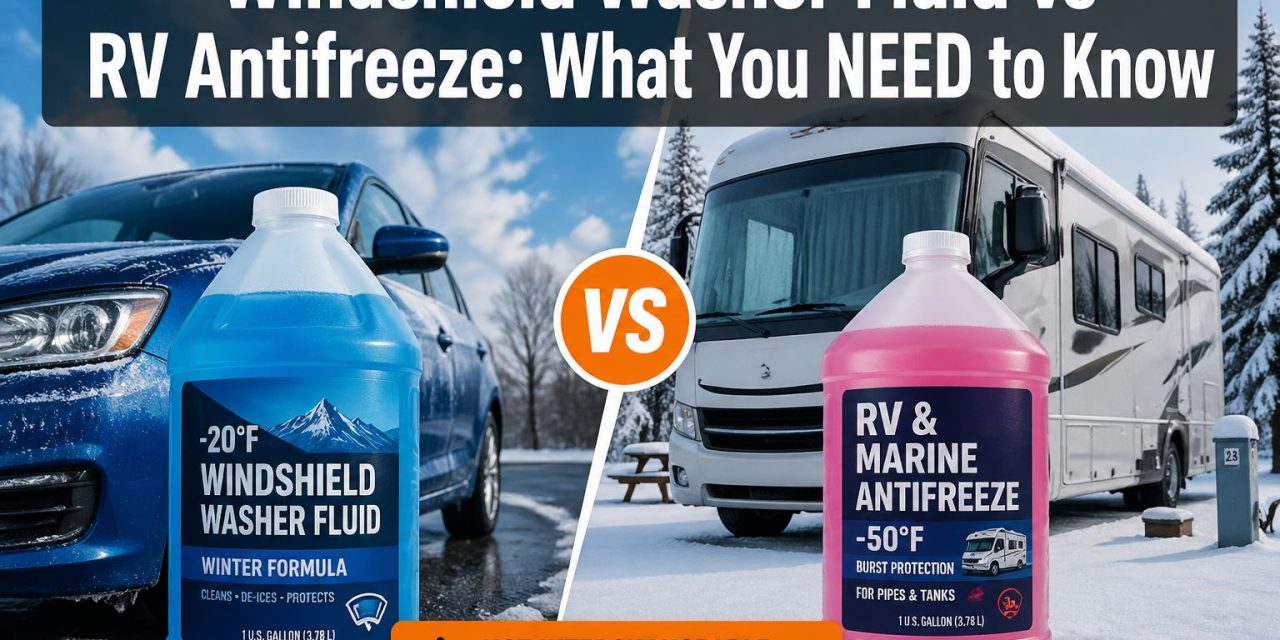
Washer fluids also come in different colors. A blue liquid is not automatically washer fluid, and a pink liquid is not automatically engine coolant or RV antifreeze. Read the full label and confirm the product’s intended use before adding it to any vehicle reservoir.
Never mix automotive fluids based on color alone. If the container is unmarked or the contents are uncertain, do not pour the liquid into the vehicle.
Read the label
Look for the words windshield washer fluid, engine coolant, or RV antifreeze and follow the stated use.
Check vehicle requirements
Use the owner’s manual to identify the correct coolant for the engine and the correct reservoir for washer fluid.
What Happens If You Put Antifreeze in the Washer Reservoir?
The result depends on how much coolant entered the reservoir and whether the washer pump was used. A small accidental amount does not automatically mean the entire washer system must be replaced. However, the mixture should not be treated as safe to spray onto the windshield.
If the reservoir contains a mixture of coolant and washer fluid, its cleaning ability and behavior may be unpredictable. The mixture may leave streaks, and it may not offer the freeze protection claimed by either product alone. Mixing two liquids does not guarantee that their useful properties remain unchanged.
If you have not activated the washer system, keep it switched off and arrange to have the contaminated fluid removed. If you have already sprayed the mixture, avoid driving when the windshield is hazy or visibility is poor. Clean the glass with an appropriate automotive glass cleaner and have the washer system serviced before using it again.
Do not try to fix the issue by adding more washer fluid and hoping the coolant becomes harmless. Dilution does not turn engine coolant into a product designed for glass. The reliable solution is to remove the contaminated fluid and restore the system with the correct washer fluid.
Source: img.freepik.com
If the engine is off and the pump has not been used
Do not activate the washers. Identify the coolant product and arrange safe removal of the contaminated contents.
If you have already sprayed it
Stop using the washers. If the windshield is smeared or hazy, do not continue driving until you can see clearly.
If the pump makes an unusual noise or the spray stops
Do not keep running the pump. Have the reservoir, hoses, nozzles, and pump checked for contamination or a blockage.
If the liquid has spilled
Keep children and pets away, avoid contact, and follow the product label’s spill instructions. Prevent the liquid from entering storm drains.
How to Fix an Accidental Antifreeze Addition
The safest repair is to remove the incorrect fluid and restore the washer system to its intended condition. The right procedure depends on the vehicle design, the amount of coolant, and whether the pump has run. A repair shop can handle the job when access to the reservoir is difficult or the product’s hazards are unclear.
Do not siphon coolant by mouth or pour it onto the ground. Engine coolant can be harmful, and improper disposal may contaminate the environment. Keep the product container available so the person handling the cleanup can identify its ingredients and follow suitable precautions.
Step 1: Stop using the washer system
Leave the washer controls alone so contaminated liquid is not sprayed onto the windshield or pushed farther through the system.
Step 2: Identify the product
Read the container and note whether it is engine coolant, concentrated antifreeze, premixed coolant, or RV antifreeze.
Step 3: Arrange safe removal
Have the reservoir drained using a suitable method. If the fluid has circulated through the pump and lines, ask for the full washer system to be assessed and cleaned.
Step 4: Restore the system
Refill with the correct windshield washer fluid and confirm that the system sprays normally without leaving a film.
Step 5: Check visibility
Make sure the windshield is clear, the wipers work properly, and the nozzles deliver a normal spray before relying on the system during a trip.
Can You Use RV Antifreeze as Windshield Washer Fluid?
You should not use ordinary RV antifreeze as windshield washer fluid unless its label specifically approves that use. RV antifreeze is generally intended to help protect plumbing systems in recreational vehicles from freezing during storage or cold weather. Its purpose is different from that of automotive washer fluid.
Many RV antifreeze products use propylene glycol or other formulations intended for plumbing protection. Some products may be marketed as less toxic than certain engine coolants, but that does not make them suitable for spraying onto a car windshield. Their additives, cleaning performance, spray behavior, and compatibility with vehicle washer components may not have been established for this purpose.
The term antifreeze covers several different product types. Engine coolant, RV plumbing antifreeze, and winter windshield washer fluid should not be treated as equivalent. The only reliable way to determine whether a product is suitable for a particular use is to check the label and any relevant manufacturer instructions.
If you need protection in freezing weather, choose a winter windshield washer fluid with a stated freeze rating that fits your local conditions. A product made specifically for automotive glass is the better choice because it is intended for the washer system and the task of cleaning the windshield.
Source: vehiclechef.com
Engine coolant
Designed for the engine cooling system, not the windshield washer reservoir.
RV plumbing antifreeze
Designed for certain plumbing protection needs in recreational vehicles, subject to its label and intended use.
Winter washer fluid
Designed to clean automotive glass while providing the freeze protection stated on its label.
Is Propylene Glycol Antifreeze Safe for Windshields?
Propylene glycol is used in a range of products, including some coolants and RV antifreeze formulas. Its presence alone does not prove that a product is suitable for a windshield washer system. The complete formula and the manufacturer’s stated use matter.
A product may have a different hazard profile from ethylene glycol coolant and still be unsuitable for glass cleaning. It may leave residue, fail to remove road grime, or lack tested compatibility with washer components. Do not infer suitability from a single ingredient or a claim that a formula is less toxic.
Use only a product whose label identifies it as suitable for windshield washing. If the label is unclear, contact the manufacturer rather than testing the liquid on the vehicle.
Ingredient names are not enough
Check the entire formulation and its approved use, not just whether it contains propylene glycol.
Do not assume all RV products are alike
Formulas differ by brand and product type, so one label cannot establish suitability for another product.
What Windshield Washer Fluid Should You Use in Winter?
Use winter windshield washer fluid rated for temperatures at or below the coldest conditions you reasonably expect. In the United States, winter needs vary by region, elevation, and weather. A product suitable for a mild Southern winter may not offer enough protection during a hard freeze in the Upper Midwest or Northeast.
Check the temperature rating on the container before buying. The stated rating is a product claim under specified conditions, not a promise that every mixture or vehicle will remain trouble-free at that temperature. If you add water or mix different formulas, the final freeze protection may change.
Choose a formula designed for automotive glass and follow the label’s instructions. Some products are ready to use, while others are concentrates that require dilution. Using a concentrate without the required water can change how it performs, while adding water to a ready-to-use winter formula can reduce its freeze protection.
A summer washer fluid may be suitable for warm conditions but can freeze when temperatures fall below its intended range. Frozen fluid can stop the washers from working and may cause problems in the reservoir or lines. Refill with the correct winter formula before severe cold arrives, rather than waiting until the windshield becomes dirty on a freezing day.
Source: c8.alamy.com
Warm climates
A standard washer fluid may be adequate when freezing conditions are not expected. Check the label and local weather.
Cold winter regions
Choose a winter formula with a suitable temperature rating for expected lows.
Areas with changing temperatures
Use a formula appropriate for the coldest conditions likely during the time it will remain in the reservoir.
Vehicles used in mountain areas
Account for colder conditions at higher elevations and during overnight parking.
Should You Mix Water With Winter Washer Fluid?
Do not dilute ready-to-use winter washer fluid unless the label specifically permits it. Adding water can raise the mixture’s freezing point and reduce its ability to protect the washer system in cold weather. The amount of protection lost depends on the product’s original formula and the dilution ratio.
Concentrated washer fluid is different. It is intended to be mixed according to its instructions, and the recommended ratio may vary with the desired freeze protection. Use the specified water type and ratio rather than guessing.
If you have accidentally diluted a winter formula, check the product instructions and expected weather. If a hard freeze is likely and the mixture’s protection is uncertain, have the reservoir corrected with a suitable winter fluid before relying on the washers.
Ready-to-use fluid
Use it as supplied unless the manufacturer gives different directions.
Concentrated fluid
Follow the label’s mixing ratio for the temperature protection you need.
Can You Use Water Instead of Windshield Washer Fluid?
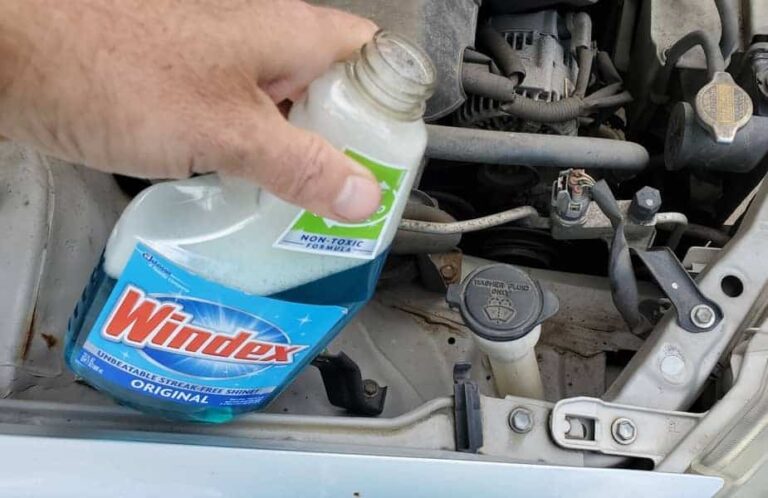
Water may provide a short-term way to rinse some loose dirt in warm weather, but it is not a dependable replacement for proper washer fluid. Plain water lacks the cleaning agents found in many washer formulas, so it may struggle with oily road film, dried insects, and other stubborn dirt.
Freezing is the main concern in cold weather. Water can freeze in the reservoir, hoses, or nozzles and leave the washer system unable to spray when needed. Ice may also create mechanical problems, depending on where it forms and how the system is designed.
Water can also leave mineral deposits if it contains substantial dissolved minerals. The risk varies with the water source and how often it is used. A washer fluid made for automotive glass is generally the more practical choice for routine use.
If the weather is warm and you need a temporary rinse, check the vehicle manual and restore the proper fluid as soon as possible. Do not rely on water during freezing conditions, and never add engine antifreeze to compensate for the lack of washer fluid.
Source: thumbs.dreamstime.com
Cleaning limits
Water alone may not remove greasy films or dried road residue as well as a formulated washer fluid.
Freezing risk
Water can freeze in the washer system and stop it from working.
Mineral residue
Some water sources may leave deposits on glass or in small spray openings.
Better routine option
Use automotive washer fluid suited to your local temperatures and driving conditions.
Can You Mix Antifreeze and Water to Make Washer Fluid?
No. Mixing engine antifreeze with water does not make a suitable windshield washer fluid. It may change the coolant’s concentration, but it does not give the mixture the right cleaning formula or establish compatibility with washer-system parts.
The same warning applies to homemade mixtures that use engine coolant, household cleaners, or other automotive fluids. Different chemicals can behave unpredictably when mixed, and some mixtures may leave films or expose people to harmful substances.
Use a washer fluid made for automotive glass. If you need to change its freeze rating, follow the product label rather than adding engine antifreeze or guessing at a ratio.
Do not experiment with coolant mixtures
There is no general mixing ratio that turns engine antifreeze into an approved windshield washer fluid.
Follow the intended use
Choose the fluid based on the reservoir and task, not merely on whether it resists freezing.
Common Mistakes to Avoid When Choosing Washer Fluid
The most common mistake is choosing a fluid based on one feature, such as color, price, or freeze protection, without checking its intended use. A liquid that resists freezing is not automatically safe for automotive glass or compatible with a washer system.
Another mistake is assuming that all antifreeze products share the same ingredients. Engine coolant and RV plumbing antifreeze can differ in their formulas and intended uses. Even products within the same category may have different instructions and limitations.
Drivers can also overlook the effect of dilution. Adding water to ready-to-use winter fluid may weaken its freeze protection, while using a concentrate incorrectly can produce a mixture that does not perform as expected. Always follow the container’s directions.
Finally, do not continue driving with a smeared windshield simply because the washer reservoir contains fluid. Visibility is the priority. Stop in a safe place when needed and clean the glass before resuming travel.
Source: aerosols-that-work.com
Mistake: Choosing by color
Correction: Read the product label and confirm the intended application.
Mistake: Using RV antifreeze in a car washer system
Correction: Use it only if the specific product explicitly identifies windshield washer use as suitable.
Mistake: Adding coolant to improve freeze protection
Correction: Choose a winter washer fluid with the required temperature rating.
Mistake: Diluting ready-to-use winter fluid
Correction: Follow the product’s instructions and do not weaken its formula without approval.
Mistake: Ignoring a hazy windshield
Correction: Stop using the washer system and restore clear visibility before driving.
How to Check Whether Your Washer Fluid Is Suitable
Before filling the reservoir, check three things: the product name, its intended use, and its temperature rating. The label should identify it as windshield washer fluid and provide any mixing instructions or operating limits.
Next, check your owner’s manual for the location of the washer reservoir and any relevant product restrictions. Do not confuse the washer-fluid cap with the engine coolant cap. If the reservoir markings are unclear, consult the manual before pouring anything into the vehicle.
After filling, use the washers only when the windshield is in a condition where the fluid can be cleared safely. The spray should reach the glass, the wipers should clear it without persistent smearing, and the windshield should remain clear enough for safe driving. If the system behaves abnormally, stop and investigate rather than adding another chemical.
Confirm the product
Look for an explicit windshield washer fluid label.
Confirm the temperature range
Match the stated protection to the conditions expected where you drive.
Confirm the reservoir
Use the owner’s manual to identify the correct filler opening.
Check the result
Make sure the spray and wipers clear the glass without leaving a persistent film.
Safety and Environmental Precautions
Handle engine coolant carefully and keep it away from children and pets. Some formulations contain ethylene glycol, which can cause serious poisoning if swallowed. Other formulations may have different hazards, so check the label and safety information for the exact product.
Never pour used coolant or contaminated washer fluid onto soil, into a street gutter, or down a storm drain. Local rules and accepted disposal sites vary across the United States. A municipal household hazardous waste program, an automotive service shop that accepts the material, or a local waste authority can explain the appropriate disposal route.
If coolant gets on your skin, follow the product label’s first-aid directions and wash the affected area as directed. If it gets into the eyes, follow the label’s instructions for rinsing and seek medical advice when required. If someone swallows coolant, contact Poison Control in the United States at 1-800-222-1222 or seek emergency help as appropriate. Do not wait for symptoms.
If the coolant has leaked into a large area or reached a drain, avoid spreading it while cleaning and contact the appropriate local environmental or waste authority for guidance. Preventing exposure and contamination is more important than trying to save a small amount of fluid.
Source: c8.alamy.com
Keep containers labeled
Store automotive chemicals in their original containers and do not transfer them into food or drink bottles.
Prevent access
Keep coolant and washer products away from children, pets, and food preparation areas.
Use proper disposal
Follow the label and local waste rules for coolant and contaminated liquid.
Seek help after exposure
Use the product’s first-aid guidance and contact Poison Control or emergency services when warranted.
When Should You Ask a Mechanic for Help?
Contact a mechanic if a substantial amount of engine coolant has entered the washer reservoir, if the washer pump has been operated with the wrong fluid, or if the system stops spraying afterward. Professional help is also sensible when the reservoir cannot be drained safely or its location is difficult to access.
Ask the shop to identify the fluid, remove the contaminated contents, and assess whether the pump, hoses, and nozzles need cleaning or replacement. Do not assume that every part needs replacing; the inspection should determine what is actually required.
If the windshield remains hazy after proper cleaning, check the glass and wiper blades before driving in demanding conditions. Persistent smearing may require additional cleaning or replacement of contaminated blades. The goal is a clear view, not simply a full reservoir.
Seek service after pump use
A mechanic can determine how far the incorrect fluid traveled and whether the system needs flushing.
Seek service for poor spray
Weak or uneven spray may indicate blocked nozzles or another washer-system issue.
Do not drive with poor visibility
Arrange safe cleaning or repair before driving when the windshield cannot be kept clear.
Frequently Asked Questions
Q
Can you use antifreeze as windshield washer fluid in an emergency?
No. Engine antifreeze is not a safe substitute for windshield washer fluid, even in an emergency. It may smear across the glass, reduce visibility, and expose people or animals to harmful chemicals. If you run out of washer fluid, wait until you can obtain a suitable automotive washer product rather than filling the reservoir with engine coolant.
Q
Will antifreeze freeze in a windshield washer reservoir?
The freezing behavior depends on the exact product and its concentration, but resistance to freezing does not make engine antifreeze suitable for the washer system. Use winter windshield washer fluid with a stated temperature rating that matches the expected conditions. Do not rely on a coolant’s freeze rating for a different application.
Q
Can you mix engine antifreeze with windshield washer fluid?
You should not deliberately mix engine antifreeze with windshield washer fluid. The mixture may not clean glass properly, may leave residue, and may not provide predictable freeze protection. If the products have already mixed in the reservoir, stop using the washers and arrange for the contaminated liquid to be removed.
Q
Is RV antifreeze the same as windshield washer antifreeze?
No. RV antifreeze is generally intended to protect certain plumbing systems from freezing, while winter windshield washer fluid is formulated for cleaning automotive glass. Product formulas and intended uses differ. Read the label carefully and use only a product explicitly suitable for windshield washer systems.
Q
What should you do if you accidentally pour antifreeze into the washer reservoir?
Do not activate the washer pump. Identify the product and arrange for the contaminated fluid to be drained safely. If the pump has already been used, have the reservoir, pump, hoses, and nozzles assessed and cleaned as needed. Refill with suitable washer fluid only after the system has been restored.
Q
Can antifreeze damage windshield wipers?
Coolant residue can contaminate the glass and wiper blades, which may lead to smearing or poor wiping. The degree of damage depends on the product and exposure, so it is not accurate to say every contact will ruin the blades. Clean the glass properly and inspect the wipers; replace them if they remain contaminated or fail to clear the windshield.
Q
Can you use plain water instead of antifreeze in winter washer fluid?
Adding plain water to ready-to-use winter washer fluid can weaken its freeze protection. Water may freeze in the reservoir, hoses, or nozzles when temperatures fall. Follow the washer fluid label and use a formula rated for the cold conditions you expect.
✦ Wrapping Up
Conclusion
You should not use antifreeze as windshield washer fluid. Engine coolant protects the engine cooling system, while washer fluid is made to clean automotive glass and support safe visibility. Even if both products resist freezing, that shared feature does not make them interchangeable.
For warm weather, choose a washer fluid suitable for routine glass cleaning. For winter driving in the United States, select a product with a freeze rating that fits the coldest conditions you expect, and follow its instructions for use or dilution. Do not substitute engine coolant, assume RV antifreeze is suitable, or judge an automotive fluid by its color.
If you have already added antifreeze to the washer reservoir, stop using the system and arrange for safe removal and cleanup. A mechanic can check the pump and washer lines if the wrong fluid has circulated through them. Restore the system with the proper washer fluid and confirm that the windshield stays clear before driving.
💡 Key Takeaway
Check the container before every refill. Use only windshield washer fluid approved for that purpose, choose a suitable winter rating when needed, and never use engine antifreeze as a substitute.