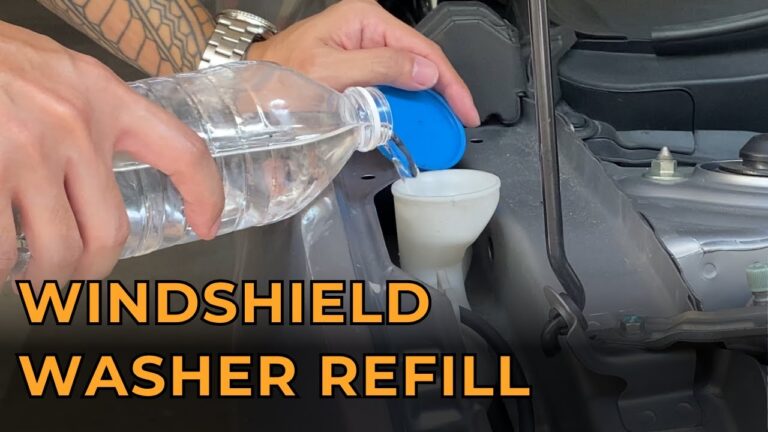
The most common causes of a windshield washer that stops working are an empty fluid reservoir, frozen washer fluid, clogged spray nozzles, a leaking hose, a failed washer pump, a blown fuse, or an electrical fault. checking the fluid level, listening for the pump, and inspecting for leaks can help identify the problem.
Across the United States, a working windshield washer is essential for safe driving in rain, snow, dusty conditions, and on busy highways. Road salt in northern states, pollen in the South, and dust on western roads can quickly cover a windshield. When the washer stops spraying, even good wiper blades may struggle to keep the glass clear.
The cause is not always a broken pump. A low fluid level or blocked nozzle can create the same symptom, while freezing weather can stop the system from working even when every part is intact. The most useful first step is to observe what happens when you activate the washer, then check the simplest and safest possible causes before replacing parts.
This guide explains what causes windshield washer systems to stop working, how to distinguish common faults, and what you can check at home. It also explains when a fuse, pump, hose, or electrical issue calls for professional repair. Vehicle designs vary, so use your owner’s manual for the correct fluid, fuse location, and service procedure.
A windshield washer stops working when it cannot store, move, or spray fluid, or when its electrical controls fail. The system normally uses a reservoir, a small electric pump, fluid hoses, spray nozzles, wiring, and a switch or electronic control. Some vehicles also have separate circuits or pumps for the rear window and headlight washers.
The first clue is the symptom. A system that makes noise but produces no spray points toward a fluid delivery problem, while a silent pump suggests an electrical fault, a failed motor, or a control issue. These clues narrow the search, but they do not prove which part has failed.
Source: YouTube
Low or empty washer fluid
The pump cannot draw enough fluid when the reservoir is empty or the level is too low.
Frozen fluid or blocked lines
Cold temperatures can freeze unsuitable fluid and prevent it from moving through the hoses and nozzles.
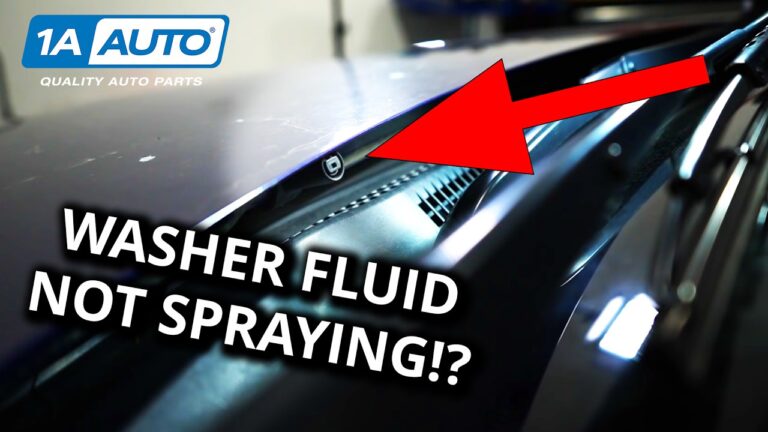
Clogged spray nozzles
Dirt, mineral deposits, wax, or debris can restrict the small openings that direct fluid onto the glass.
Fluid may escape under the hood instead of reaching the windshield.
Failed washer pump
The pump motor or its internal parts may wear out, seize, or fail to move fluid.
Blown fuse or wiring fault
An interrupted electrical supply can prevent the pump from operating.
Why the exact symptom matters
Before taking anything apart, try to identify whether the pump runs and whether any fluid reaches the glass. Test only when the windshield is clear enough to see safely, the vehicle is parked, and the washer system is not frozen. A short activation is usually enough to hear whether the pump responds.
If only one nozzle sprays, a local blockage is more likely than a total electrical failure. If the front washer fails but the rear washer works, the front and rear systems may share some components but differ in their pump, hose, or control arrangements. Check the vehicle’s service information before assuming they use the same circuit.
Pump runs, no spray
Check the fluid level, freezing, hoses, nozzle openings, and possible pump outlet blockage.
Pump makes no sound
Check the fuse and electrical supply, then consider a failed pump or control switch.
One nozzle works
Inspect the nonworking nozzle and its branch hose for a local restriction or disconnection.
1. An Empty or Low Washer Fluid Reservoir
An empty reservoir is one of the easiest causes to check. Frequent use, a long drive through dirty weather, or an unnoticed leak can use up the available fluid. Some vehicles have a low-fluid warning, but others provide no warning at all.
Find the washer fluid reservoir by checking the owner’s manual. Its cap often has a windshield and spray symbol. With the vehicle parked on level ground and the engine off, inspect the level if the reservoir is translucent or use the manufacturer’s recommended method to confirm it.
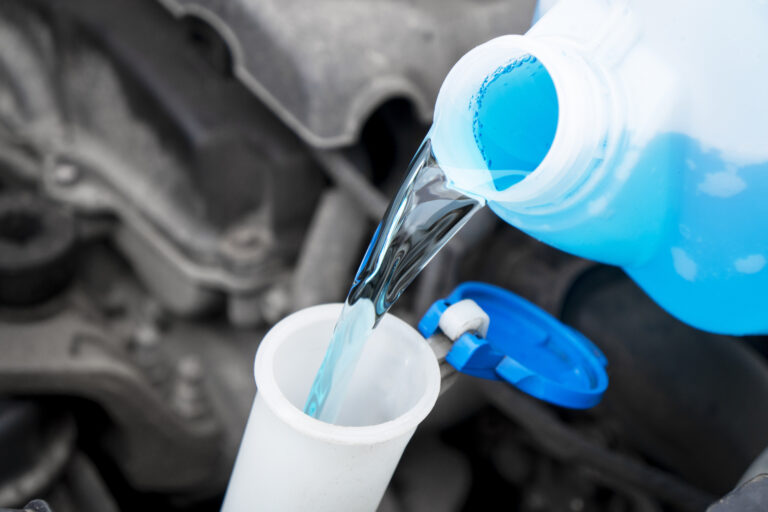
If the tank is low, add washer fluid that meets the vehicle manufacturer’s requirements and suits the local climate. In areas that experience freezing weather, use a product rated for temperatures expected during the trip. Do not fill the tank with engine coolant, and do not assume plain water will be suitable year-round.
Source: The Family Handyman
What to look for
A low level, an empty tank, a recent fluid warning, or a system that began failing after extended washer use.
What to do
Refill the reservoir with compatible automotive washer fluid, then briefly test the system while parked.
When to investigate further
If the reservoir becomes empty again quickly, inspect for leaks rather than repeatedly topping it up.
Can the reservoir look full but still fail?
Yes. A full tank does not guarantee that fluid can reach the windshield. A clogged pickup filter, frozen fluid, a damaged pump, a blocked hose, or an electrical problem can prevent delivery even when the reservoir contains plenty of fluid.
Some reservoirs are difficult to see because they sit behind body panels or inside the engine compartment. Use the owner’s manual rather than opening unrelated caps or removing components without the correct instructions.
Avoid overfilling
Follow the reservoir markings or vehicle instructions and secure the cap after filling.
2. Frozen Windshield Washer Fluid or Lines
Freezing is a common reason a windshield washer stops working during winter. In states such as Minnesota, Michigan, Wisconsin, and New York, temperatures can fall below the protection rating of the fluid in the reservoir. Fluid left in narrow hoses or nozzle openings can freeze and block the flow.
A summer washer formula may not provide enough protection for a cold snap. Water added to the reservoir can also reduce the mixture’s freeze protection. The result may be a silent or straining pump, a pump that runs without spraying, or spray that returns after the vehicle warms up.
If freezing is likely, do not keep activating the washer in repeated attempts. This can strain the pump or overheat it. Move the vehicle to a safe, warmer location and allow the system to thaw naturally, following the manufacturer’s guidance.
Source: giogiuviu.blob.core.windows.net
Signs of frozen fluid
The problem appears during a cold spell, the reservoir or hoses contain slush or ice, and spraying resumes after the system warms.
Safe response
Allow the system to thaw in a suitable warm environment, then use compatible winter-rated washer fluid.
What not to do
Do not pour boiling water on the reservoir or nozzles, use an open flame, or force a frozen pump to run.
How to prevent winter washer problems
Before winter weather arrives, check the washer fluid’s stated freeze protection and replace unsuitable fluid according to the product and vehicle instructions. The correct rating depends on the expected temperature, so do not select a formula based only on its color or general label.
After thawing, test the spray while parked. If the pump remains silent or the fluid still does not flow, freezing may have exposed or contributed to a separate pump, fuse, hose, or nozzle problem.
Use the correct formula
Choose automotive washer fluid with freeze protection appropriate for the expected weather.
Check after thawing
Look for leaks and confirm that the spray pattern returns before driving in poor weather.
3. Clogged Windshield Washer Nozzles
Clogged nozzles can stop washer fluid from spraying even when the pump works normally. The nozzle openings are small, so dirt, dried fluid residue, road debris, wax, and mineral deposits can restrict the flow. A partial blockage may create a weak stream or send the spray in the wrong direction.
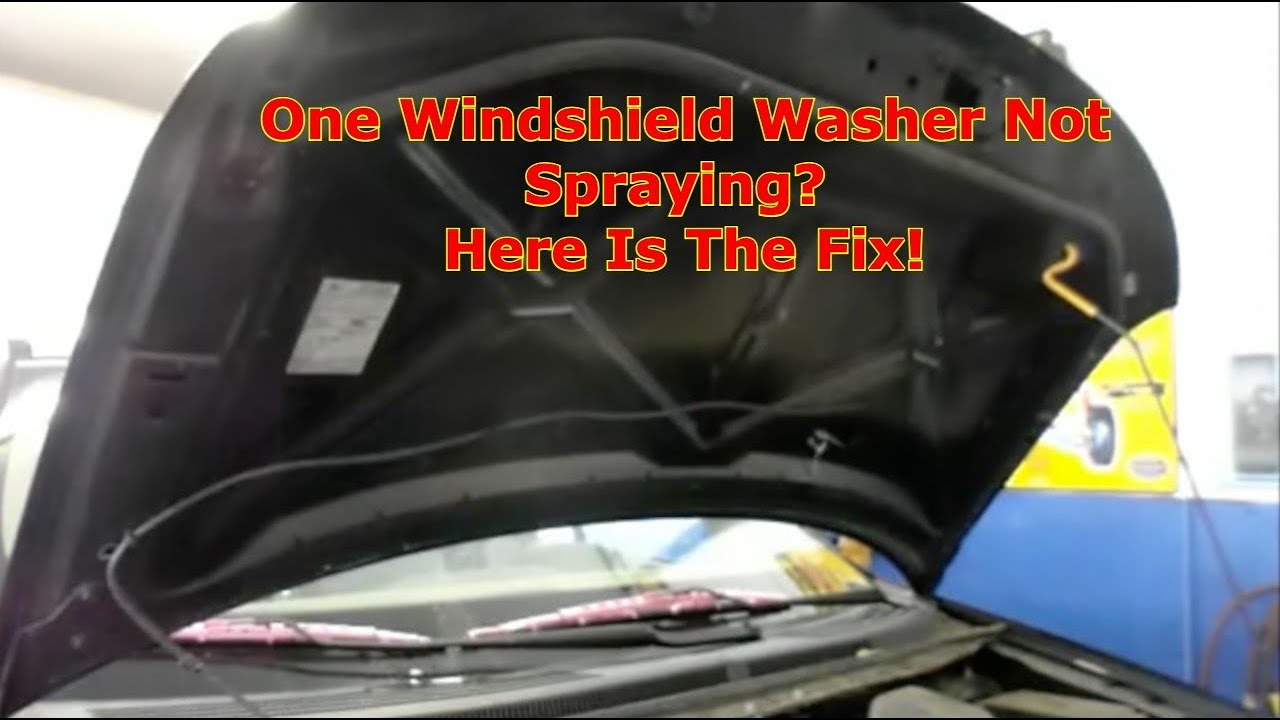
If one nozzle works and the other does not, a local blockage or damaged hose is a reasonable first suspect. If both nozzles fail at once, consider a shared supply problem, such as frozen fluid, a blocked filter, a disconnected main hose, or a failed pump.
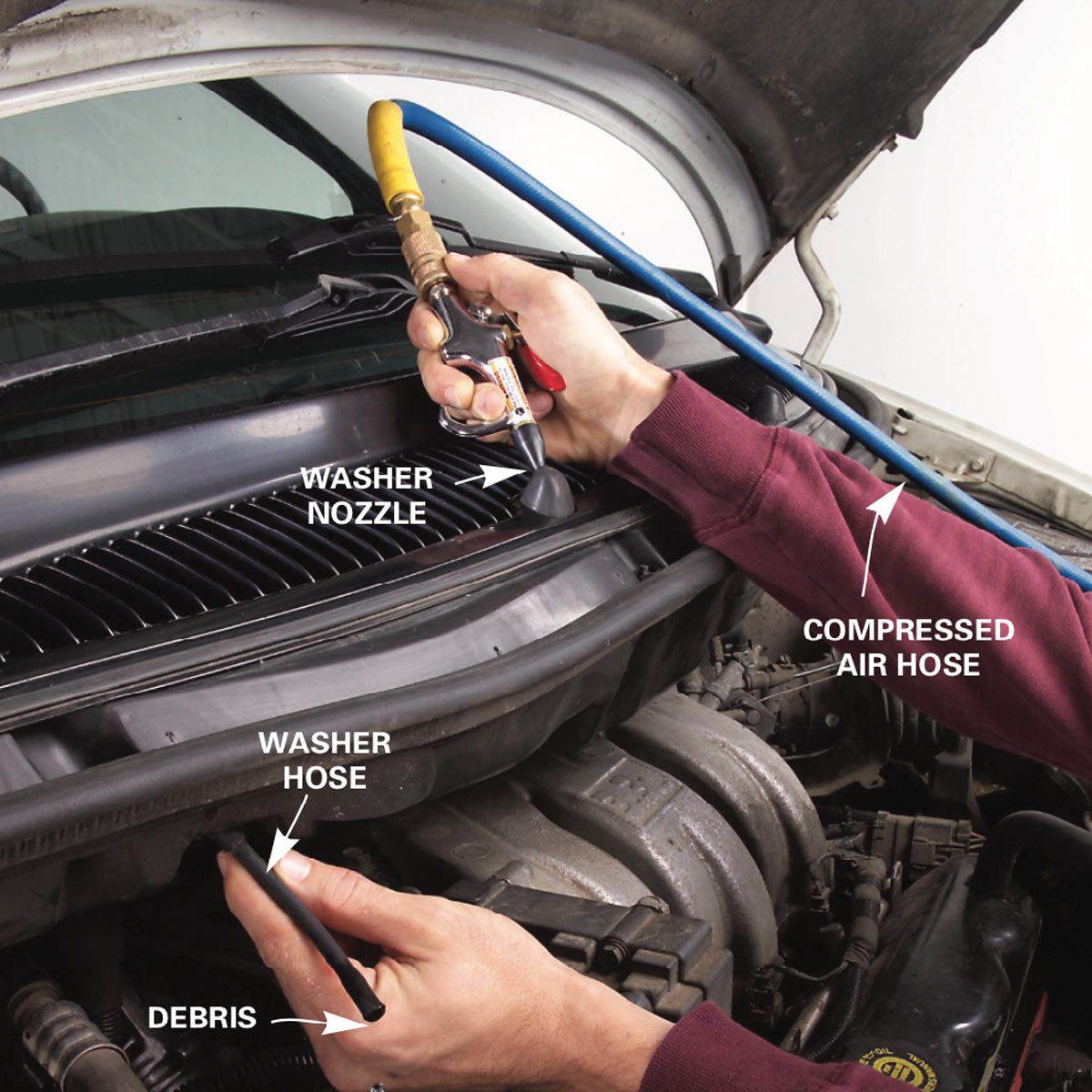
Inspect the nozzle openings for visible dirt. Use the cleaning method specified by the vehicle manufacturer, as some nozzles are delicate or use a fan-shaped spray design. Avoid pushing hard objects into the openings, since this may damage the nozzle or change its spray pattern.
Source: www.youtube.com > Hacks by Dad
Weak or uneven spray
A partial obstruction may allow some fluid through but prevent the intended spray pattern.
One side does not spray
Check the affected nozzle and nearby hose before replacing the pump.
Spray hits the wrong area
The nozzle may be blocked, misaligned, or damaged. Use the specified adjustment procedure if the design allows adjustment.
How to clean a blocked nozzle safely
Park the vehicle, switch off the engine, and inspect the nozzle without reaching near moving wiper arms. Remove loose surface dirt with a clean, damp cloth. If the blockage remains, follow the owner’s manual or a service guide for the exact nozzle design.
Do not assume every nozzle can be adjusted with a pin. Modern fan-spray nozzles may be damaged by improvised tools. If cleaning does not restore a normal spray, the nozzle may need replacement or the fault may be farther upstream.
Confirm the result
The fluid should reach the intended part of the windshield in a consistent pattern without obvious leaks.
4. Leaking, Split, or Disconnected Washer Hoses
Washer hoses carry fluid from the reservoir and pump to the spray nozzles. If a hose slips off a connector, cracks with age, becomes pinched, or splits, fluid may escape before reaching the glass. This can make the system seem empty or leave the pump running without useful spray.
A wet area under the hood after a brief washer test can indicate a leak. You may also notice fluid running down the inside of the hood, dripping near a wheel well, or collecting beneath the front of the vehicle. The exact location depends on the hose route and reservoir position.
With the vehicle parked and the system switched off, inspect accessible hoses and connectors for visible damage. Avoid removing trim or reaching into tight spaces near hot engine parts. If the leak is hidden beneath body panels or the reservoir must be removed, a repair shop may be the safest option.
Source: storage.googleapis.com
Disconnected hose
Fluid may spray into the engine compartment rather than onto the windshield.
Cracked hose
A split may cause slow leakage, weak spray, or a reservoir that empties unexpectedly.
Pinched hose
A restricted line can reduce flow even when the pump and nozzle are in working order.
Why a hose can fail after other repairs
Washer hoses may be disturbed during work near the hood, cowl panel, fender, or windshield. If the washer stopped working soon after another repair, check whether a connector was left loose or a line was trapped under a panel.
Use hose and connector parts compatible with the vehicle. A temporary fit that leaks or comes loose can return the problem and leave the windshield without spray when it is needed.
After a repair
Ask the technician to verify the hose connections and test the complete washer system.
5. A Faulty Windshield Washer Pump
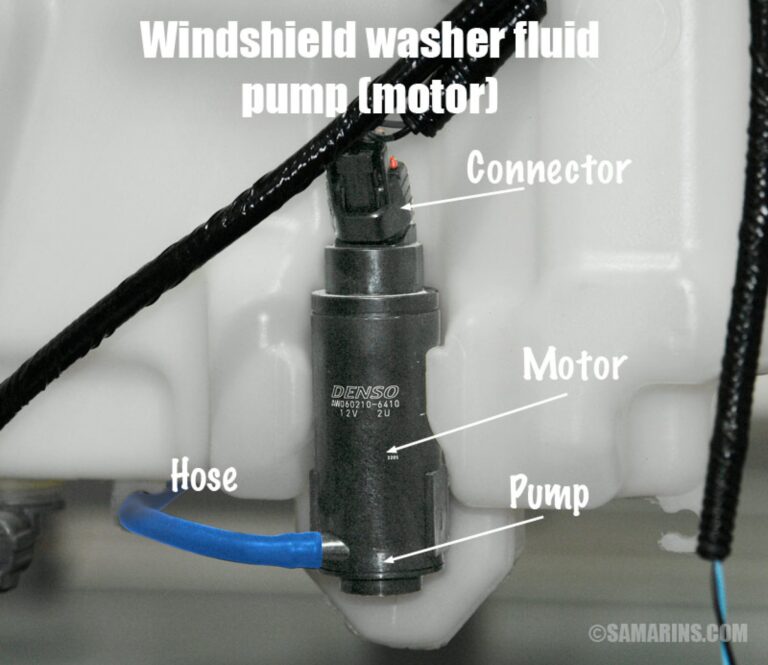
The washer pump moves fluid from the reservoir into the hose system. It is usually a small electric motor attached to or near the reservoir. A worn motor, internal damage, debris around the intake, or a seized pump can prevent fluid from reaching the windshield.
A pump that makes a humming sound may still be faulty. It may have enough power to make noise but not enough force to move fluid, or the pump may be operating while a blockage prevents flow. A pump that makes no sound may have failed, but the cause could also be a blown fuse, bad connection, damaged wiring, or an inactive control circuit.
Before replacing the pump, verify the fluid level, temperature, and hose condition. Check the fuse using the vehicle’s wiring information. If the electrical supply is present but the pump does not operate, or if the pump runs but cannot deliver fluid after blockages are ruled out, pump testing or replacement may be needed.
Source: askmyauto.com
Pump is silent
Check the correct fuse, wiring, connector, control signal, and pump condition.
Pump runs without spray
Inspect for a blocked intake, damaged pump impeller, disconnected hose, or clogged delivery path.
Pump runs intermittently
A worn motor, loose connector, or electrical fault may interrupt operation.
When does a washer pump need replacement?
Replacement is justified when testing confirms that the pump has failed or cannot deliver fluid and the problem is not caused by its power supply or a blocked line. The correct part depends on the vehicle’s make, model, year, and washer configuration.
Some pumps can be accessed from above, while others require access through a wheel-well liner or removal of part of the reservoir assembly. Follow the service procedure for the specific vehicle, and avoid working beneath a vehicle supported only by a jack.
Confirm before buying parts
Use vehicle-specific service information or professional testing to distinguish a failed pump from a fuse, wiring, or plumbing fault.
6. A Blown Fuse or Electrical Problem
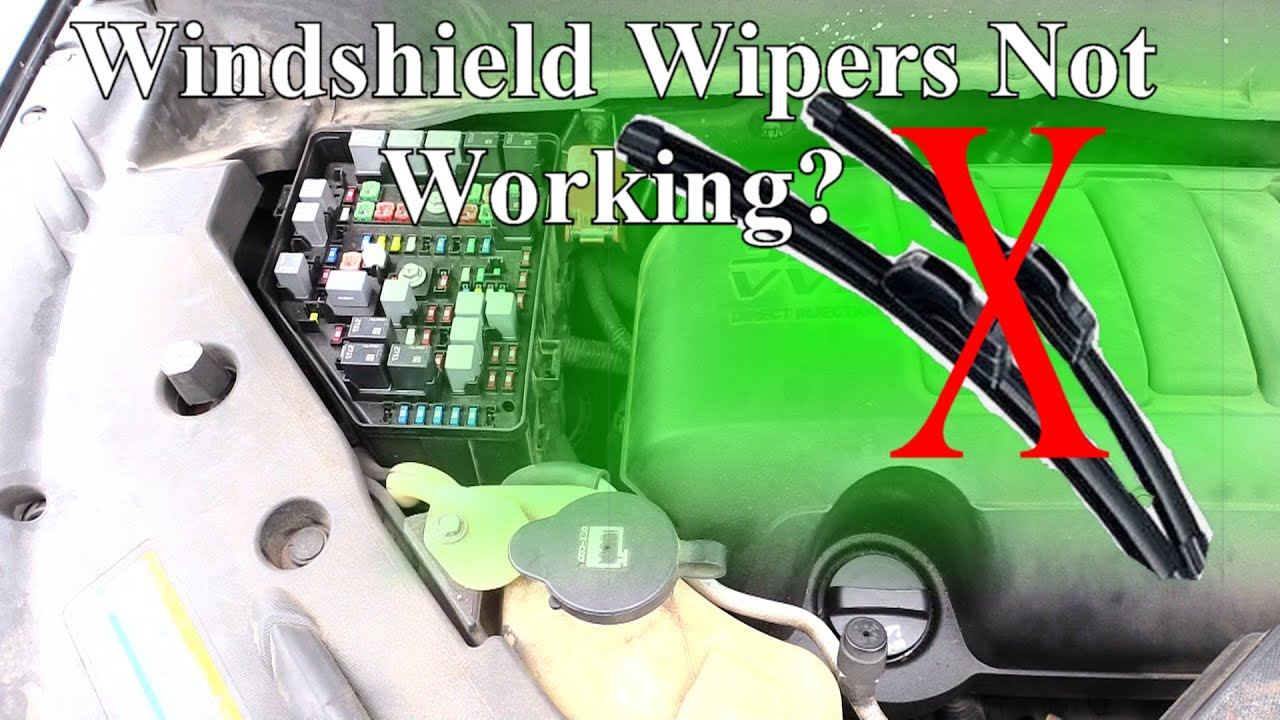
A windshield washer needs electrical power to run its pump. A blown fuse can interrupt that power, while damaged wiring, a loose connector, corrosion, or a control fault can produce similar symptoms. These problems become more likely when the pump is silent and the reservoir, fluid temperature, and visible hoses appear normal.
Use the owner’s manual or the vehicle’s fuse diagram to identify the correct circuit. Some vehicles use separate circuits for different washer functions, and others integrate washer controls into an electronic module. Never assume a fuse position based on another vehicle of the same brand.
Inspect a fuse only according to the vehicle’s instructions. Replace a blown fuse only with the specified type and rating. If the replacement fuse blows again, stop replacing fuses and arrange electrical diagnosis because a short circuit or another fault may be present.
Source: hitchesguide.com
Blown fuse
The pump may stop receiving power, leaving the washer silent.
Loose or corroded connector
Poor electrical contact can cause intermittent operation or prevent the pump from starting.
Faulty switch or control module
The washer command may not reach the pump even when the pump itself is functional.
Why a fuse should not be replaced repeatedly
A fuse protects an electrical circuit against excessive current. If a replacement fuse fails again, the underlying fault has not been fixed. Installing a fuse with a higher rating can allow wiring to overheat and may create a fire risk.
Electrical diagnosis may require a wiring diagram, a suitable meter, and knowledge of the vehicle’s control system. If you are not comfortable testing automotive circuits, ask a qualified technician to inspect the circuit.
Use the specified rating
Never bypass a fuse or install a higher-rated replacement to keep the washer running.
7. A Clogged Filter or Contaminated Washer Fluid
Debris inside the reservoir can restrict the pump intake or clog a small filter. Dirt may enter when the reservoir is opened, while unsuitable fluids can leave deposits that build up over time. These restrictions may cause weak spray, uneven flow, or no spray at all.
A contaminated reservoir can also contain sediment, algae-like growth, or residue from incompatible products. The appearance of the fluid alone does not identify the exact cause, but visible debris or repeated nozzle blockages are reasons to inspect the system.
Use automotive washer fluid recommended for the vehicle and follow its product directions. If the reservoir is contaminated, cleaning it may require removal and proper disposal of the old fluid. Avoid mixing cleaners or chemicals in an attempt to dissolve a blockage.
Source: storage.googleapis.com
Repeated nozzle blockage
A contaminated reservoir or restricted intake may be supplying debris to the nozzles.
Weak flow from both nozzles
A clogged pickup filter or intake restriction may reduce the amount of fluid the pump can draw.
Unusual fluid appearance
Cloudiness or visible particles may indicate contamination that requires inspection.
Can the wrong fluid damage the washer system?
It can cause problems if the product leaves deposits, is incompatible with the system, or lacks the freeze protection needed for the climate. Household cleaners are not automatically suitable substitutes for automotive washer fluid, and engine coolant is not washer fluid.
If the wrong product has been added, check the vehicle and product guidance before operating the pump. Some mistakes can be corrected by draining and refilling the reservoir, while other situations require inspection to protect the pump, hoses, paint, or nearby components.
Do not mix chemicals
Use the recommended fluid and seek product-specific guidance if the reservoir contains an unknown substance.
How to Troubleshoot a Windshield Washer That Has Stopped Working
Stop troubleshooting if you would need to work near moving parts, access wiring you cannot identify, or remove heavy components without the proper equipment. A clear diagnosis is more useful than replacing parts based on a guess.
Source: storage.googleapis.com
Step 1: Check the fluid level
Locate the washer reservoir and confirm that it contains enough fluid. If it is empty, refill it with a compatible product. If the tank is full, continue to the next check rather than assuming the pump is bad.
Expected result
The reservoir contains suitable fluid and there is no obvious rapid leak.
Step 2: Consider the weather
If the washer stopped working during freezing weather, check whether the fluid or lines may be frozen. Allow the system to thaw in a suitable warm environment before testing it again. Do not force a frozen system to operate.
Expected result
After thawing, the pump operates and fluid can move through the system without visible leakage.
Step 3: Listen for the pump
With the vehicle parked and the windshield clear, activate the washer briefly. Listen near the reservoir for a short motor sound. The pump’s location varies, so the sound may be faint or difficult to hear in some vehicles.
Pump audible
Focus next on fluid delivery, hose connections, blockages, and pump performance.
Pump silent
Focus next on the fuse, electrical connections, controls, and pump condition.
Step 4: Inspect visible hoses and nozzles
Look for loose connectors, cracked hoses, wet areas, and dirt around the nozzle openings. If one nozzle works and another does not, inspect the affected branch first. Follow vehicle-specific instructions for cleaning or adjusting the nozzles.
Expected result
Hoses remain connected, fluid does not leak, and both nozzles produce the intended spray pattern.
Step 5: Check the correct fuse
If the pump remains silent, use the owner’s manual to find the relevant fuse and inspect it as directed. Replace a failed fuse only with the specified rating. If the fuse blows again, stop and have the circuit tested.
Expected result
The fuse and circuit function correctly without repeated fuse failure.
Step 6: Arrange pump or circuit testing
If the simple checks do not identify the fault, a technician can test the pump’s power supply, ground, control signal, and fluid output. The results help distinguish a failed pump from a wiring issue or a blocked intake.
Expected result
The faulty component is identified before repair or replacement.
Common Symptoms and Their Likely Causes
Use the symptom table below to decide which checks are most useful. These are diagnostic clues, not guaranteed diagnoses. More than one fault can exist at the same time, especially if freezing or contamination has affected the system.
Source: YouTube
No spray and no pump sound
Likely areas to check include an empty or frozen system, a blown fuse, wiring, the control circuit, and the pump motor.
No spray but the pump runs
Check the fluid level, blocked intake, frozen hoses, disconnected lines, leaks, and clogged nozzles.
Only one nozzle sprays
Inspect the blocked nozzle, its hose branch, and any local connector.
Fluid leaks under the hood
Look for a split hose, loose connector, leaking reservoir, or a pump seal problem.
Washer works intermittently
Consider a loose electrical connection, failing pump, partial blockage, or fluid that freezes in cold conditions.
Front washer fails but rear washer works
The fault may be isolated to the front washer’s pump, plumbing, nozzle, or control path, depending on the vehicle design.
How much does windshield washer repair cost?
Repair cost depends on the vehicle, the failed component, labor rates, and how easy the parts are to reach. Refilling the reservoir or cleaning an accessible nozzle may cost little, while replacing a hidden pump or diagnosing an electrical fault may require more labor.
A reliable estimate requires the vehicle’s make, model, year, and a confirmed diagnosis. Ask the repair shop to identify the failed part and explain whether the quote includes diagnosis, parts, labor, and any required fluid or seals. Avoid treating a generic online price as a quote for your specific vehicle.
Lower-complexity checks
Fluid refill, visible hose reconnection, or manufacturer-approved nozzle cleaning may be simple when access is easy.
More involved repairs
Pump replacement, reservoir removal, wiring repair, and control-module diagnosis may increase labor time.
Safety Mistakes to Avoid
A failed washer system can become a driving hazard when road spray, mud, insects, salt, or dust cover the windshield. Do not continue driving if your view is too poor to maintain safe control. Pull over at a safe location and arrange cleaning or repair before continuing.
Avoid running the pump repeatedly when the reservoir is empty or the system may be frozen. Do not bypass fuses, fit a higher-rated fuse, mix cleaning chemicals, or use tools that may damage delicate spray nozzles. Never work near a running engine or moving wiper mechanism when inspecting hoses or connectors.
If the vehicle uses a complex electrical control system, the reservoir is difficult to reach, or the fault returns after a basic fix, professional diagnosis can prevent further damage. A repair should restore reliable fluid delivery, not merely produce a brief spray during a test.
Source: The Family Handyman
Protect your visibility
Do not rely on the wipers alone when the windshield cannot be kept clear enough for safe driving.
Protect the electrical system
Use only the specified fuse rating and stop if a replacement fuse fails again.
Protect the pump
Do not keep operating a dry, blocked, or frozen pump in an effort to force fluid through.
Use proper service information
Follow the owner’s manual and model-specific service instructions for fluid, fuses, parts, and access.
Frequently Asked Questions
Q
Why did my windshield washer suddenly stop working?
A sudden failure may result from an empty reservoir, frozen fluid, a hose that has come loose, a clogged nozzle, a blown fuse, or a failed pump. Check the fluid level and weather conditions first, then listen for the pump and inspect for visible leaks. These checks help narrow the cause without replacing parts unnecessarily.
Q
Why can I hear the washer pump but no fluid comes out?
The pump may be running while fluid is blocked or escaping before it reaches the windshield. Check for frozen fluid, an empty reservoir, a disconnected hose, a leak, clogged nozzles, or a blocked pump intake. A humming sound alone does not prove that the pump can move fluid.
Q
Can a blown fuse stop the windshield washer from working?
Yes. A blown fuse can interrupt power to the washer pump, leaving the system silent. Find the correct fuse using the vehicle’s manual and replace it only with the specified type and rating. If the new fuse blows again, stop and have the electrical circuit diagnosed.
Q
Can cold weather stop windshield washer fluid from spraying?
Yes. Fluid, hoses, or nozzles can freeze if the washer fluid lacks enough protection for the current temperature. Let the system thaw in a suitable warm environment and use automotive washer fluid rated for the expected cold. Avoid boiling water, open flames, or repeated pump operation while the system is frozen.
Q
Why does one windshield washer nozzle work while the other does not?
A single nonworking nozzle often points to a local blockage, a disconnected hose branch, or a damaged nozzle. Inspect visible dirt and the nearby hose, then follow the vehicle manufacturer’s cleaning procedure. If the nozzle remains blocked, it may need replacement or further testing.
Q
Is it safe to drive when the windshield washer is not working?
It may be possible to move the vehicle a short distance when the windshield is clean and visibility remains clear, but driving in conditions that require washer spray can quickly become unsafe. Do not continue if dirt, road spray, snow, or other debris obstructs your view. Pull over safely and arrange cleaning or repair.
Q
Should I replace the washer pump if it makes no sound?
Not before checking the basics. A silent pump may have no power because of a blown fuse, loose connector, damaged wiring, or a control fault. If the electrical supply and ground are correct but the pump does not operate, replacement may be appropriate after testing confirms the failure.
✦ Wrapping Up
Conclusion
The most common causes of a windshield washer that stops working are low fluid, freezing, clogged nozzles, leaking hoses, a failed pump, and electrical faults. The symptom provides a useful starting point: a running pump with no spray suggests a fluid delivery problem, while a silent pump calls for checks of the fuse, wiring, controls, and motor.
Start with the reservoir and weather conditions, then inspect accessible hoses and nozzles. Move to fuse checks and professional testing only when simpler checks do not identify the cause. Follow vehicle-specific service instructions, use compatible washer fluid, and avoid operating a pump that may be frozen or blocked.
💡 Key Takeaway
Park safely, check the fluid level, consider freezing, and briefly listen for the pump. Inspect visible hoses and nozzles, then check the correct fuse if needed. If the fault remains or the fuse fails repeatedly, have the washer system diagnosed before driving in conditions that require a clear windshield.
Is windshield washer fluid universal? Learn which types work for your car, how to choose the right formula, and what to avoid in hot or freezing weather.
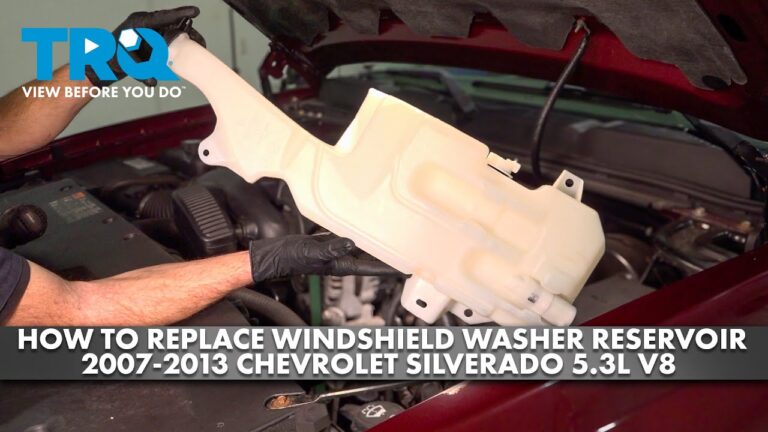
Learn how to remove a Silverado windshield washer fluid reservoir, disconnect the pump and hoses, access mounting bolts, and safely install the replacement.
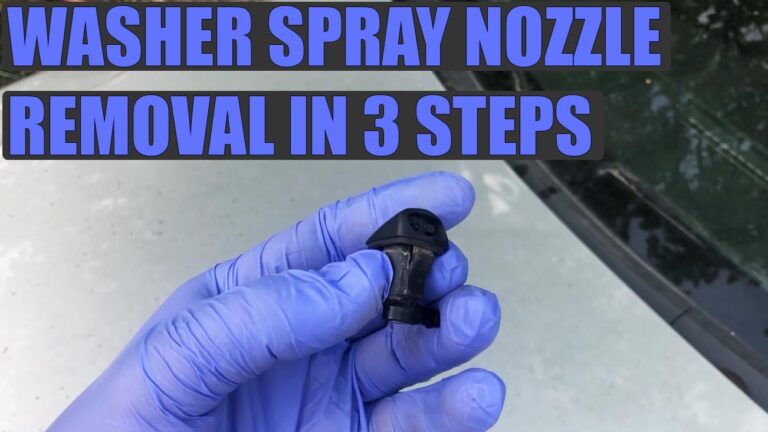
Learn how to remove a windshield washer nozzle safely, identify clip and screw-mounted designs, disconnect the hose, replace the nozzle, and test the spray pattern.
Learn how to refill rear windshield washer fluid in a Toyota Highlander, locate the correct reservoir, choose washer fluid, and troubleshoot spray problems.