How to Read Car Battery Code: Complete Battery Label Guide
How to read car battery code helps you understand the information printed on your vehicle battery, including manufacturing date, battery size, power rating, and replacement specifications. These codes allow you to identify the correct battery type and determine the age of your current battery.
The complete details are explained below. You will learn where to find battery codes, how to read manufacturing dates, what battery numbers mean, and how to choose the correct replacement battery for your vehicle.
What Is a Car Battery Code?
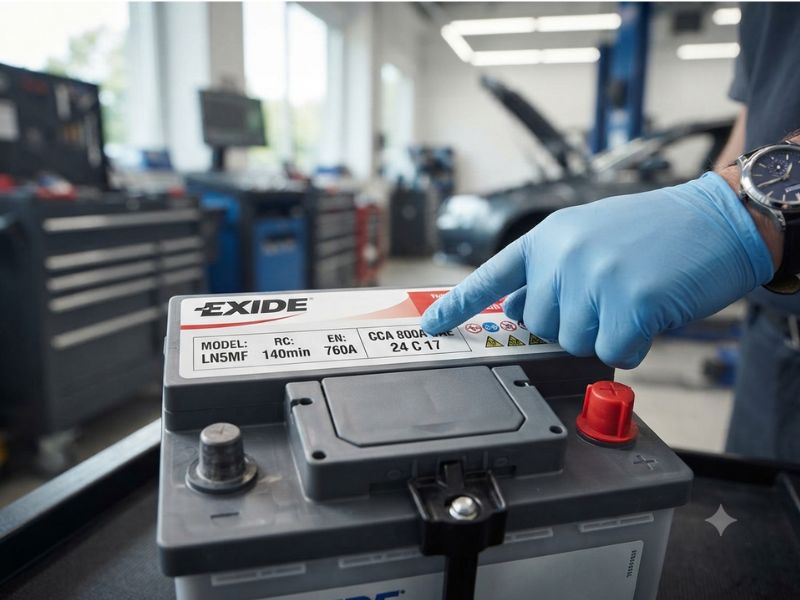
A car battery code is a combination of letters, numbers, and symbols printed on the battery label or case.
Battery manufacturers use these codes to identify important information such as:
- Battery size
- Battery type
- Manufacturing date
- Production location
- Cold cranking amps (CCA)
- Voltage rating
- Group number
- Model information
Unlike a VIN, which identifies the vehicle, a battery code identifies the battery itself.
The exact format depends on the manufacturer.
Different brands use different coding systems, so there is no single universal battery code format.
Why Do You Need to Read a Car Battery Code?
Understanding battery codes is useful when:
- Replacing an old battery
- Checking battery age
- Buying a used vehicle
- Diagnosing starting problems
- Comparing battery specifications
- Confirming compatibility
A battery may look physically correct but still be unsuitable for your vehicle.
The wrong battery can cause:
- Slow starting
- Charging problems
- Reduced battery life
- Electrical system issues
Reading the battery label helps you choose the correct replacement.
Where Can You Find the Battery Code?
Battery information is usually printed directly on the battery label.
Common locations include:
- Top of the battery
- Side label
- Battery cover
- Manufacturer sticker
- Barcode label
Look for markings such as:
- Date code
- Serial number
- Model number
- Group size
- Part number
- CCA rating
The information may be printed as a combination of letters and numbers.
How to Read a Car Battery Date Code
One of the most important battery codes is the manufacturing date code.
Knowing the battery age helps determine whether a weak battery is nearing the end of its service life.
Many batteries last approximately:
- 3 to 5 years under normal conditions
- Less in extremely hot climates
- Longer with proper maintenance
Manufacturers use different date formats.
Common examples include:
- Letter + number codes
- Numeric date codes
- Month/year labels
- Julian date formats
Reading Letter-Based Battery Date Codes
Some manufacturers use letters to represent months.
Example:
A25
Possible interpretation:
- A = January
- 25 = Year 2025
Another manufacturer may use:
F24
Possible interpretation:
- F = June
- 24 = 2024
The meaning depends on the battery brand.
Always check the manufacturer’s coding system.
Reading Numeric Battery Date Codes
Some batteries use numbers to show production dates.
Examples:
1224
May represent:
- December 2024
or:
202412
May represent:
- Year 2024
- Month 12
The format varies.
Do not assume every battery uses the same system.
Julian Date Battery Codes
Some manufacturers use Julian date formats.
Example:
24350
This may represent:
- 2024 production year
- 350th day of the year
Julian dates are common in industrial and automotive battery manufacturing.
The first digits usually indicate the year, while the remaining digits indicate the production day.
How to Read Battery Group Size
Battery group size identifies the physical dimensions and terminal arrangement.
Examples include:
- Group 24
- Group 35
- Group 48
- Group 49
- H6
- H7
- H8
The group number tells you:
- Battery length
- Battery width
- Battery height
- Terminal location
- Case design
A battery with the wrong group size may not fit correctly in the vehicle.
Always match the recommended group size from your vehicle manufacturer.
How to Read Battery CCA Rating
CCA means Cold Cranking Amps.
It measures how much current a battery can provide during cold starting conditions.
Example:
650 CCA
This means the battery can deliver 650 amps under the standard cold-cranking test.
Higher CCA generally provides:
- Better cold-weather starting
- More starting power
- Improved performance in harsh conditions
However, installing a battery with extremely high CCA does not always provide additional benefits if the vehicle is not designed for it.
Follow the manufacturer’s recommended specifications.
How to Read Battery Reserve Capacity (RC)
Reserve Capacity indicates how long a battery can provide power if the charging system fails.
It is measured in minutes.
Example:
RC 120
This means the battery can provide power for approximately 120 minutes under the standard test conditions.
Higher reserve capacity can be useful for vehicles with:
- Many electronic accessories
- Advanced infotainment systems
- Start-stop technology
How to Read Battery Voltage
Most automotive batteries are:
12-volt batteries
A fully charged 12V battery usually measures around:
- 12.6 volts when resting
- 13.7–14.7 volts while charging
A battery label may show:
- 12V
- 12V AGM
- 12V EFB
The voltage rating confirms the battery type.
How to Read AGM and EFB Battery Codes
Modern vehicles may use advanced battery technology.
AGM Battery
AGM stands for Absorbent Glass Mat.
AGM batteries are designed for:
- Start-stop vehicles
- High electrical loads
- Premium vehicles
- Better vibration resistance
They are often labeled:
- AGM
- VRLA
- Absorbed Glass Mat
EFB Battery
EFB stands for Enhanced Flooded Battery.
EFB batteries are commonly used in:
- Entry-level start-stop systems
- Vehicles requiring improved durability
Installing the wrong battery type can affect vehicle operation.
Some vehicles require battery registration after replacement.
How to Read Battery Manufacturer Codes
Different battery brands use different identification systems.
Examples of battery manufacturers include:
- Interstate
- DieHard
- Optima
- Bosch
- Exide
- ACDelco
- Duralast
Each company may place codes differently.
A battery label may include:
- Manufacturing plant code
- Serial number
- Production date
- Model number
The manufacturer’s website or customer support can help decode specific formats.
How to Read an Interstate Battery Code
Interstate batteries often include date information and model identification.
The label may contain:
- Battery model
- Group size
- CCA rating
- Manufacturing information
The exact date code format can vary depending on the production period.
Look for a combination of letters and numbers that identify when the battery was made.
How to Read an ACDelco Battery Code
ACDelco batteries commonly include:
- Model number
- Group size
- CCA rating
- Manufacturing information
The battery label provides the specifications needed to select a replacement.
For exact date interpretation, manufacturer-specific information may be required.
How to Read a Battery Serial Number
A serial number identifies a specific battery unit.
It may include:
- Factory information
- Production sequence
- Manufacturing date information
However, the serial number is not always designed for consumer decoding.
It mainly helps manufacturers track:
- Production batches
- Warranty information
- Quality control records
Does the VIN Tell You the Battery Type?
No, the VIN does not directly show the installed battery.
The VIN identifies:
- Vehicle manufacturer
- Model
- Engine
- Production information
However, manufacturers use vehicle build information connected to the VIN to determine the recommended battery specification.
A dealer or parts supplier can use the VIN to identify the correct battery.
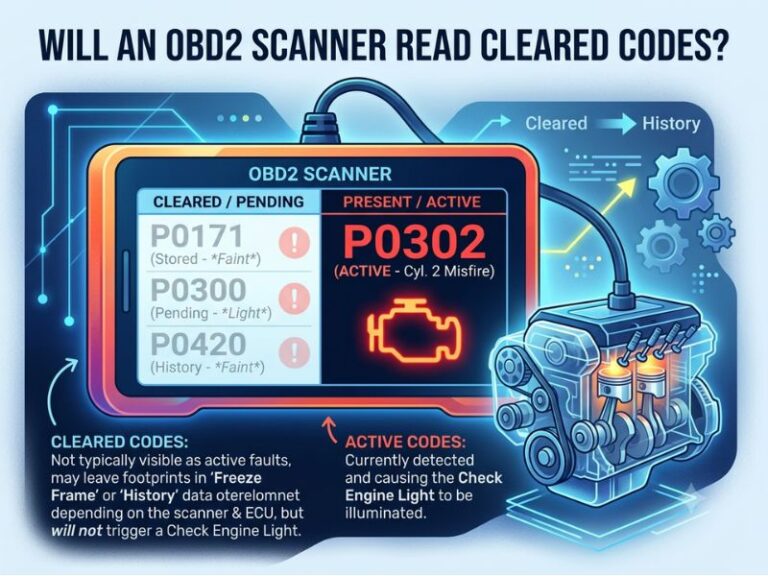
Can an OBD2 Scanner Read Battery Codes?
Sometimes, but not in the way many people expect.
A basic OBD2 scanner cannot read the battery label code or manufacturing date.
However, advanced diagnostic tools may access vehicle charging system information, including:
- Battery voltage
- Charging voltage
- Battery monitoring system data
- Battery registration status
Some modern vehicles have a Battery Management System (BMS) that monitors battery condition.
The OBD2 scanner communicates with the vehicle computers, not the physical battery label.
How to Check If Your Car Battery Is Too Old
Reading the battery date code helps estimate battery age.
Signs of an aging battery include:
- Slow engine cranking
- Clicking sound during startup
- Dim headlights
- Electrical issues
- Battery warning light
- Frequent jump starts
A battery test can measure:
- Voltage
- Cold cranking ability
- Internal resistance
- Overall health
A battery may still work even when it is approaching the end of its expected lifespan.
How to Choose the Correct Replacement Battery
When replacing a battery, match these specifications:
Battery Group Size
Ensure the battery physically fits.
Voltage
Most passenger vehicles require a 12V battery.
CCA Rating
Match or exceed the recommended starting power.
Battery Type
Confirm whether your vehicle requires:
- Flooded battery
- AGM battery
- EFB battery
Terminal Location
The positive and negative terminals must be positioned correctly.
Reserve Capacity
Consider electrical demands and driving conditions.
The vehicle owner’s manual or parts catalog can provide the correct specifications.
Common Mistakes When Reading Battery Codes
Confusing Date Code With Model Number
The battery model identifies the product, not always the manufacturing date.
Ignoring Battery Type
Replacing AGM with a standard battery can cause issues in some vehicles.
Choosing Only by Physical Size
A battery can fit physically but still have incorrect specifications.
Assuming Newer Means Better
The correct battery must match vehicle requirements.
Ignoring Battery Registration
Some modern vehicles require battery management system resets after replacement.
Final Thoughts
So, how to read car battery code starts with understanding the information printed on the battery label. Battery codes can reveal important details such as manufacturing date, group size, CCA rating, voltage, and battery type.
Reading these codes helps you determine battery age, select the correct replacement, and avoid compatibility problems.
Remember that battery codes vary between manufacturers. When replacing a battery, always confirm the group size, power rating, technology type, and vehicle requirements instead of relying only on the code printed on the battery.