How Much Is an Obd2 Scanner: Complete Guide and Practical Tips
An OBD2 scanner typically costs between $20 and $500, although professional diagnostic equipment can cost $1,000 or more. A basic code reader is inexpensive, while advanced scanners charge more for live data, manufacturer-specific systems, service resets, and bidirectional controls.
The practical distinction many shoppers miss is that “OBD2 scanner” can describe two very different tools: a simple device that reads and clears check-engine codes, or a full diagnostic platform that helps identify why a vehicle has a problem. Both plug into the same diagnostic port, but their capabilities, update policies, vehicle coverage, and ease of use can be far apart.
This guide explains the price ranges, features that affect cost, ongoing fees, and the limits of consumer scan tools. By the end, you can compare a code reader with a midrange or professional scanner, decide which functions you actually need, and avoid paying for equipment that cannot perform the diagnosis or service reset your vehicle requires.
OBD2 Scanner Price Ranges
Most buyers can find a useful scanner for less than $150. The right price depends less on the shape of the tool than on the depth of information and control it provides.
- $20 to $50: Basic code readers that retrieve and erase generic powertrain trouble codes.
- $50 to $150: Better handheld units and Bluetooth adapters with live data, readiness monitors, and enhanced app features.
- $150 to $500: Advanced consumer or enthusiast scanners with broader system access, graphing, service functions, and improved vehicle coverage.
- $500 to $1,500 or more: Professional-grade tools with bidirectional controls, extensive manufacturer coverage, frequent updates, and workshop-oriented support.
Prices can also vary within the same category. A $30 wired reader may offer more reliable basic access than a poorly supported wireless adapter, while a $250 tool may be a better value than a $600 device if the more expensive model’s extra functions are irrelevant to your vehicles.
What You Get at Each Price Level
Basic code readers: $20 to $50
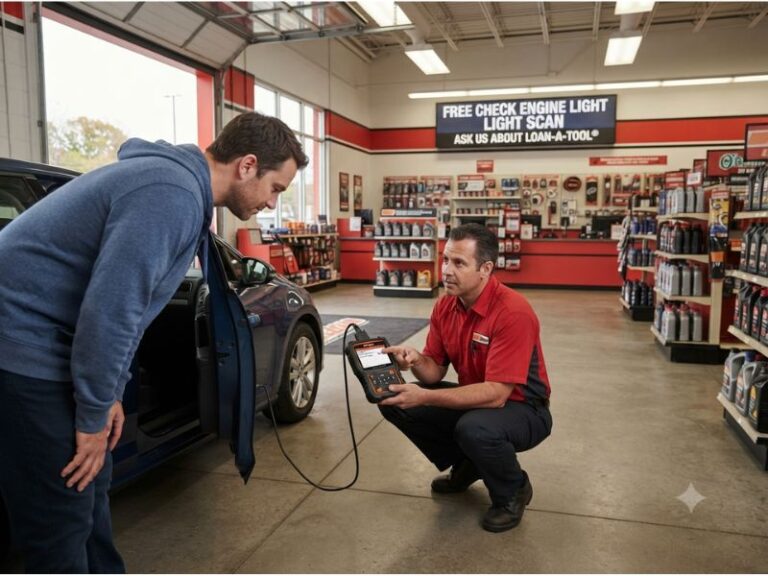
Entry-level devices usually read and clear diagnostic trouble codes from the engine and emissions system. Many also show the code description, display vehicle information, and check whether the emissions monitors are ready for an inspection.
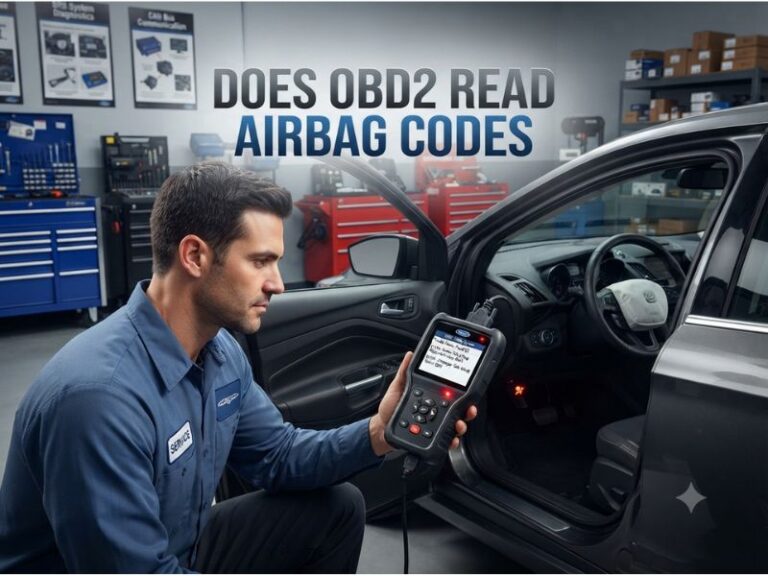
These readers are suitable for finding out why the check-engine light is on and deciding whether a problem appears urgent. They are not usually designed to access airbag, anti-lock brake, transmission, body, or other non-engine modules.
A low-cost reader does not identify the failed part automatically. For example, a code related to an oxygen sensor may result from a wiring fault, exhaust leak, vacuum problem, fuel issue, or actual sensor failure. The tool reports a system condition; further testing is still necessary.
Midrange scanners: $50 to $150
Midrange tools commonly add live data, which shows changing information such as engine speed, coolant temperature, fuel trims, oxygen-sensor readings, throttle position, and vehicle speed. This information can help reveal whether a sensor is behaving normally while the engine is running.
Some scanners in this category access more than the engine computer, but coverage is vehicle-specific. One model may read ABS codes on a particular car but offer no airbag access on another, so compatibility should be checked by year, make, model, engine, and sometimes trim.
Bluetooth adapters often fall into this range when the cost of the adapter and a capable mobile app are considered together. They can be convenient, but connection reliability, app permissions, phone compatibility, and subscription requirements matter as much as the hardware price.
Advanced consumer scanners: $150 to $500
At this level, scanners may read several control modules, display data in graphs, perform selected service resets, and provide more detailed fault information. Common functions can include oil-life reset, battery registration, electronic parking-brake service mode, steering-angle calibration, or diesel particulate filter procedures.
Not every device includes every function. A scanner may advertise “full system diagnostics” but still restrict special procedures on certain vehicles. Manufacturers use different electronic architectures, security systems, and module software, so broad claims should be confirmed against an application-coverage list.
Advanced tools may also support coding or configuration changes. These functions can be useful, but an incorrect setting can create new faults or disable a vehicle feature. They should not be treated like harmless code clearing.
Professional diagnostic platforms: $500 and beyond
Professional equipment generally provides deeper vehicle coverage, faster navigation, more guided tests, and bidirectional controls. A technician may use these controls to command a cooling fan, fuel pump, solenoid, window motor, or other component and observe the response.
Professional tools may also support topology views, oscilloscope connections, key programming, advanced coding, secure gateway access, and extensive service procedures. These features explain the higher purchase price, but they are valuable only when the user understands the tests and the vehicle systems involved.
Some professional scanners require annual software subscriptions or paid updates. The initial price may therefore be only part of the ownership cost, especially for a repair business that needs current model-year coverage.
Features That Increase the Cost
The most important price difference is system coverage. A basic reader may communicate with the engine control module, while a more capable scanner can inspect transmission, ABS, supplemental restraint, body, climate-control, and other modules.
Live data also affects cost. Viewing one value at a time is different from recording multiple parameters, graphing them, reviewing a drive session, or comparing commanded and actual values. More capable data tools can shorten diagnosis when used correctly.
Bidirectional testing is another major upgrade. Reading a code tells you which system noticed a problem; an active test lets the scanner request an action from a module. That may help separate a faulty component from a wiring, power, ground, or control-module problem.
Service functions add value for owners who perform maintenance. Examples include battery-management registration, oil-service resets, injector coding, throttle relearn, steering-angle reset, and brake-maintenance modes. These functions are not universal, and some can affect vehicle operation if performed incorrectly.
Other cost factors include screen size, wired versus wireless communication, battery life, ruggedness, update frequency, technical support, report printing, and the ability to save diagnostic sessions. A large color display is convenient, but it does not automatically mean the scanner performs better tests.
Do You Need a Cheap or Expensive Scanner?
A basic reader is usually enough if the goal is to retrieve a check-engine code before visiting a repair shop, confirm that a repair cleared the code, or check emissions readiness before an inspection. It is also a reasonable emergency tool for a driver who wants a first indication of a problem.
Choose a midrange scanner if you routinely maintain several vehicles, want to inspect live data, or need access to systems beyond the engine. This level is often the best balance for a serious do-it-yourself owner who understands that scan information must be combined with mechanical tests.
An advanced or professional unit makes sense for frequent repairs, multiple vehicle brands, commercial work, or service procedures that a basic reader cannot perform. Paying more is justified when a specific function saves repeated trips to a shop or supports work that you already know how to complete safely.
Before buying, write down the exact tasks you need. “Read codes” is too broad; “read ABS codes on a 2018 Ford F-150 and perform an electronic parking-brake service mode” gives you a useful compatibility target.
Hidden and Ongoing Costs
The purchase price may not include everything needed for useful operation. Bluetooth devices may depend on a paid application, and some scanner brands divide features between free and premium versions.
Software subscriptions are common with professional equipment. An expired subscription may leave basic functions working while removing new vehicle coverage, updated fault-code information, special functions, or technical support.
There can also be costs for proprietary cables, replacement batteries, protective cases, shipping, and manufacturer-specific adapters. A scanner that needs several add-ons may be less economical than a slightly more expensive package that includes the required accessories.
Free updates are attractive, but update policy should be read carefully. “Lifetime updates” may apply only to a defined period, a particular device owner, or certain functions. It does not always guarantee perpetual coverage for every new vehicle.
Compatibility and OBD2 Limitations
Most gasoline vehicles sold in the United States from the 1996 model year onward use standardized OBD2 emissions diagnostics. That does not mean every scanner can communicate with every module or perform every repair function on those vehicles.
Diesel vehicles, hybrids, electric vehicles, imported models, and older vehicles can have different requirements. A tool may connect successfully but provide only generic engine data, leaving manufacturer-specific systems inaccessible.
Compatibility should be verified before purchase using the scanner’s coverage information. Pay attention to supported model years, engine options, control modules, special functions, and security-related restrictions rather than relying only on a statement such as “works with all vehicles.”
Some newer vehicles use secure gateway systems that restrict certain commands. A scanner may read codes but require an authorized account, an online service, or a separate access process to perform coding or bidirectional functions.
How to Use a Scanner Without Misdiagnosing the Car
Start by recording the exact code, freeze-frame information, mileage, symptoms, and conditions under which the warning appeared. Do not erase the code before saving this information, because clearing it can remove useful evidence and reset emissions monitors.
- Park safely, set the brake, and locate the diagnostic connector.
- Turn the ignition off before connecting the scanner unless the device instructions specify otherwise.
- Connect the tool, switch on the ignition, and allow it to identify the vehicle.
- Read stored, pending, and permanent codes when available.
- Save the code numbers and descriptions before clearing anything.
- Research the system and inspect basic causes such as loose connectors, damaged wiring, low fluid, or a weak battery.
- Clear codes only after recording them and completing an appropriate repair or test.
A code is a starting point, not a parts order. Use a repair manual, wiring diagram, multimeter, pressure gauge, or other appropriate test equipment when the fault could involve multiple causes.
Never use a scanner while driving unless a qualified passenger operates it and the setup is secure. Do not perform active tests, coding, or programming with a weak battery or unstable power supply, because interrupted communication can create additional problems.
Common Buying Mistakes
The first mistake is buying the cheapest device and assuming it will read every warning light. A basic OBD2 reader commonly focuses on emissions-related engine codes and may not communicate with ABS or airbag modules.
Another mistake is confusing a code description with a confirmed diagnosis. “Misfire detected” does not prove that a spark plug is defective, and “low catalyst efficiency” does not automatically prove that a catalytic converter must be replaced.
Buyers also overlook update and return policies. A scanner that cannot cover the intended vehicle, or that locks essential features behind an unexpected subscription, can be expensive even when its advertised price looked low.
Finally, avoid choosing by screen size or the number of listed codes alone. Prioritize vehicle compatibility, the specific service functions required, clear data presentation, and support that matches your skill level.
FAQ: OBD2 Scanner Prices
How much is an OBD2 scanner for basic code reading?
A basic code reader usually costs about $20 to $50. It can commonly retrieve and clear generic engine and emissions codes, but it may not read ABS, airbag, transmission, or body-module faults.
Is a $20 OBD2 scanner worth buying?
A $20 scanner can be worthwhile for occasional check-engine-light checks. Confirm that it supports the vehicle, displays the actual code number, and does not require an app or subscription for basic operation.
How much is a professional OBD2 scanner?
Professional scanners commonly cost $500 to $1,500 or more. Workshop-grade systems can cost substantially more when advanced programming, security access, subscriptions, and specialized accessories are included.
Do OBD2 scanners require a subscription?
Basic handheld readers often do not require a subscription, but advanced tools frequently may. Check whether updates, special functions, technical information, or new vehicle coverage stop when the subscription expires.
Can an inexpensive scanner read ABS and airbag codes?
Some inexpensive scanners can access ABS or airbag modules, but many cannot. This capability depends on the vehicle and the scanner’s software, so verify module coverage before buying.
Will an OBD2 scanner tell me which part to replace?
No, a scanner normally identifies a detected fault condition rather than proving a failed part. Accurate diagnosis may require visual inspection, electrical testing, pressure testing, or manufacturer-specific procedures.
Conclusion: Choosing the Right Scanner Price
For occasional check-engine-light checks, a $20-to-$50 reader is often sufficient. Spend roughly $50 to $150 for live data and broader usefulness, or more for system coverage, service resets, and bidirectional testing that match specific repair needs.
The major limitation is that no scanner replaces diagnosis, and clearing a code does not repair the underlying fault. Before purchasing, check compatibility for the exact vehicle and functions required, then choose the least expensive tool that genuinely supports those tasks.