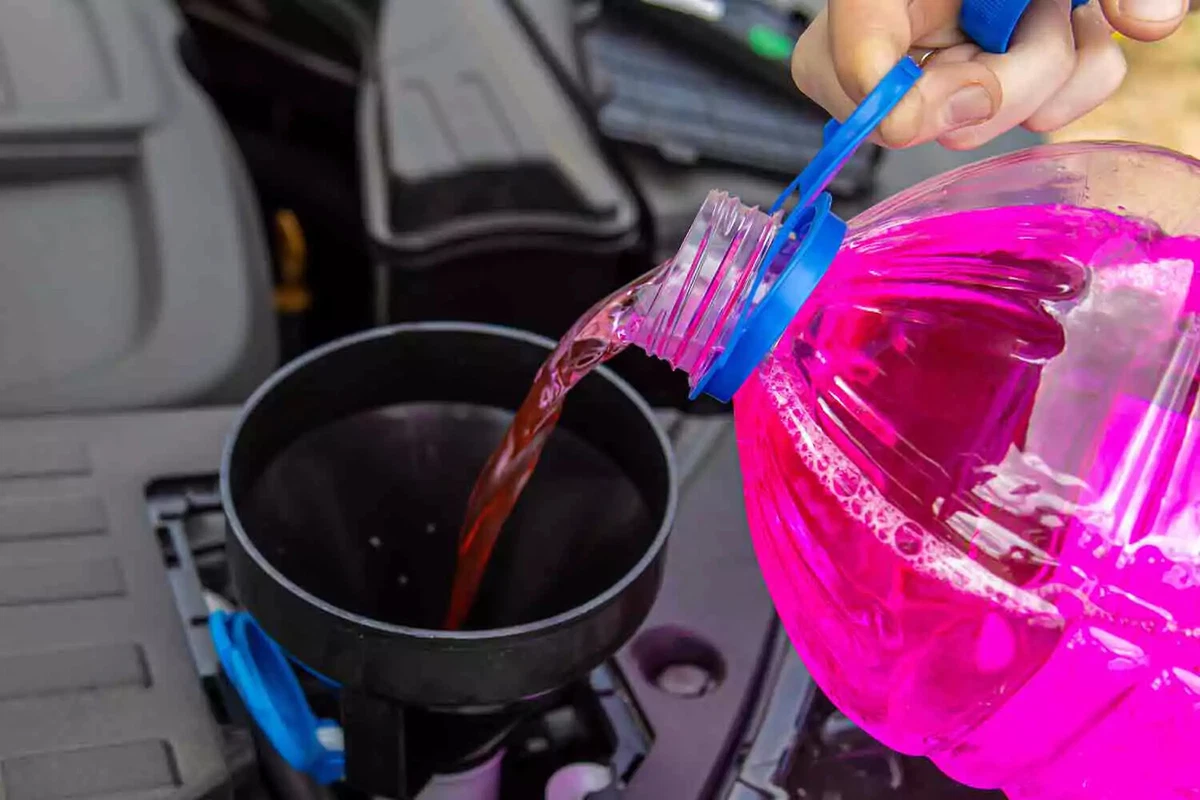
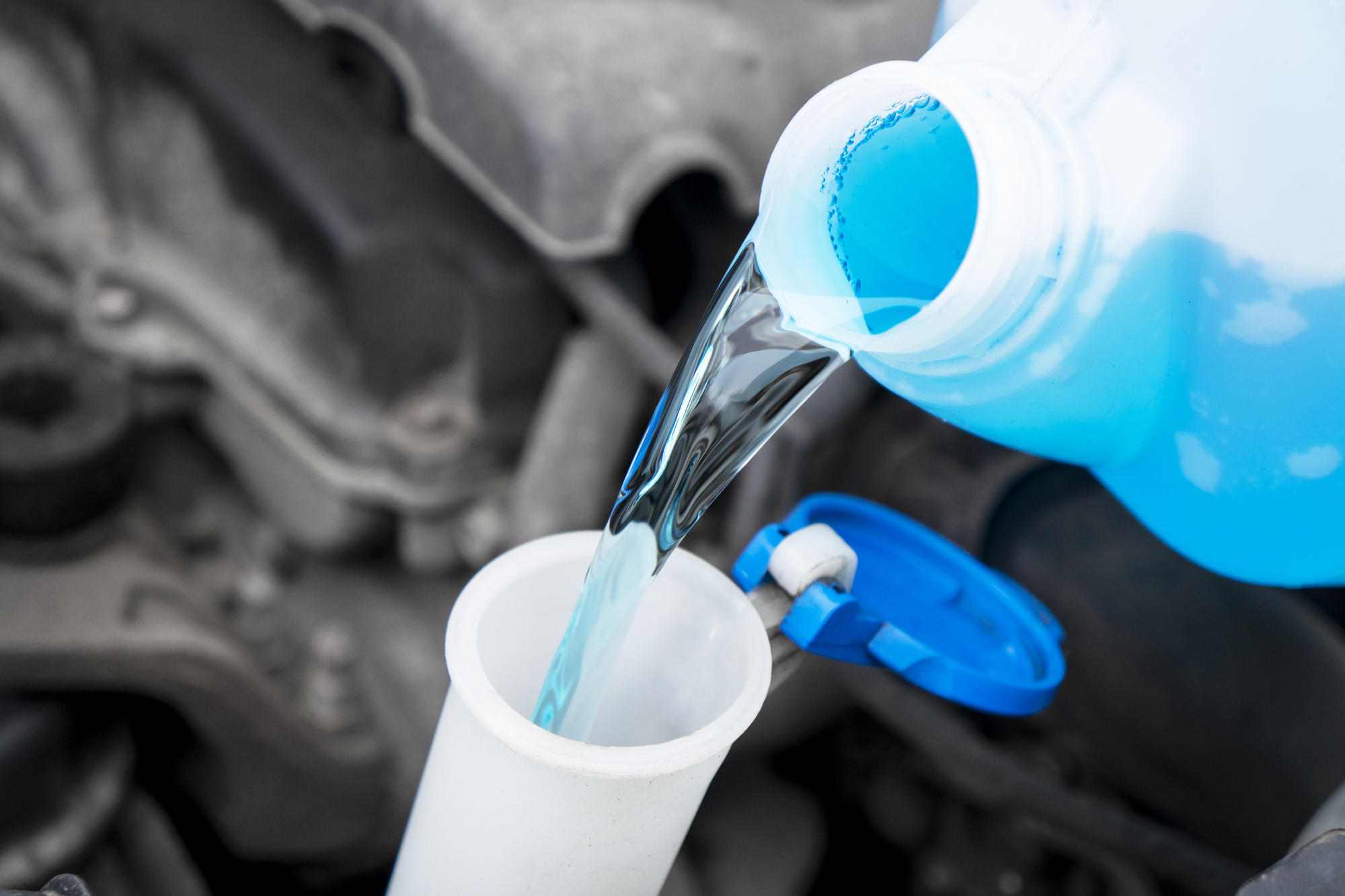
Windshield washer fluid is most commonly blue, but it can also be green, pink, orange, yellow, purple, or clear. The color comes mainly from added dye, and it does not reliably tell you the fluid’s formula, cleaning power, or freezing protection.
For drivers across the United States, windshield washer fluid is a basic part of car care. It helps remove road dust, bugs, pollen, and grime from the windshield so you can see clearly in rain, traffic, and bright sunlight. Walk through an American auto parts store, supermarket, or service center, and you may find several colors of washer fluid on the shelf.
Blue is the color many drivers know best, but other shades are common, too. Some products are made for warm weather, while others help keep washer systems working in freezing conditions. The key difference is the formula, not simply the color printed on the bottle or seen in the reservoir.
This guide explains the colors of windshield washer fluid, what they may mean, and how to choose the right product for your vehicle. It also covers how to identify the correct reservoir, what to do if the fluid looks unusual, and why you should never identify an unknown car fluid by color alone.
Windshield washer fluid is usually blue, although its shade can range from pale blue to a deep, bright blue. Manufacturers may also sell green, pink, orange, yellow, purple, and colorless versions. The exact appearance depends on the product and the dye used.
Blue has become a familiar choice for standard washer fluid, so many drivers expect every bottle to contain blue liquid. That expectation is not a rule. Different brands can use different dyes for similar products, and products of the same color can have different ingredients and performance claims.
In the United States, washer fluid may be sold as a ready-to-use liquid or as a concentrate that must be diluted according to its label. Both types can have added color. A colored liquid is not automatically a winter formula, and a clear liquid is not automatically plain water.
Source: storage.googleapis.com
Blue
A common color for everyday washer fluid. The product may be designed for general cleaning, but the label must confirm its intended use and temperature rating.
Green
Used by some manufacturers for particular cleaning or seasonal formulas. Green alone does not prove that a product is stronger, safer, or more resistant to freezing.
Pink or orange
Colors found in some washer fluid products. They may help distinguish a product range, but they do not establish a standard formula.
Yellow, purple, or clear
Other possible appearances. Check the product label instead of assuming a particular function from the shade.
Why Is Blue Washer Fluid So Common?
Blue dye gives washer fluid a recognizable appearance. It can help drivers distinguish the liquid from clear water and notice its presence in a translucent reservoir. It may also help a manufacturer distinguish one product from another.
However, blue is a common convention, not a universal automotive standard. A blue product might be intended for ordinary cleaning or for use in cold weather. Its freezing protection depends on the ingredients and concentration, not the blue dye.
Useful visual cue
Color can help you recognize a familiar product, but it cannot confirm its identity when the source is unknown.
Check the label
Look for the product name, intended season, temperature rating, and directions before filling the reservoir.
What Do Different Windshield Washer Fluid Colors Mean?
Different washer fluid colors can help you tell products apart, but they do not have fixed meanings across all brands. A manufacturer may use one color for a standard cleaner and another for a seasonal product, while another manufacturer may use the same colors differently.
The best way to understand a product is to read its packaging. Look for claims about bug removal, road film, de-icing, freeze protection, and whether the liquid is ready to use or needs dilution. These details provide more useful information than its appearance.
The following table summarizes common colors and what you can reasonably infer from them. The examples are general observations, not a guaranteed code for every product sold in the United States.
Source: tiendamia.com
Blue washer fluid
Often used for general-purpose cleaning. Confirm the stated freezing protection if you drive in cold weather.
Green washer fluid
May identify a particular brand or product line. Do not assume it is a winter formula or an environmentally safer option.
Pink washer fluid
Can be used for a range of formulations. Its color does not confirm whether it contains special cleaning additives.
Orange washer fluid
May distinguish a particular formula, but the shade alone cannot establish its cleaning or de-icing ability.
Yellow or purple washer fluid
May be used by certain manufacturers. Verify the product description rather than assigning a universal meaning.
Clear washer fluid
May be a colorless washer product. Never assume an unidentified clear liquid is washer fluid or safe to put in a vehicle.
Does Washer Fluid Color Tell You Its Freezing Point?
No. Color alone cannot tell you the temperature at which a washer fluid may freeze. Two blue liquids can have different freeze ratings, and a brightly colored product may not provide the cold-weather protection your vehicle needs.
When buying fluid for winter driving, check the stated temperature rating on the container. Match it to the lowest temperatures you reasonably expect in your area, and follow the label’s directions. A product rated for mild cold may not be suitable for a severe winter.
Concentrates need particular care because adding too much water can reduce their freeze protection. Use only the dilution ratio specified by the manufacturer.
Read the temperature rating
Use the printed rating rather than the color as your guide to cold-weather suitability.
Follow dilution instructions
Do not add extra water to a winter formula unless the product directions permit it.
Does a Brighter Color Mean Better Cleaning?
No. A brighter shade does not prove that washer fluid cleans better. Cleaning depends on the formula, including its cleaning agents and any additives intended for bugs, road film, or other residue.
If you often drive on highways during warm months, a formula labeled for bug removal may be useful. If your area gets freezing weather, temperature protection should be a priority. In either case, compare the stated features rather than the color.
For summer
Consider a product labeled for insects, pollen, and road grime.
For winter
Choose a formula with a suitable stated freeze rating and any de-icing features you need.
Why Does Windshield Washer Fluid Have Different Colors?
Manufacturers add dye mainly to give products a distinctive appearance. Color can make a fluid easier to recognize, help distinguish products within a range, and make the liquid visible in some translucent reservoirs. It can also make the product easier to identify when checking a familiar container.
The dye is separate from the ingredients that do the main cleaning work. Depending on the formula, washer fluid may contain water, cleaning agents, solvents, and ingredients that help reduce freezing. The exact composition varies by product.
Color is therefore a visual feature, not a complete description of a chemical mixture. A liquid that looks like the washer fluid you used last season may still be a different product. If you need to know what is in a container, check its original label or safety information instead of relying on its hue.
Source: c2dpetroleum.com
Product identification
Dye can help a manufacturer distinguish products and help a driver recognize a familiar fluid.
Visibility in the reservoir
A tint may make the liquid easier to see through translucent plastic, although visibility varies by vehicle and reservoir design.
No universal formula code
The same color can appear in products with different ingredients, uses, and temperature ratings.
Does Dye Change Washer Fluid Performance?
The color itself is not a reliable measure of cleaning power or freezing protection. Those properties depend on the complete formula and how the product is used. A dye is generally present to give the liquid its chosen appearance.
Do not choose a fluid simply because its color looks familiar or appealing. Check whether the product suits your vehicle and the weather in which you drive. If the label gives a warning or a specific dilution ratio, follow it.
Focus on function
Compare cleaning claims, temperature ratings, and use instructions.
Avoid assumptions
Never treat color as proof of chemical compatibility or safety.
How to Choose the Right Windshield Washer Fluid
Choose windshield washer fluid according to the weather, the kind of dirt you encounter, and the product instructions. Color should be a secondary consideration. A suitable formula helps keep the glass clear without leaving you dependent on a shade that has no universal technical meaning.
In the United States, driving conditions can vary greatly between regions. A driver in a warm southern state may focus on bugs and road film, while someone in a northern state may need reliable freeze protection. Drivers who travel between regions should consider the coldest conditions they expect to encounter.
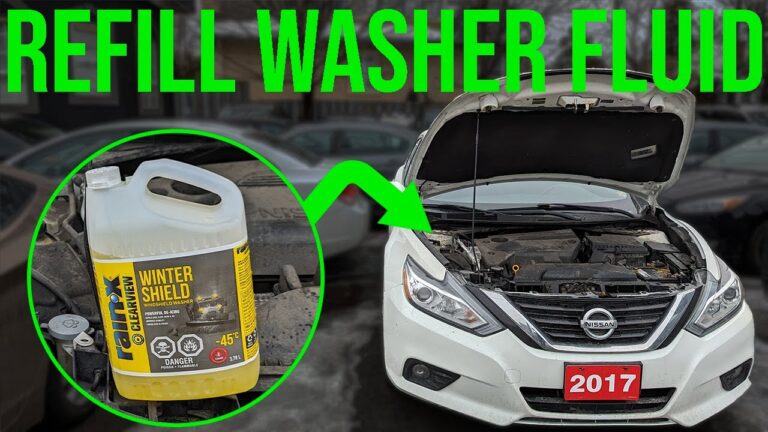
Before buying a product, check whether it is ready to use or concentrated. A ready-to-use liquid can generally be poured directly into the correct reservoir, while a concentrate must be mixed as directed. Using the wrong dilution can change performance and may reduce protection against freezing.
Source: hitchesguide.com
Check the season
Choose a summer, winter, or all-season formula that fits your local conditions and planned trips.
Read the temperature rating
For freezing weather, select a product rated for the temperatures you expect.
Match the cleaning need
A bug-removing product may help during warm months, while a winter formula may focus on low-temperature performance.
Confirm the dilution
Use concentrated fluid only with the mixing ratio on its label.
Follow vehicle guidance
Consult the owner’s manual if you are unsure which products or procedures are suitable for your vehicle.
Summer, Winter, and All-Season Washer Fluid
Summer washer fluid often emphasizes removing bugs, pollen, dust, and road film. It may be useful in areas where freezing temperatures are not a concern. However, a summer formula may not provide enough protection for winter conditions.
Winter washer fluid is formulated to work at lower temperatures. The label’s freeze rating is more useful than the color when deciding whether it fits your climate. Do not assume every product marketed as a de-icer has the same temperature limit.
All-season fluid is intended to cover a broader range of conditions. Its performance still depends on the specific formula and its stated rating. If your vehicle travels through severe winter weather, verify that the product is suitable for the lowest temperatures expected on your route.
Summer formula
Useful when insect residue and general road grime are the main concerns and freezing conditions are unlikely.
Winter formula
Useful when low temperatures may cause ordinary fluid or water to freeze.
All-season formula
May suit mixed conditions when its stated temperature protection matches the climate.
Can You Mix Different Colors of Washer Fluid?
Different colors do not automatically mean that two products are incompatible, and matching colors do not prove that two formulas are compatible. The ingredients and manufacturer directions matter more than the dye.
If you know that both products are ordinary washer fluids and their labels permit the intended use, mixing may be acceptable. However, mixing different formulas can change their cleaning properties or reduce cold-weather protection. This is especially relevant when a concentrate or a winter-rated product is involved.
When the existing fluid is unknown, the safest practical choice is to check the product information or ask a qualified technician. Avoid adding an unfamiliar liquid just because its color resembles the fluid already in the reservoir.
Known products
Follow both manufacturers’ instructions and check whether the intended combination is permitted.
Unknown products
Do not guess based on color. Seek reliable identification before adding more fluid.
How to Identify the Windshield Washer Fluid Reservoir
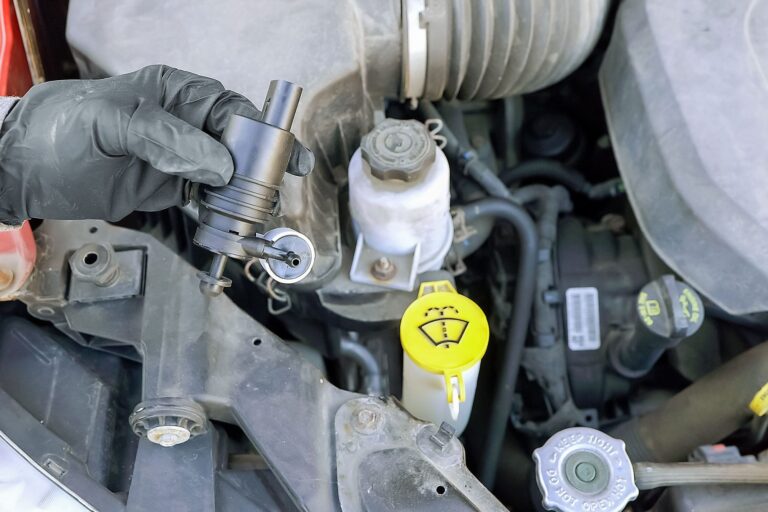
The windshield washer fluid reservoir is usually a plastic tank under the hood. Its cap often shows a symbol of a windshield with water spraying onto it. The exact location and cap design depend on the vehicle, so consult the owner’s manual if you cannot identify it with confidence.
Do not identify a reservoir by the color of its cap alone. Engine coolant, brake fluid, and other automotive fluids have different purposes, and putting the wrong liquid in a system can cause damage or create a safety risk. Confirm the symbol and location before opening a cap.
Check the vehicle with the engine off and parked safely. If you need to work near hot engine parts, wait until the area is safe to approach. Keep the fluid container stable and avoid spilling it on the vehicle, the ground, or nearby components.
Source: aestheticpoems.com
Find the correct symbol
Look for a windshield and spray symbol on the cap, then verify the reservoir in the owner’s manual if needed.
Check the fluid level
If the reservoir is translucent, you may be able to see the level from outside. Follow the vehicle’s instructions.
Use the right product
Pour washer fluid only into the confirmed washer reservoir and follow the product directions.
Secure the cap
Close the reservoir securely after filling and wipe up any spills using the product’s safety guidance.
What If You Cannot Find the Reservoir?
Reservoir locations vary by make and model. Some tanks sit near a front corner of the engine compartment, while others are partly hidden beneath covers or positioned farther from the engine. The washer cap may be visible even when most of the tank is not.
Use the owner’s manual or an official vehicle guide to identify the correct location. If the layout remains unclear, ask a qualified mechanic rather than opening a reservoir based on guesswork.
Use the owner’s manual
Check the section on washer fluid or under-hood components.
Ask for help if uncertain
A technician can identify the reservoir and check the system if access is difficult.
What Does It Mean If Washer Fluid Changes Color?
A change in appearance does not always indicate a problem, but an unexpected change deserves attention. Lighting, the color of the reservoir, a mixture of known products, or contamination can affect how the liquid looks. Color alone cannot identify the cause.
If the fluid has become cloudy, contains visible debris, or has an unusual appearance, avoid guessing about its identity. Check the container and product instructions if you know what was added. If the source is uncertain, seek professional advice before adding more fluid or using the washer system.
If the washer system stops spraying, do not assume that color is the cause. A low fluid level, a blocked nozzle, a frozen line, a leak, or a pump fault may be responsible. The best next step depends on the symptoms and the conditions in which the problem occurs.
Source: autoglassestimator.com
The fluid looks cloudy
Possible causes include contamination or a mixture of products. Verify the fluid’s identity and ask for help if you cannot establish what is in the reservoir.
The washer stops spraying in cold weather
The fluid or a part of the system may be frozen. Do not keep operating a system that may be frozen; let the vehicle warm in a safe place and consult the manual.
The reservoir level keeps dropping
A leak may be present, or the system may be using fluid normally. If the level falls quickly without an obvious reason, have the system inspected.
The windshield remains dirty
The fluid may not suit the type of residue, or the nozzles and wiper blades may need attention.
Can You Identify an Unknown Car Fluid by Color?
No. Color is not a reliable way to identify an unknown automotive fluid. Washer fluid may be blue or another shade, and other vehicle fluids can also have varied colors. Modern coolant products, for example, are sold in several colors, so appearance alone can be misleading.
If you find a puddle under your vehicle, do not touch or taste the liquid to identify it. Note where it appears to be coming from, keep children and pets away, and consult a qualified mechanic if the source is unclear. If you suspect a hazardous spill, follow the relevant local safety guidance.
If you accidentally put the wrong fluid into a vehicle reservoir, do not continue adding liquids to dilute it. Check the vehicle manual and contact a qualified repair professional for advice on the appropriate next step.
Do not taste or directly handle unknown fluid
Automotive liquids may contain harmful chemicals. Avoid exposure and keep the area away from children and pets.
Use reliable identification
A known product label, vehicle manual, or qualified technician is more reliable than color.
Windshield Washer Fluid Safety and Common Mistakes
Windshield washer fluid should be handled according to its label because some formulas contain ingredients that can be harmful if swallowed or improperly handled. Keep the container closed, store it in its original packaging, and place it where children and pets cannot reach it.
Never drink washer fluid or transfer it into a food or drink bottle. Avoid contact with your eyes, follow any protective measures listed on the label, and wash your hands after handling the product. If exposure occurs, follow the product’s first-aid directions and seek appropriate medical or poison-control advice.
Use only products intended for windshield washer systems. Household cleaners, engine coolant, and other automotive liquids are not suitable substitutes simply because they look similar. Follow the owner’s manual and the product label, especially when working with concentrates or cold-weather formulas.
Source: storage.googleapis.com
Do not use color as a safety test
A blue or clear liquid is not automatically harmless. Read the label and safety information.
Do not substitute engine coolant
Coolant belongs in the engine cooling system, not the washer reservoir.
Avoid unsuitable household products
Use a washer fluid designed for automotive glass and the vehicle’s washer system.
Store products safely
Keep fluids sealed in their original containers and away from children, pets, food, and drink.
Is Windshield Washer Fluid Safe for Car Paint?
A washer fluid intended for automotive use is generally designed to clean the windshield when used as directed. However, the exact formula matters, and spilled fluid should be handled according to its label rather than left on painted surfaces without checking the instructions.
If you spill washer fluid while filling the reservoir, follow the product directions for cleaning the area. Do not mix it with other cleaners or chemicals. If a product has a specific warning about vehicle finishes, follow that warning.
Clean spills promptly
Follow the manufacturer’s directions for removing spilled fluid from the vehicle.
Use the intended product
Do not use industrial cleaners or unrelated automotive liquids in place of washer fluid.
Frequently Asked Questions
Q
What color is windshield washer fluid most commonly?
Blue is the most familiar and widely seen color of windshield washer fluid in the United States. However, some products are green, pink, orange, yellow, purple, or clear. The color varies by manufacturer and does not identify every ingredient or performance feature.
Q
Is windshield washer fluid always blue?
No. Blue is common, but there is no universal rule that requires every washer fluid product to be blue. Manufacturers can use different dyes for different product lines, and some formulas have little or no visible color.
Q
Does blue windshield washer fluid mean it is safe for winter?
No. Blue dye does not prove that a fluid can withstand freezing temperatures. Check the product’s stated temperature rating and follow its instructions. Choose a formula suited to the lowest temperatures you expect to encounter.
Q
Can green or pink windshield washer fluid be used in any car?
Color alone cannot establish whether a product is suitable. Check that the liquid is intended for windshield washer systems, follow the product directions, and consult the vehicle owner’s manual if you are uncertain. Do not confuse washer fluid with coolant or another automotive liquid.
Q
Does windshield washer fluid color affect cleaning performance?
The dye itself is not a reliable measure of cleaning performance. Cleaning depends on the complete formula and its intended use. Compare the product’s stated features, such as bug removal, road-film cleaning, and cold-weather protection, instead of selecting it by shade.
Q
Can I mix blue and green windshield washer fluid?
Different colors do not automatically mean the products are incompatible, but color cannot confirm compatibility either. Check the ingredients and instructions for both known products. If the existing fluid is unknown, or if you are unsure about the effect on freeze protection, ask a qualified technician before mixing them.
Q
Why is my windshield washer fluid clear?
Some washer fluids may be colorless or have very little visible tint. Clear appearance does not mean that the liquid is plain water or that it is safe to handle without precautions. Verify its identity from the original container or other reliable product information.
Q
What should I do if I accidentally put the wrong fluid in the washer reservoir?
Do not add more liquid in an attempt to dilute the unknown product. Check the vehicle manual and contact a qualified repair professional to determine whether the reservoir needs to be drained and cleaned. The correct response depends on which liquid was added and how much entered the system.
✦ Wrapping Up
Conclusion
Windshield washer fluid is most commonly blue, but it can also be green, pink, orange, yellow, purple, or clear. These colors mainly reflect the dye selected by the manufacturer and do not provide a universal code for the product’s ingredients, cleaning power, or resistance to freezing.
For drivers in the United States, the best choice depends on the weather, the type of dirt on the windshield, and the vehicle’s instructions. Read the product label, check the temperature rating when freezing weather is possible, and follow the correct dilution directions for concentrates. If you cannot identify a liquid or reservoir with confidence, do not guess based on color.
💡 Key Takeaway
Before your next refill, confirm the windshield washer reservoir symbol, choose a product suited to your local weather, and read the label for its intended use and temperature rating. Treat color as a visual clue, not proof of what the liquid contains.