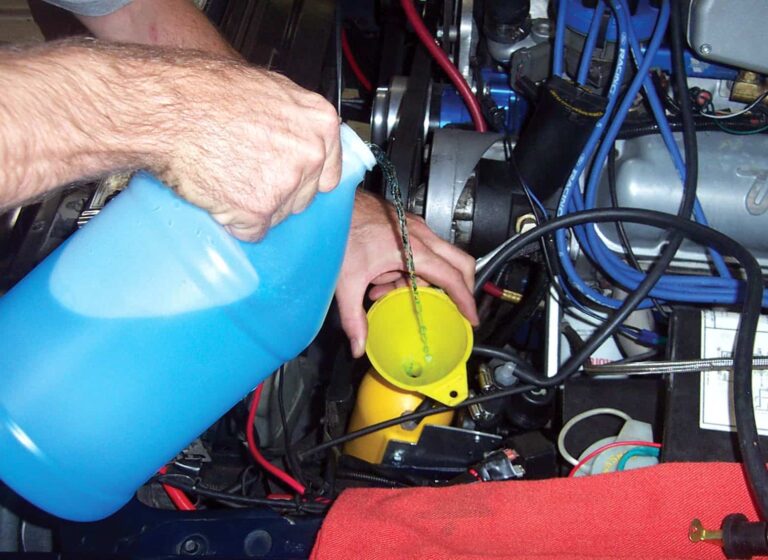
Windshield washer fluid color usually does not matter by itself. There is no universal color code for automotive washer fluid in the United States. The formula, cleaning ability, freeze protection, and vehicle compatibility matter far more than the color.
Across the United States, drivers face different road conditions throughout the year. A driver in Minnesota may need strong freeze protection during winter, while a driver in Florida may focus on removing dust, pollen, and bug residue. Both need washer fluid that suits their local weather and their vehicle.
Walk into an American auto parts store, and you may see blue, green, orange, pink, or purple washer fluid. These colors can help brands tell their products apart, but they do not follow one national standard. Two blue products may have different temperature ratings, and two products of different colors may offer similar cleaning performance.
The safest way to choose washer fluid is to read the product label, check the expected temperatures, and follow your vehicle owner’s manual. Color can offer a visual clue, but it cannot prove that a fluid has the right ingredients or features. This guide explains what the colors may mean, when the formula matters, and how to avoid common mistakes.
In most cases, the color itself does not affect how well windshield washer fluid cleans glass. The dye mainly helps distinguish one product from another. The ingredients do the actual work of loosening road film, dust, insect residue, and other dirt.
The key difference is between a product’s appearance and its formula. A blue fluid may be a basic cleaning solution, while another blue fluid may offer stronger winter protection. A green fluid might target bug residue for one brand but serve as an all-season product for another.
There is no single rule that makes a certain color suitable for a specific temperature or task. Treat color as a secondary clue, not as proof of performance. If the bottle says the product is rated for winter use, check the stated temperature rating before relying on it in cold weather.
This distinction also matters when topping up a reservoir. If you know that the fluid already in the tank is suitable for your climate, adding a compatible product may be reasonable. If you do not know what is in the tank, the color alone cannot tell you whether the two formulas will work well together.
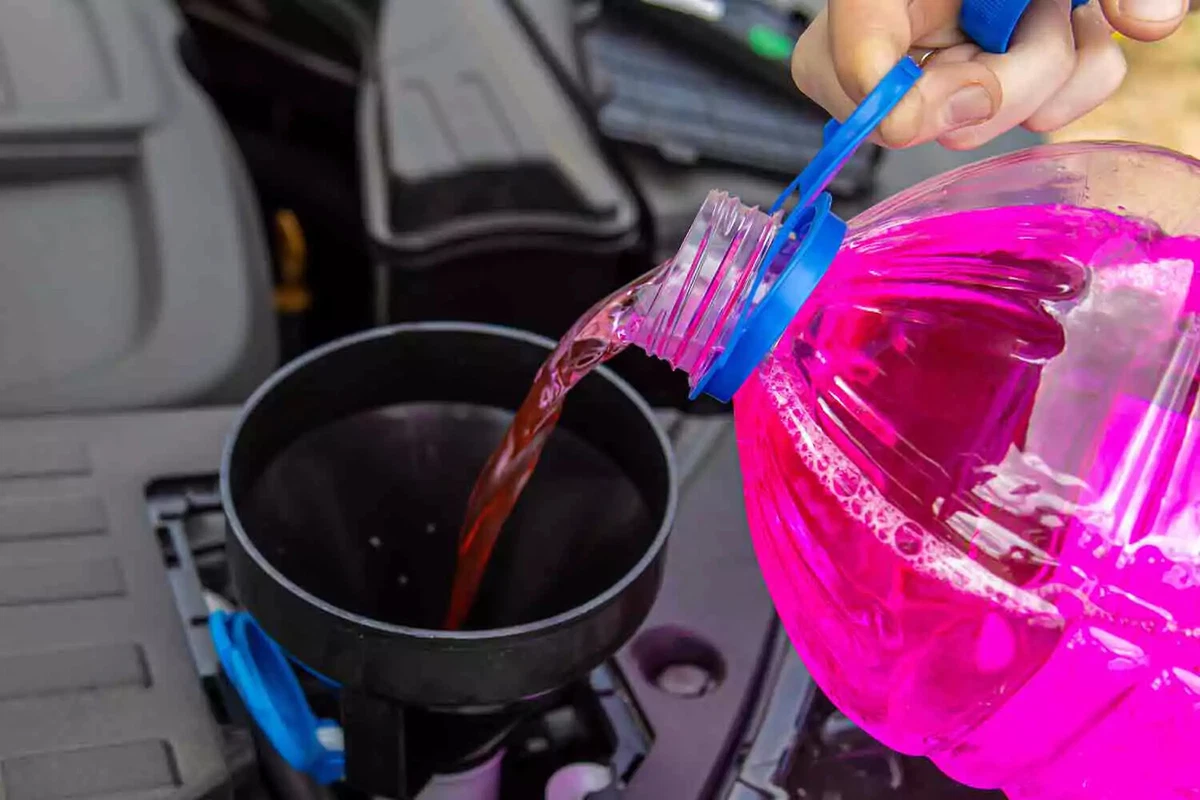
Source: www.familyhandyman.com
Color is a visual identifier
Dyes help distinguish products, but they do not provide a reliable measure of cleaning strength or freeze protection.
Formula determines performance
Cleaning agents, solvents, water content, and other additives influence how a product performs.
Labels guide the choice
Use the stated purpose, temperature rating, and vehicle guidance to select the right product.
Is There a Standard Color Code in the United States?
No universal color code assigns a fixed meaning to each washer fluid color across the US market. Manufacturers may use colors to identify product lines, but another company can use the same color for a different formula.
For example, blue does not always mean winter-ready, and green does not always mean bug remover. The product label is the reliable source for those details. Do not use color alone to identify an unknown liquid in a garage or engine bay.
Check the exact product
Read the front label and any temperature or dilution instructions on the back.
Do not identify fluids by color alone
Different vehicle fluids can look similar, and dyes can vary between brands.
What Do Different Windshield Washer Fluid Colors Mean?
Blue, green, orange, pink, and purple are common colors found in washer fluid products. However, their meanings depend on the manufacturer. The table below describes possible uses, not fixed industry rules.
The best approach is to compare the product label with your driving needs. A fluid marketed for bug removal may be useful during summer road trips, while a winter formula may be more important during freezing weather. Some products combine general cleaning with seasonal protection.
Never assume that a certain color guarantees a particular freezing point. Two fluids with the same appearance may have very different temperature ratings. Even a product sold as all-season fluid must be checked against the lowest temperatures you expect.
Source: thompsonsales.com
Blue fluid
Often sold as a general-purpose washer fluid, but the exact cleaning and temperature features depend on the label.
Green fluid
May be used for general cleaning or a special cleaning formula. It does not automatically indicate a bug-removal or environmentally friendly product.
Orange or yellow fluid
May identify a particular seasonal or specialty product. Read the label to confirm its intended use.
Pink or purple fluid
May appear in some specialty or cold-weather products. The color alone cannot confirm winter performance.
How to Read the Color and Product Label Together
Start with the product name, then look for its intended use. Terms such as summer, winter, all-season, bug remover, and de-icer can help you narrow down the options. Check the temperature rating and any warnings before buying.
If the bottle contains concentrate, follow the dilution instructions exactly. Adding too much water can reduce the expected cleaning performance or freeze protection. If the product is premixed, do not dilute it unless the label tells you to do so.
Find the temperature rating
Look for the lowest temperature at which the product is intended to provide protection.
Confirm the product type
Make sure it is automotive windshield washer fluid rather than a different cleaning liquid.
Follow mixing instructions
Use the specified ratio for concentrates and never guess at the amount of water.
What Matters More Than the Color of Washer Fluid?
The right washer fluid should clean the windshield, suit the weather, and work with your vehicle’s washer system. Color cannot tell you whether a product meets those needs. A few label details can make a much bigger difference to visibility and maintenance.
First, consider the climate. In places where winter temperatures fall below freezing, choose a product with a suitable cold-weather rating. A summer formula may freeze in the reservoir, hoses, or spray nozzles, which can stop the system from working when you need it most.
Next, consider the dirt you face. Drivers who travel on highways may deal with bug residue, while drivers in cities may see dust, road film, and grime. A product designed for the relevant type of dirt can help, but it should still meet the vehicle maker’s requirements.
Finally, check compatibility. Some vehicles have special washer systems, sensitive exterior materials, or sensors that may react poorly to certain additives. Tesla, for example, warns in its Model 3 manual that washer fluids containing water repellent or bug wash can cause streaking, smearing, or noise. This shows why vehicle-specific guidance matters more than a fluid’s color.
Source: garagesee.com
Freeze protection
Choose a product rated for the coldest conditions expected in your area, with enough protection for the actual weather.
Cleaning ability
Choose a formula intended for the dirt you commonly encounter, such as road film or bug residue.
Vehicle compatibility
Check your owner’s manual for restrictions on additives, materials, or specialty washer systems.
Correct dilution
Use concentrates only at the stated ratio. Incorrect dilution may weaken the product.
Why Freeze Protection Is So Important
A frozen washer system cannot deliver fluid when you need to clear the windshield. Ice may block the nozzles or prevent fluid from moving through the hoses. In severe cold, frozen liquid can also place stress on parts of the system.
Choose a winter product with a temperature rating suited to local conditions. For example, a driver who expects temperatures near 0 degrees Fahrenheit should not rely on a product rated only for milder winter weather. Allow a suitable safety margin when local temperatures can drop sharply.
Read the rated temperature
Do not use color or the word winter as a substitute for a stated temperature rating.
Account for local weather
Use a rating that suits expected lows rather than the average daytime temperature.
Can You Mix Different Colors of Windshield Washer Fluid?
Different colors do not automatically make two washer fluids incompatible. However, products of different colors may have different ingredients, temperature ratings, or additives. The important question is whether the formulas are compatible, not whether their colors match.
Mixing a summer formula with a winter formula can reduce the level of freeze protection compared with the winter product used alone. Mixing products with different cleaning additives may also change how well they remove dirt or how much residue they leave behind.
If you know both products and their labels permit mixing, follow their instructions. If you cannot identify the fluid already in the reservoir, avoid guessing. Consult the vehicle manual or a qualified service professional if you are unsure what the system contains.
There is no need to drain a reservoir simply because the liquid looks different from the new bottle. A color difference by itself does not prove that damage has occurred. Focus instead on product compatibility, performance, and the temperatures the vehicle will face.
Source: carfromjapan.com
Do not mix based only on color
Matching colors do not prove that the formulas are the same, and different colors do not prove they are incompatible.
Avoid diluting a winter-rated formula with a product that offers weaker freeze protection.
Follow vehicle guidance
Some manufacturers warn against mixing specific washer fluid products because of possible deposits or blocked nozzles.
What If You Already Mixed Two Fluids?
If you have already mixed two ordinary automotive washer fluids, do not panic. The mixture may still work, but its final cleaning performance and freeze protection may be uncertain. Check both product labels and the vehicle manual before deciding what to do next.
If freezing weather is approaching and you cannot confirm the mixture’s rating, ask a qualified service professional how to restore suitable protection. Do not use heat or an open flame to thaw a frozen washer system. If the spray pattern changes or the nozzles stop working, have the system checked rather than repeatedly running the pump.
Check both labels
Look for warnings against mixing, different intended uses, and temperature ratings.
Watch system performance
Poor spray, streaks, or blocked nozzles may indicate a problem that needs further checking.
How to Choose the Right Washer Fluid for Your Car
Choose washer fluid by matching its intended use to your climate, driving conditions, and vehicle requirements. This simple process is more reliable than picking a bottle because its color looks familiar.
You do not need the most specialized product for every trip. A suitable general-purpose fluid may meet your needs in mild weather, while a winter-rated product is necessary when freezing temperatures are likely. Specialty formulas can help with certain kinds of dirt, but they are not automatically suitable for every vehicle.
Before opening the bottle, confirm that it is designed for automotive washer systems. Read the directions, check whether it is premixed or concentrated, and note any warnings. Keep the container nearby until you have finished filling the reservoir, so you can refer to the instructions if needed.
Source: www.slashgear.com
Step 1: Check your owner’s manual
Find the recommended washer fluid type and any restrictions on water-repellent additives or specialty products.
Step 2: Match the climate
Choose an appropriate temperature rating for the lowest temperatures you expect during use.
Step 3: Match the cleaning task
Consider whether general cleaning, bug removal, or another labeled feature best fits your driving conditions.
Step 4: Check the formula
Confirm whether the fluid is premixed or concentrated and follow the stated dilution ratio.
Step 5: Fill the correct reservoir
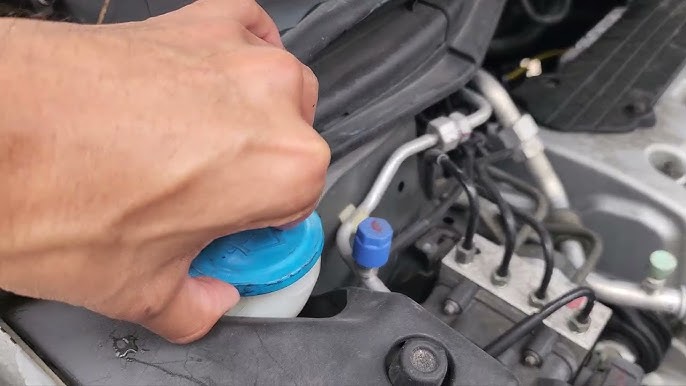
Use the washer fluid reservoir identified in your manual. Never pour the product into a coolant, brake fluid, or other reservoir.
Step 6: Test the spray
Once the cap is secure, test the washers in a safe, stationary setting and confirm that fluid reaches the glass.
A Simple Decision Table for US Drivers
Use the table below as a starting point when comparing products. These are general climate-based examples, not guarantees that one formula fits every vehicle. Always check the bottle and the owner’s manual before filling the system.
Mild or warm weather
Consider a suitable general-purpose or summer formula if freezing conditions are not expected.
Frequent insect residue
Consider a product labeled for bug removal, provided it is compatible with your vehicle.
Cold winters
Choose a winter-rated product with sufficient protection for expected low temperatures.
Unpredictable seasonal changes
An appropriate all-season product may be practical if its stated temperature rating covers local conditions.
Common Washer Fluid Mistakes to Avoid
Most washer fluid problems come from choosing the wrong formula, mixing products without checking compatibility, or filling the wrong reservoir. A few basic precautions can help protect visibility and avoid unnecessary repairs.
One common mistake is treating radiator antifreeze as a substitute for windshield washer fluid. Engine coolant is designed for the cooling system, not for cleaning glass. If sprayed onto the windshield, it can leave a film and seriously impair visibility.
Another mistake is using plain water as a long-term replacement in freezing conditions. Water may be allowed as a temporary option in some vehicle manuals, but it lacks the cleaning additives and cold-weather protection of a suitable washer fluid. It can freeze in the system when temperatures fall below its freezing point.
Drivers should also avoid assuming that a more expensive or more colorful product must work better. Compare the stated features and suitability instead. A product with a special additive is useful only if that feature fits your needs and the vehicle maker allows it.
Source: www.pinterest.com
Never use engine coolant in the washer tank
Coolant can impair visibility when sprayed on glass and may damage paint or trim.
Do not ignore temperature ratings
A formula that works in summer may freeze in winter conditions.
Do not guess at concentrate ratios
Incorrect dilution can reduce cleaning ability or freeze protection.
Do not keep running an empty pump
Refill the reservoir before testing the washers to avoid unnecessary strain on the system.
Do not rely on color to identify unknown fluid
If the liquid’s identity is uncertain, avoid handling or mixing it until you can establish what it is.
Washer Fluid Safety and Storage
Some windshield washer fluids contain methanol or other ingredients that can be harmful if swallowed. Keep the product in its original labeled container, close the cap securely, and store it out of reach of children and pets. Never transfer it into a drink bottle or food container.
Follow the product label when handling the fluid, and avoid contact with the eyes and skin. Clean up spills according to the label directions. Keep the product away from heat, sparks, and flames when the label warns that it is flammable.
If someone swallows washer fluid, seek urgent poison-control guidance or emergency medical help. In the United States, Poison Control can be reached at 1-800-222-1222. Do not wait for symptoms to appear, because some toxic effects may be delayed.
Keep the original label
The label provides product identity, first-aid advice, handling precautions, and disposal guidance.
Protect children and pets
Use secure storage and never leave an open container unattended.
Follow local disposal rules
Check your community’s household hazardous waste guidance for unused fluid.
Troubleshooting Washer Fluid Problems
If the washer system does not work as expected, start with the easiest and safest checks. Color alone rarely explains a fault. The fluid level, weather, product type, nozzles, pump, and hoses are more useful places to look.
If the reservoir is empty, refill it with a compatible product. If the system is frozen, let the vehicle warm in a safe, suitable place and follow the owner’s manual. Do not pour boiling water onto components or use a flame to thaw them.
If fluid reaches the windshield but leaves streaks, check the glass and wiper blades as well as the fluid. Dirt on the glass, worn blades, or a residue-forming additive may all contribute. If the system remains blocked or the pump makes an unusual sound, a service professional can inspect it.
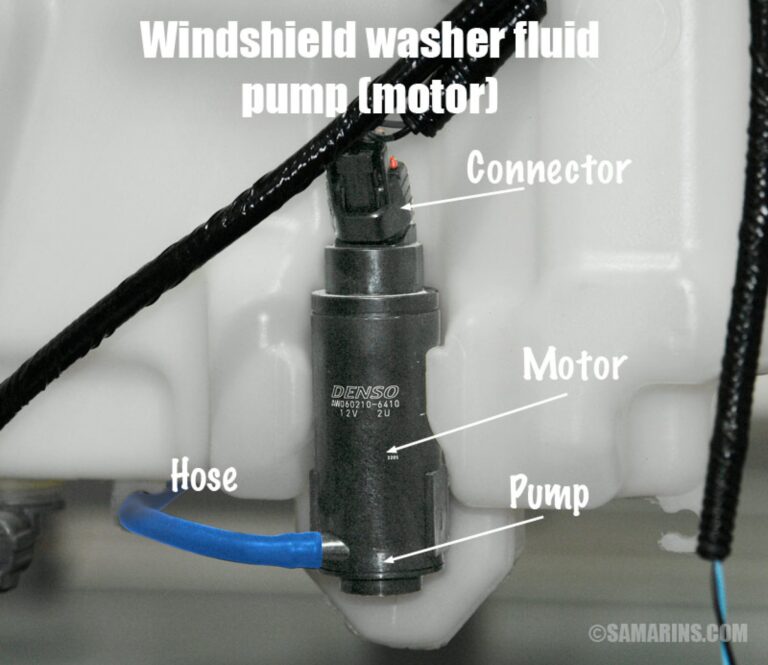
Source: ebay.com
No fluid comes out
Check the fluid level and weather conditions. Frozen nozzles, a blocked line, a failed pump, or an electrical issue may need attention.
Fluid sprays unevenly
A blocked nozzle or a problem with the hose may be responsible. Follow the manual’s guidance or seek service.
The windshield stays streaky
Check for dirty glass, worn wiper blades, and residue from incompatible or unsuitable additives.
The fluid freezes
The product may not provide enough protection for the actual temperature, or it may have been diluted.
The reservoir fluid looks unusual
Color variation alone does not prove contamination. If there is unexplained separation, debris, or poor performance, ask a qualified technician to assess the system.
When Should You Seek Professional Help?
Seek professional help if the pump does not work after you have confirmed the reservoir has fluid, or if you suspect the system contains the wrong liquid. A technician can check the pump, hoses, wiring, and nozzles without relying on guesses about color.
If an unsuitable liquid has been added, do not keep spraying it onto the windshield. Consult the owner’s manual or a qualified repair shop about the correct next step. This is especially important if the liquid could be engine coolant or another automotive fluid.
Stop if visibility is poor
Do not continue driving when you cannot keep the windshield clear enough to see safely.
Get help for suspected contamination
A repair professional can determine whether the reservoir or washer lines need attention.
Frequently Asked Questions
Q
Does blue windshield washer fluid work better than green fluid?
Not necessarily. Blue and green are dyes, not standardized grades of cleaning power. Compare the labels, temperature ratings, intended uses, and vehicle compatibility to decide which product suits your needs.
Q
Can I use any color of washer fluid in my car?
You can often use different colors if the products are designed for automotive washer systems and meet your vehicle’s requirements. Check the owner’s manual and the bottle label first. Avoid products with additives your vehicle maker advises against.
Q
Does the color of washer fluid tell me its freezing point?
No. Color does not reliably indicate a product’s freezing point. Read the temperature rating on the bottle and choose a formula suited to the coldest conditions you expect.
Q
Is it safe to mix blue and green windshield washer fluid?
The colors alone cannot tell you whether the products are compatible. Their formulas may differ, and mixing them can change cleaning performance or freeze protection. Check both labels and the vehicle manual before mixing.
Q
Can windshield washer fluid damage car paint?
Automotive washer fluid is intended for use in a vehicle’s washer system, but spills should still be cleaned up according to the label. Concentrates and unsuitable liquids may harm some finishes or trim. Follow the product instructions and your vehicle maker’s guidance.
Q
Can I use plain water instead of washer fluid?
Some vehicle manuals allow plain water as a temporary option in suitable conditions. However, water lacks the cleaning additives found in washer fluid and can freeze in cold weather. Use a suitable automotive washer fluid for regular service and follow your manual.
Q
Does washer fluid color change when it gets old?
Color changes are not a reliable way to judge whether washer fluid is still usable. Storage conditions, contamination, and the product’s formulation may affect its appearance. Check the label and storage guidance, and do not use a liquid whose identity or condition is uncertain.
✦ Wrapping Up
Conclusion
So, does windshield washer fluid color matter? Usually, no. Color helps distinguish products, but there is no universal US color code that tells you how well a fluid cleans, how cold it can withstand, or whether it suits your vehicle.
The formula and the label deserve your attention. Check the intended use, freeze protection, dilution instructions, and vehicle compatibility before filling the reservoir. Choose a winter-rated product when freezing weather is expected, and follow your owner’s manual when it lists specific restrictions.
Avoid mixing unknown products, never use engine coolant in the washer reservoir, and store washer fluid safely. If the system stops spraying or the windshield remains streaky, investigate the cause rather than assuming the color is to blame.
💡 Key Takeaway
Before your next refill, check your owner’s manual and the washer fluid label. Match the product to your climate and driving needs, and choose by formula rather than color.