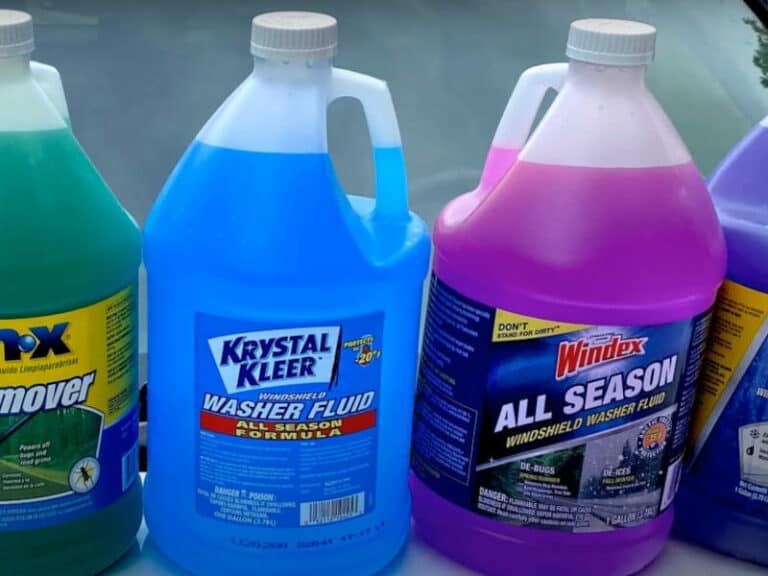
Yes, you can often mix different brands of windshield washer fluid if they have similar formulas and serve the same purpose. However, mixing different types is not always advisable, especially when winter freeze protection or special cleaning additives are involved. Check both product labels and your vehicle owner’s manual before combining them.
Across the United States, drivers use windshield washer fluid to remove road dust, pollen, insect residue, salt, and grime. A low-fluid warning may appear during a road trip, or you may find a partly used bottle of another brand in your garage. In either case, it is natural to wonder whether adding a different product will harm your car.
The answer depends less on the brand name or liquid color and more on the product’s formula, intended use, and temperature rating. Two standard all-season fluids may work together without an obvious problem, while a summer bug-removal formula and a winter deicer may deliver less predictable results when combined. Some vehicle manufacturers also warn against mixing particular products because the combination can cause streaking or blocked spray nozzles.
The safest approach is to use one suitable formula at a time whenever practical. If you need to top off the reservoir, compare the labels, confirm that the fluids are intended for your vehicle, and preserve the freeze protection needed for your local weather. This guide explains when mixing may be reasonable, which combinations deserve caution, and what to do if you have already combined two products.
Can You Mix Different Brands of Windshield Washer Fluid?
Yes, mixing different brands of windshield washer fluid is often possible when both products are designed for the same conditions and have similar functions. For example, combining two conventional all-season washer fluids may be reasonable if both labels permit ordinary automotive use and neither product has a special restriction. The brand name alone does not determine whether the products are compatible.
However, there is no universal rule that every washer fluid can be mixed with every other one. Manufacturers use different cleaning agents, alcohol concentrations, water-repellent additives, and other ingredients. These differences can affect cleaning, streaking, freezing resistance, and how the fluid behaves in the vehicle’s washer system.
A useful distinction is the difference between chemical compatibility and performance compatibility. Two products might combine without producing an obvious reaction, yet the resulting fluid may not clean as well or resist freezing as expected. A mixture that looks normal in the reservoir is not proof that it retains the original products’ performance claims.
Rain-X’s published guidance advises drivers to avoid mixing different brands or types, particularly specialty additives and deicer formulas. Mercedes-Benz owner documentation also warns against mixing certain specified summer and winter products with other washer fluids because blocked spray nozzles may result. These examples show why product-specific instructions take priority over a general assumption that all washer fluids are interchangeable.
If the two products are ordinary fluids with similar purposes, the immediate risk may be low. Still, the most reliable choice is to use a single suitable formula and avoid unnecessary mixing. When the labels do not clearly establish compatibility, do not assume that the products will work together simply because they are both sold as windshield washer fluid.
Source: carfluidpro.com
Same brand, same formula type
This is generally the simplest situation, provided the products are intended for the same conditions and the manufacturer permits their use together.
Different brands, similar all-season formulas
Mixing may be acceptable, but check the labels for temperature ratings, special additives, dilution instructions, and compatibility warnings.
Different seasonal or specialty formulas
Use greater caution. Differences in freeze protection or cleaning additives can make the resulting mixture less suitable for its intended conditions.
Unclear ingredients or restrictions
Avoid combining the products until you can verify their intended use and compatibility.
Why the Brand Name Is Not the Main Factor
A washer-fluid brand may offer several products for different needs. One bottle might be intended for warm weather, another for winter, and another for removing insects or applying a water-repellent effect. Two products from the same company can therefore differ more than two ordinary products from separate companies.
Look at the product description, temperature rating, dilution instructions, and warnings instead of relying on the logo. These details provide a better basis for deciding whether a product is suitable for your vehicle and climate.
Compare intended use
Check whether both fluids are standard cleaners, winter deicers, bug removers, or specialty treatments.
Check the temperature rating
Make sure the fluid you use can withstand the coldest conditions you expect to encounter.
What Happens When You Mix Different Washer Fluid Formulas?
The main concern when mixing washer fluids is not necessarily an immediate chemical reaction. More often, the concern is that the combined product may no longer provide the cleaning ability, freeze protection, or special performance claimed by either original formula.
Windshield washer fluid commonly contains water, cleaning agents, and ingredients that help control freezing. Some formulas also include ingredients designed to remove insect residue, reduce water beading, or improve performance in cold weather. The exact composition varies by product, so the result of mixing two formulas cannot be predicted from their appearance alone.
The effects depend on the products involved and their proportions. Adding a small amount of a similar fluid may have little practical effect, while adding a large amount of a different formula can change the properties of the mixture more substantially. No universal mixing ratio can guarantee that every combination will remain suitable.
Source: carrepairmag.com
Reduced freeze protection
Adding a fluid with weaker cold-weather protection may raise the effective freezing point of the mixture. This can allow the fluid to freeze in the reservoir, hoses, or nozzles during cold weather.
Changes in cleaning performance
Combining detergents or specialty additives may reduce the benefit of a particular formula or change how well it removes road grime and insect residue.
Streaking or smearing
Some water-repellent or specialty products may cause streaking, smearing, or wiper noise in vehicles whose manufacturers advise against those formulations.
Possible nozzle blockage
Certain product combinations can contribute to washer-system problems. The exact risk depends on the products and vehicle, so manufacturer warnings should be taken seriously.
No visible change
A mixture may look clear and spray normally while still having reduced freeze protection or different cleaning performance. Appearance is not a reliable compatibility test.
Does Mixing Washer Fluid Cause a Dangerous Chemical Reaction?
There is no basis for assuming that every pair of commercial washer fluids will react dangerously. However, it is also not possible to guarantee compatibility between every product without knowing the formulations. Follow the manufacturer’s instructions instead of treating all washer fluids as chemically identical.
If a mixture becomes unusually cloudy, forms visible deposits, develops an unexpected odor, or causes the spray system to stop working, discontinue use. Avoid touching or smelling the fluid to investigate it. Check the product safety information and contact the manufacturer or a qualified automotive technician for advice.
Do not experiment with additives
Avoid adding household detergents, solvents, or unapproved chemicals in an attempt to improve a mixed formula.
Follow vehicle-specific restrictions
Some vehicles have particular requirements for fluid chemistry, exterior-light compatibility, or washer-nozzle operation.
Can You Mix Summer and Winter Windshield Washer Fluid?
Mixing summer and winter washer fluid deserves more caution than mixing two similar standard products. Winter fluid is designed to provide freeze protection under specified conditions, while summer formulas may focus on routine cleaning, bug removal, or other warm-weather needs. Combining them can reduce the cold-weather protection you need.
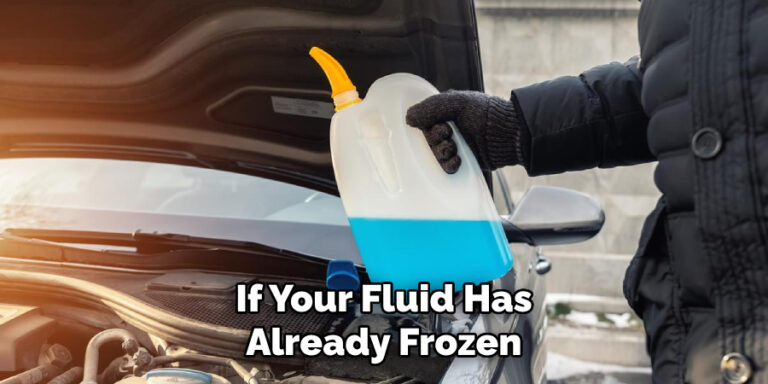
For drivers in the northern United States, mountainous regions, and areas that experience freezing temperatures, this distinction matters. A reservoir may contain fluid that sprays normally in a warm garage but fails when the vehicle sits outside overnight. Frozen fluid can prevent cleaning when road salt, slush, or spray from other vehicles makes the windshield dirty.
The temperature rating printed on a bottle applies to the product under its specified use conditions. Once you mix that product with another formula, you should not assume the finished mixture retains the original rating. The exact freezing point depends on the formulations and proportions, and it should not be estimated from color or a simple average of the printed ratings.
For example, imagine that a reservoir contains winter washer fluid rated for severe cold. Adding a substantial amount of a summer formula with limited freeze protection can weaken the mixture’s resistance to freezing. Even if the fluid remains liquid at first, that does not establish that it will remain suitable in colder weather.
If winter weather is approaching and you are unsure what is in the reservoir, the practical choice is to replace the uncertain mixture with a suitable winter product according to the vehicle and fluid manufacturer’s instructions. Letting the reservoir run nearly empty before changing products can help limit mixing, but do not operate the washer pump when the reservoir is empty.
Source: budget101.com
In warm weather
A suitable summer or all-season formula may be adequate when freezing is not a concern. Follow the label and the vehicle owner’s manual.
In freezing weather
Choose a fluid with freeze protection suitable for the lowest temperatures you expect to encounter. Do not rely on a mixed product with an unknown rating.
During seasonal changeovers
Avoid topping a winter reservoir with a summer product when freezing weather is possible. Switch to the appropriate formula before severe cold arrives.
Does Mixing Two Fluids Average Their Freezing Points?
Not in a way that can be reliably calculated from the numbers on the bottles alone. Freezing behavior depends on the ingredients, their concentrations, and the proportions in the final mixture. Different products may use different formulations, so a simple midpoint calculation can give a false sense of security.
Treat the finished mixture as having an uncertain temperature rating unless the manufacturer provides reliable guidance for that specific combination. In areas where freezing is possible, use a suitable product with a documented rating rather than guessing.
Do not rely on a label average
A mixture of two products is not automatically protected to the average of their stated minimum temperatures.
Allow for local weather
Choose a formula for expected outdoor conditions, including overnight lows and colder locations along your route.
How to Decide Whether Two Brands Can Be Mixed
Before pouring a second brand into the reservoir, compare the products and check your vehicle’s instructions. This short review can help you avoid a mixture that compromises winter performance or conflicts with a manufacturer warning.
You do not need to identify every ingredient in a commercial fluid to make a sensible decision. The most useful information is usually on the front and back labels, in the product instructions, and in the vehicle owner’s manual. If these sources do not establish that the products are suitable, choose one compatible formula instead of experimenting.
Source: slashgear.com
Step 1: Identify the fluid already in the reservoir
If you know the product name, check its intended use and temperature rating. If you do not know what is in the reservoir, treat its exact performance as uncertain.
Step 2: Read the new product’s label
Check whether it is ready to use or concentrated, whether it contains specialty additives, and whether the manufacturer gives mixing restrictions.
Step 3: Compare the formulas’ purposes
Similar standard fluids are a more reasonable match than a summer bug remover and a winter deicer. Similar purposes do not guarantee compatibility, so also check any warnings.
Step 4: Confirm cold-weather suitability
If freezing is possible, do not add a product that may weaken the protection needed for your area. Use a fluid with an appropriate stated temperature rating.
Step 5: Check the owner’s manual
Look for restrictions on additives, alcohol-based products, washer-fluid specifications, or the care of exterior lights and other components.
Step 6: Choose the lowest-risk option
When compatibility is uncertain, use one suitable product at a time. Contact the fluid maker or vehicle manufacturer if the manual or label does not resolve the question.
Washer Fluid Compatibility Decision Table
Use this table as a practical screening guide, not as a guarantee that every product in a category is compatible. The labels and vehicle instructions remain the deciding sources.
Two standard all-season fluids
General guidance: mixing may be acceptable when both are intended for the same conditions and their labels do not prohibit it.
Two winter fluids
General guidance: compare their temperature ratings and formulation restrictions. Do not assume the mixture keeps the stronger rating.
Summer fluid and winter deicer
General guidance: avoid mixing when cold-weather performance matters because the summer product may dilute the winter protection.
Bug remover and water-repellent fluid
General guidance: avoid mixing unless the manufacturers confirm compatibility because the combined cleaning and surface effects may be unpredictable.
Concentrate and ready-to-use fluid
General guidance: do not guess the dilution ratio. Follow the concentrate label and confirm whether combining it with premixed fluid is permitted.
Unknown fluid and a new product
General guidance: do not assume compatibility. Use a known, suitable product after an appropriate changeover if the mixture’s performance matters.
What If You Have Already Mixed Different Washer Fluid Brands?
If you have already mixed two brands, do not assume that you have damaged your car. Many combinations may cause no immediate problem, particularly when the products are similar standard fluids. The next step is to assess the products, the weather, and the way the washer system is behaving.
Start by checking the labels of both fluids if possible. Determine whether either product contains specialty additives, whether one is a concentrate, and whether the mixture still has appropriate freeze protection. If the vehicle manufacturer prohibits the combination, follow its guidance rather than continuing to use the mixture.
If both products are ordinary fluids intended for similar conditions and there are no warnings against mixing, there may be no need for an urgent intervention. Continue to monitor cleaning performance and use an appropriate product for future top-ups. If the mixture is uncertain and freezing weather is approaching, replacing it with a known suitable fluid is the more cautious option.
If the fluid stops spraying, the windshield develops persistent smears, or the system appears to be blocked, stop using the washer system until the cause is understood. A blocked nozzle can have several causes, including debris or a mechanical fault, so do not assume the mixture is the only possible explanation.
Do not run the pump repeatedly in an attempt to clear a suspected blockage. Check the owner’s manual for safe maintenance steps and seek help from a qualified technician if the fluid appears contaminated, the pump makes unusual noises, or the system remains inoperative.
Source: i.ytimg.com
If the washer system works normally
Check both labels, confirm the mixture is suitable for the current weather, and follow the manufacturer’s guidance. A normal spray pattern alone does not prove adequate freeze protection.
If the fluid leaves streaks
Clean the windshield and inspect the wiper blades. If streaking persists, stop using the questionable mixture and follow the product maker’s recommendations.
If the spray nozzles are blocked
Do not keep running the pump. Check the vehicle manual and arrange professional inspection if the cause is unclear or the blockage continues.
If freezing temperatures are expected
Do not rely on a mixture with unknown cold-weather protection. Use a suitable product according to the label and vehicle instructions.
Should You Drain the Washer Reservoir?
Not every mixed reservoir needs to be drained. If the products are compatible, intended for the same conditions, and permitted by the relevant instructions, replacing the fluid may offer little practical benefit. Avoid unnecessary work when there is no known compatibility issue.
A changeover may be sensible when the products have conflicting instructions, the mixture is unsuitable for expected temperatures, or the manufacturer warns against mixing. The appropriate method depends on the vehicle design and the amount of fluid involved. Some systems have separate reservoirs or additional washer circuits, so check the manual before attempting maintenance.
If you are unsure how to remove the fluid safely, ask a qualified automotive technician. Washer fluid can be harmful if swallowed and some formulas are flammable. Collect and dispose of removed fluid according to the product label and applicable local rules; never pour it onto the ground or into a storm drain.
Avoid running the reservoir dry
Operating the washer pump with an empty reservoir can damage the pump or impair its operation.
Do not use improvised flushing chemicals
Avoid household cleaners, engine coolant, or other unapproved substances as a way to flush the system.
Common Mistakes to Avoid When Mixing Washer Fluid
Most washer-fluid mistakes come from assuming that products with similar labels or colors must be interchangeable. A few simple precautions can help you avoid poor cleaning performance, cold-weather problems, and damage caused by using an unsuitable substance.
The most important rule is to keep the washer reservoir for products approved for that purpose. Engine coolant and radiator antifreeze are not substitutes for windshield washer fluid. Vehicle manufacturers warn that coolant can severely impair visibility when sprayed on the windshield and may damage paint or trim.
Mistake 1: Choosing fluid by color
Blue, green, pink, or other colors do not provide a reliable measure of the ingredients, compatibility, or freeze protection. Read the label instead.
Mistake 2: Assuming every winter formula has the same rating
Winter products can have different temperature ratings and instructions. Confirm that the chosen product suits the weather you expect.
Mistake 3: Adding water without checking the climate
Water may be permitted temporarily in some circumstances, but it can weaken cleaning performance and freezing resistance. Follow the vehicle manual and fluid label.
Mistake 4: Ignoring concentrate instructions
Concentrated products require the specified dilution. Adding concentrate or premixed fluid without following the directions can produce an unsuitable formula.
Mistake 5: Adding engine coolant or radiator antifreeze
These products are not designed for the washer reservoir and can impair visibility, harm vehicle finishes, or create other problems.
Mistake 6: Mixing specialty additives without approval
Bug-removal, water-repellent, and deicer formulas can have different performance goals. Avoid combining them unless the manufacturers confirm that the combination is suitable.
Mistake 7: Testing a questionable mixture while driving
Do not wait until the windshield is dirty on a busy road to find out whether the fluid works. Check the washer system safely while the vehicle is parked.
Safe Handling and Storage
Windshield washer fluid is not safe to drink and should be kept away from children and pets. Some formulations contain alcohol and may be flammable, so keep the product away from flames, sparks, and hot surfaces as directed on the label.
Close the container after use and store it in its original labeled packaging. If fluid spills, follow the product instructions for cleanup. Avoid skin and eye contact, and seek appropriate medical or poison-control advice if someone swallows the product or has a significant exposure.
Use the correct reservoir
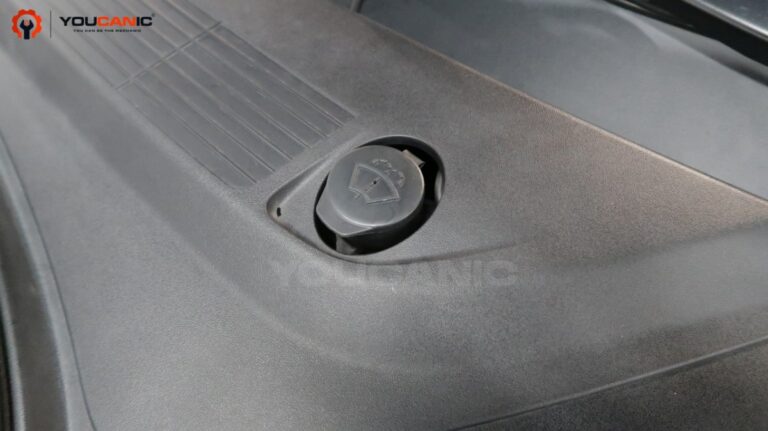
Identify the windshield washer cap by its label or symbol before pouring anything into the vehicle.
Keep containers labeled
Do not transfer fluid into an unlabeled bottle that could be mistaken for drinking water or another household product.
Clean up spills promptly
Follow the safety directions on the product label and keep the liquid away from children, animals, and drains.
Frequently Asked Questions
Q
Can you mix two different brands of blue windshield washer fluid?
Possibly, if both products are standard washer fluids intended for the same conditions and their labels do not prohibit mixing. However, blue color alone does not establish compatibility or an identical temperature rating. Compare the labels and follow your vehicle owner’s manual before topping off the reservoir.
Q
Can you mix Rain-X with another windshield washer fluid?
Compatibility depends on the specific Rain-X product and the other fluid. Rain-X advises avoiding mixtures of different brands or types, including combinations involving specialty additives and deicer formulas. Check the instructions for both products and your vehicle before combining them. When compatibility is uncertain, use one suitable formula at a time.
Q
Can mixing washer fluid brands damage the washer pump?
Mixing two compatible fluids does not automatically mean the pump will be damaged. However, some vehicle manufacturers warn that unsuitable fluid combinations can contribute to blocked spray nozzles or other washer-system problems. Do not operate the pump when the reservoir is empty or the system appears frozen or blocked.
Q
Can you mix concentrated washer fluid with ready-to-use fluid?
Do not assume that every concentrate can be added directly to premixed fluid. Concentrates may require a specific dilution ratio, and the resulting temperature protection depends on the formulation and proportions. Follow the concentrate’s label and any vehicle-specific instructions. If the manufacturer does not confirm the combination is suitable, avoid mixing them.
Q
What should you do if you mixed summer and winter washer fluid before a freeze?
Do not assume the mixture retains the winter product’s original temperature rating. Check the labels and vehicle instructions, and replace an uncertain mixture with a suitable winter formula if freezing weather is expected. If the fluid or washer system appears frozen, do not repeatedly run the pump. Follow the vehicle manufacturer’s guidance and seek professional help if the system does not operate normally.
Q
Does washer fluid color tell you whether two brands are compatible?
No. Manufacturers use different colors, and similar colors do not guarantee similar ingredients, cleaning performance, or freezing resistance. Read the product labels, compare their intended uses, and check for mixing restrictions instead of relying on appearance.
Q
Can you use water instead of mixing two washer fluids?
Some vehicle manuals permit plain water in limited circumstances, particularly in warm weather, but water does not provide the same cleaning properties or freeze protection as suitable washer fluid. In cold conditions, water may freeze in the reservoir, lines, or nozzles. Follow the owner’s manual and use an appropriate automotive washer fluid for the climate.
✦ Wrapping Up
Conclusion
You can often mix different brands of windshield washer fluid when their formulas serve the same purpose and the manufacturers permit it. Still, a similar appearance or a shared all-season label is not enough to guarantee compatibility. Seasonal differences, special additives, and vehicle-specific restrictions can change the outcome.
The most important consideration is reliable windshield visibility. A mixture that cleans poorly, smears across the glass, or freezes in cold weather can make driving more difficult and less safe. Drivers in regions with freezing winters should be especially careful not to dilute a winter formula with a product that has weaker freeze protection.
Before adding a new fluid, check both labels, review the vehicle owner’s manual, and confirm that the product suits your local weather. If you have already mixed two similar products, there may be no need to drain the reservoir immediately. If the mixture is unsuitable, its performance is uncertain, or the manufacturer warns against combining the products, use the recommended changeover procedure or ask a qualified technician for help.
💡 Key Takeaway
Before topping off your reservoir, compare the two product labels and your vehicle owner’s manual. If both fluids have similar purposes and mixing is permitted, topping off may be reasonable. If they have different seasonal ratings, specialty additives, or unclear compatibility, avoid mixing them and use one suitable formula at a time.