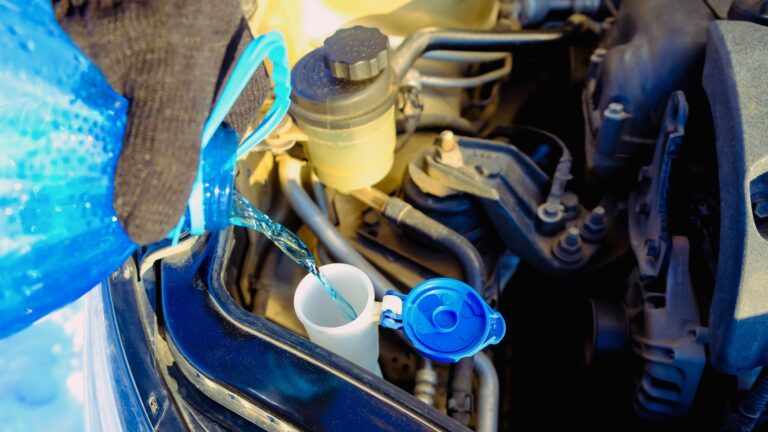
No. Never put windshield washer fluid in your car’s radiator or engine coolant reservoir. The two fluids have different jobs and different chemical formulas. Washer fluid cannot provide the heat transfer, freeze protection, and corrosion protection that your engine needs. If you added it by mistake, turn off the engine if it is running, do not open a hot radiator cap, and contact a qualified mechanic for advice.
Across the United States, cars face a wide range of driving conditions. A vehicle in Arizona may sit in intense summer heat, while a car in Minnesota may face freezing winter roads. In both places, the cooling system needs the correct engine coolant to keep the engine within its intended temperature range.
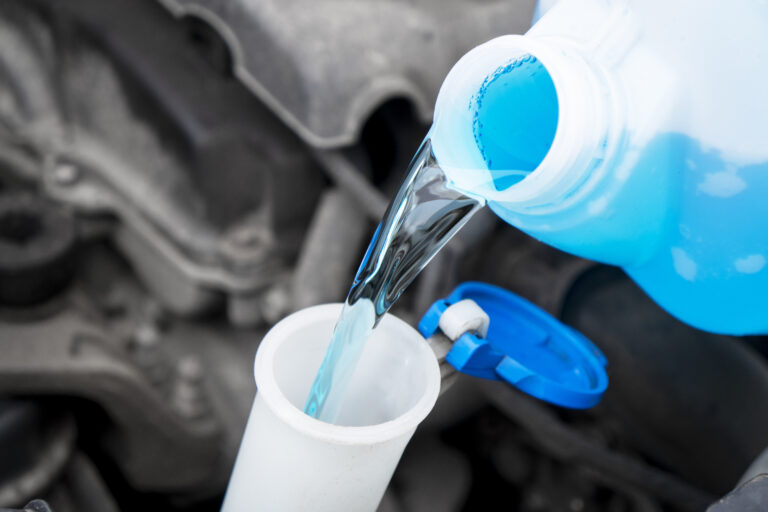
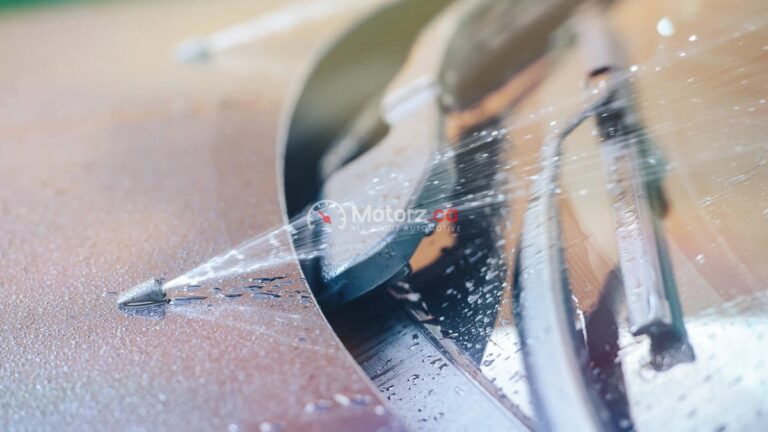
Windshield washer fluid is made to clean glass. Engine coolant, also called antifreeze or coolant, moves through the engine and radiator to carry away heat. These fluids may look alike in their containers, but they are not interchangeable. Putting washer fluid in the cooling system can contaminate the coolant and create problems that require professional service.
The right response depends on how much washer fluid entered the system and whether the engine has run since the mistake. A small amount in an expansion tank does not automatically mean the engine is damaged, but it should not be ignored. Avoid guessing based on the fluid’s color or the amount poured. A mechanic can assess the situation and decide whether the system needs draining, flushing, and refilling.
Can You Put Windshield Washer Fluid in a Radiator?
No, you cannot safely use windshield washer fluid in a radiator. Washer fluid is designed to remove dirt, dust, road film, and insect residue from a windshield. Engine coolant is designed to circulate through the engine and radiator while controlling temperature and protecting cooling-system parts.
The cooling system depends on a carefully chosen mixture of water and antifreeze additives. These additives help prevent freezing, raise the boiling point of the mixture, and limit rust and corrosion. Washer fluid is not formulated to meet those needs.
Adding washer fluid can alter the coolant mixture and introduce chemicals that were not intended for the engine’s cooling passages, hoses, seals, water pump, or radiator. The exact effects depend on the washer fluid formula and the amount added, so it is not accurate to claim that every mistake causes the same damage.
If you have already poured washer fluid into the radiator or coolant reservoir, do not start the engine to see what happens. If the engine is running, switch it off as soon as it is safe to do so. Contact a repair shop and explain what was added, approximately how much entered the system, and whether the engine has been running.
Source: carfluidpro.com
Washer fluid
Cleans the windshield and may contain cleaning agents, dyes, water, and other ingredients selected for glass cleaning and seasonal performance.
Engine coolant
Carries heat away from the engine and helps protect the cooling system against freezing, boiling, and corrosion.
The main rule
Keep each fluid in its designated reservoir. Do not substitute one for the other, even if both liquids have a similar color.
Why the Two Fluids Are Not Interchangeable
A vehicle’s cooling system operates as a connected loop. The water pump circulates coolant through passages in the engine, where it absorbs heat. The hot liquid then travels through the radiator, where airflow helps release that heat before the coolant returns to the engine.
Windshield washer fluid does not have the required formulation for this repeated heating and cooling cycle. It also does not provide the specified corrosion inhibitors needed to protect metal parts and other cooling-system materials.
Some washer fluids contain alcohols or detergents. Their presence does not make the liquid suitable for a radiator. The concentration and chemical balance are designed for cleaning glass, not for long-term contact with a hot, pressurized cooling system.
Heat control
Use the approved coolant mixture to support the engine’s designed operating temperature.
Material protection
Use coolant that meets the vehicle maker’s requirements for the cooling system’s metals, seals, and other parts.
What Happens If You Put Washer Fluid in the Radiator?
The result depends on the washer fluid’s formula, the quantity added, the existing coolant mixture, and whether the engine has circulated the contaminated liquid. There is no single outcome that applies to every vehicle.
The first concern is contamination. Washer fluid changes the composition of the coolant and may weaken the protection that the cooling system depends on. A larger amount creates greater uncertainty about the mixture’s ability to perform as intended.
If the engine runs with unsuitable fluid in the system, overheating becomes a concern because the cooling system may no longer have the intended fluid properties. However, washer fluid does not automatically cause an engine to overheat the moment it enters the reservoir. The risk depends on the conditions and should be assessed rather than guessed.
Longer-term concerns include reduced corrosion protection and possible effects on cooling-system materials. The extent of any harm cannot be determined from the liquid’s color or appearance alone. A professional inspection is the sensible next step.
Source: motorriderz.com
Contaminated coolant
The original coolant mixture is no longer known to meet the vehicle’s requirements.
Reduced protection
The coolant may not provide its intended resistance to freezing, boiling, or corrosion.
Possible overheating
If the cooling system cannot control engine temperature, continued operation may cause serious engine damage.
Potential repair costs
The final cost depends on the amount added, the work required to remove contamination, and whether any damage has occurred.
Can Washer Fluid Damage a Water Pump or Radiator?
It can create conditions that are unsuitable for cooling-system components, but the presence of washer fluid alone does not prove that a water pump or radiator has been damaged. The formula, concentration, exposure time, and operating conditions all matter.
Coolant contains additives designed to protect the system against corrosion and deposits. Replacing part of that mixture with washer fluid can reduce the certainty that the system is protected as intended. A repair professional can determine whether draining and refilling is enough or whether further checks are needed.
Do not assume a failed part
A contaminated system may need service without requiring replacement of the radiator or water pump.
Do not assume there is no harm
A car that still runs normally may still contain an unsuitable coolant mixture.
What to Do If You Accidentally Put Washer Fluid in the Coolant Reservoir
If you accidentally add windshield washer fluid to the coolant reservoir, stop and assess the situation before starting the vehicle. The safest approach is to prevent further circulation of the contaminated mixture and get advice from a qualified repair professional.
Do not open the radiator cap or a pressurized expansion tank cap while the engine is hot. Cooling systems can remain pressurized after the engine stops, and releasing that pressure can cause hot liquid or steam to escape. Wait until the engine is completely cool before any inspection that requires opening a cap.
Do not try to fix the problem by pouring in extra antifreeze, adding more water, or using another household liquid. These steps can leave the final mixture unsuitable and make the amount of contamination harder to assess.
If the vehicle has been driven after the mistake, tell the mechanic how far it traveled, whether the temperature gauge rose, and whether warning lights appeared. If the engine overheated, steam appeared, or coolant leaked, arrange a tow rather than attempting to drive to a repair shop.
Source: transpotrends.com
Step 1: Stop the engine
If the engine is running, switch it off when you can do so safely. Do not restart it simply to test the car.
Step 2: Let the engine cool
Keep away from hot cooling-system parts. Never loosen a radiator cap or pressurized reservoir cap while the system is hot.
Step 3: Record the details
Note the estimated amount added, the reservoir used, the type of washer fluid, and whether the engine was running afterward.
Step 4: Contact a repair shop
Ask whether the vehicle needs towing and whether the cooling system should be drained, flushed, and refilled.
Step 5: Follow the vehicle-specific repair procedure
Have the system serviced with the correct coolant specification and any required bleeding or inspection procedures.
What If the Engine Has Already Been Running?
If the engine has already run, do not panic, but do not keep driving to see whether a problem develops. Running the engine may circulate washer fluid beyond the reservoir, making the affected area larger than it was before the engine started.
Tell the mechanic whether the engine reached its normal temperature, whether the temperature gauge climbed above normal, and whether the vehicle displayed a coolant warning. These details help determine how urgently the system should be inspected.
If the engine overheated, do not restart it after it cools without professional guidance. Overheating can cause damage even when the temperature later returns to normal.
Normal temperature reading
This does not prove that the coolant is safe or that no damage has occurred.
High temperature or steam
Stop driving, keep away from hot parts, and arrange roadside assistance or a tow.
What If You Added Washer Fluid to the Radiator Directly?
If washer fluid went directly into the radiator rather than the overflow reservoir, tell the repair shop exactly where it was poured. The fluid may already be inside the main cooling circuit, even if the engine has not been started.
Do not remove the cap to drain the liquid yourself unless a qualified professional has confirmed that the system is completely cool and the correct service procedure is safe for your vehicle. Many newer vehicles use a pressurized expansion tank, and some have specific filling and bleeding requirements.
A repair professional can decide how to remove the contamination without causing burns, introducing air into the system, or leaving the cooling circuit incorrectly filled.
Engine has not run
Tell the shop that circulation may not have occurred, but do not assume the reservoir or radiator can be handled safely while hot.
Engine has run
Explain that the fluid may have circulated through the cooling system and ask for an appropriate service plan.
Does the Amount of Washer Fluid Matter?
Yes. The amount of washer fluid added is one of the details that helps a mechanic assess the situation. However, there is no universal amount that can be declared harmless for every cooling system.
A small accidental splash into an expansion tank is different from pouring a large quantity into a radiator that was already full of coolant. The first situation may involve less contamination, while the second can change a larger part of the mixture. Neither case should be judged by volume alone.
The size of the cooling system, the amount of coolant already present, the washer fluid ingredients, and whether the engine has run all affect the decision. Vehicle design also matters because the reservoir may be part of a pressurized system or may serve as an overflow tank.
Do not use a percentage or a guessed safe limit to decide whether to drive. The practical goal is to restore the correct coolant mixture and confirm that the system is in suitable condition.
Source: carfluidpro.com
A few drops or a small splash
Report the amount as accurately as possible. A mechanic can assess whether the contamination needs removal based on the vehicle and fluid involved.
Several ounces or more
Contact a repair shop before driving. A more substantial quantity can cause greater uncertainty about coolant performance.
A large quantity
Keep the engine off and arrange professional service. Do not attempt to dilute the mixture by adding more fluid.
Unknown quantity
Explain that the amount is uncertain. Do not invent an estimate just to make the assessment easier.
Is a Small Amount of Washer Fluid Always Dangerous?
A small amount does not automatically mean severe engine damage has occurred. At the same time, it is not possible to guarantee safety without knowing the vehicle, the washer fluid formula, and the conditions.
The amount matters because contamination changes the mixture, but it is only one part of the decision. Whether the engine was started and whether the fluid circulated can be just as important when choosing the next step.
If only a small amount entered the reservoir, explain that fact to a mechanic instead of assuming that the entire cooling system needs major repairs. A professional can decide whether a limited corrective procedure or a full service is appropriate.
Avoid unnecessary panic
Accidental contamination does not automatically mean the engine is ruined.
Avoid false reassurance
A small quantity does not establish that the mixture is suitable for continued driving.
Washer Fluid in the Radiator Overflow Tank: Is It Different?
Putting washer fluid into the coolant overflow tank is still a mistake, but the next step depends on the tank’s design and whether the engine has run. The overflow or expansion reservoir is part of the cooling system in many vehicles, so the liquid may eventually mix with the coolant.
In some systems, the reservoir returns coolant to the radiator as the engine cools. In other designs, the expansion tank is pressurized and forms part of the main coolant circuit. These differences affect how the contamination moves and how the system must be serviced.
Do not assume that fluid in an overflow tank will stay separate from the engine. Nor should you assume that every tank is connected in the same way. Consult the owner’s manual or let a mechanic identify the system before taking corrective action.
The safest choice is to keep the engine off until you have professional guidance. If the engine has already been running, mention that fact because the washer fluid may have circulated.
Source: carfluidpro.com
Separate washer reservoir
The windshield washer reservoir is normally identified by a windshield-and-spray symbol. It must not be confused with the engine coolant tank.
Coolant overflow reservoir
This tank stores or manages engine coolant and may connect to the cooling circuit, depending on the design.
Pressurized expansion tank
Some vehicles use this tank as the main coolant filling point. Never open its cap while hot.
How to Identify the Correct Reservoir
Check the symbols, labels, and diagrams in your owner’s manual before adding any automotive fluid. The windshield washer reservoir commonly has a windshield symbol with spray, while the coolant reservoir often carries a temperature warning or a coolant-related marking.
Reservoir locations vary by make, model, engine, and year. Do not rely on a friend’s car or a generic online image to identify a cap on your vehicle.
If you cannot confirm which reservoir is which, leave the caps closed and ask a qualified mechanic for help. Correct identification is easier and safer than trying to correct a mistake after the wrong liquid has entered the system.
Read the cap
Look for the label or warning symbol, but confirm the meaning in the owner’s manual.
Check the manual
Use the vehicle-specific diagram to locate the coolant fill point and washer fluid tank.
Can You Drive After Putting Washer Fluid in the Radiator?
The safest recommendation is not to drive until a qualified mechanic has assessed the contamination and advised you that the vehicle is safe to operate. Even a short trip may circulate the unsuitable mixture through the cooling system.
If the engine is already running, stop it when safe to do so. If you are on a busy road, pull over in a safe place before switching off the engine. Do not put yourself in danger by stopping in an unsafe traffic lane.
If the engine has overheated, the dashboard shows a temperature warning, steam appears, or coolant leaks from under the vehicle, do not continue driving. Arrange roadside assistance or a tow to a repair facility.
If the engine has not been started since the mistake, keep it off while you contact the repair shop. This may limit circulation, but it does not remove the need to assess the contaminated fluid.
Source: carfluidpro.com
Engine has not been started
Keep it off and ask a mechanic how to arrange service without circulating the fluid.
Engine has run without obvious symptoms
Do not treat normal operation as proof that the coolant is safe. Get professional guidance before driving again.
Engine is overheating
Stop in a safe location, switch off the engine, stay clear of hot parts, and arrange a tow.
You are unsure how severe the problem is
Do not guess. Share the known details with a repair shop and follow its advice.
Warning Signs That Need Prompt Attention
A contaminated cooling system may not show immediate symptoms. If problems do develop, the most useful warning signs are those that point to a cooling-system fault rather than a particular chemical reaction.
A rising temperature gauge, a coolant warning light, steam, a coolant leak, or an unusual loss of cabin heat can indicate a cooling-system problem. None of these signs proves that washer fluid caused the problem, but each warrants attention.
Do not remove a cap to inspect the fluid while the engine is hot. Wait until the engine is completely cool and follow the vehicle’s manual, or leave the inspection to a mechanic.
Temperature gauge above normal
Stop driving as soon as it is safe and arrange help.
Steam from the engine bay
Stay clear of hot components and do not open the cooling system.
Coolant leak or falling level
Have the system checked for leaks and contamination.
Warning light
Follow the vehicle’s instructions and avoid driving if the warning indicates overheating.
How Mechanics Correct Washer Fluid Contamination
A mechanic will first establish what entered the cooling system, how much was added, and whether the engine has run. The repair plan should fit the vehicle’s design and the degree of contamination rather than follow a single procedure for every car.
In many cases, the contaminated coolant must be removed and replaced with the coolant specified by the manufacturer. A flush may be needed when the amount or type of contamination warrants it, but the method should follow the vehicle maker’s service requirements.
After removing the unsuitable fluid, the mechanic may inspect the reservoir, radiator, hoses, and other accessible parts. The system must then be refilled with the correct coolant and properly bled if the design requires air removal.
The final checks should confirm the correct coolant level, suitable operation, and the absence of leaks or abnormal temperatures. If the engine overheated before the vehicle was stopped, additional checks may be appropriate to assess any damage.
Source: motorriderz.com
Identify the contamination
Record the fluid type, estimated amount, location, and operating history.
Remove the unsuitable mixture
Drain and, when appropriate, flush the system using a vehicle-approved procedure.
Refill with the correct coolant
Use the specified coolant type and concentration for the vehicle.
Bleed the cooling system when required
Follow the manufacturer’s procedure to remove trapped air from systems that require bleeding.
Check system operation
Verify the coolant level and check for leaks, warning lights, and abnormal temperatures.
Should You Flush the Cooling System Yourself?
A cooling-system flush is not the best first step for someone who is unsure how the vehicle is designed. Some vehicles have special filling procedures, bleed points, or requirements for approved coolant products.
A home repair can also create risks from hot coolant, spilled automotive fluids, incorrect disposal, and trapped air. Trapped air may prevent proper circulation and contribute to overheating.
If washer fluid has entered the cooling system, a professional repair is usually the more reliable choice. Follow the owner’s manual and qualified service advice rather than experimenting with cleaners, detergents, or improvised flushing mixtures.
Use the specified coolant
The correct formula depends on the vehicle’s requirements, not merely on the liquid’s color.
Avoid household chemicals
Do not use dish soap, glass cleaner, or other cleaning products to treat the cooling system.
Dispose of removed fluid properly
Ask the repair shop or local waste service how to handle contaminated automotive fluids safely.
What Should You Use in the Radiator Instead?
Use only the engine coolant specified in the owner’s manual. The correct product depends on the make, model, engine, model year, and cooling-system requirements. Coolant color alone is not a reliable way to choose the right formula.
Many vehicles use a mixture of antifreeze and water, while others specify a premixed coolant that is ready to use. If the manufacturer calls for a particular concentration or coolant standard, follow that requirement rather than choosing a generic product.
Do not pour concentrated antifreeze into a system that requires a ready-to-use premix unless the manual specifically permits that approach. Likewise, do not add water to a premixed product unless the vehicle instructions call for it.
If the coolant is low, check the owner’s manual to find the correct fill point and safe procedure. If the vehicle has a leak, repeatedly loses coolant, or shows an overheating warning, topping up alone will not solve the underlying problem.
Source: carfluidpro.com
Manufacturer-approved coolant
Choose coolant that meets the specification listed for the exact vehicle.
Correct mixture
Use the required antifreeze-to-water concentration or the specified premixed product.
Clean water only when permitted
Water may be allowed as a temporary emergency measure in limited situations, but it is not a universal replacement for coolant.
No washer fluid or glass cleaner
These products are made for windshield cleaning, not engine temperature control.
Is Water Better Than Windshield Washer Fluid in a Radiator?
Plain water is not a full substitute for the correct engine coolant, but vehicle guidance may permit water as a temporary emergency measure in some situations. Washer fluid is not an appropriate substitute at all.
Water lacks the antifreeze and corrosion-inhibiting additives found in proper engine coolant. It can also freeze in cold weather, and its boiling protection differs from that of the specified coolant mixture.
If the system is contaminated with washer fluid, do not try to solve the problem by adding water. Ask a mechanic to determine the appropriate corrective procedure. If a vehicle is overheating or leaking coolant, a tow may be safer than attempting an emergency top-up.
Normal maintenance
Use the correct manufacturer-approved coolant and mixture.
Emergency situation
Follow the vehicle manufacturer’s guidance and seek professional help when overheating or leakage is present.
How to Prevent the Wrong Fluid From Entering Your Cooling System
Preventing a fluid mix-up starts with identifying each reservoir before removing a cap. Many engine bays contain several containers for different fluids, and their locations can vary from one vehicle to another.
Read the cap labels and use the owner’s manual to confirm the correct reservoir. Do not rely only on the tank’s shape, the fluid’s color, or the location of a container under the hood.
Store washer fluid and engine coolant in their original labeled containers. Keep them upright and separate, and avoid transferring either product into an unmarked bottle. Clear labels reduce the risk of confusing one liquid with another.
Make fluid checks part of routine vehicle maintenance. Check coolant only when the engine is cold, use the specified fluid, and investigate recurring low levels instead of repeatedly topping up without finding the cause.
Source: carfluidpro.com
Read labels before pouring
Confirm that the cap and container match the fluid you intend to add.
Keep products in original containers
Avoid unmarked bottles that can make fluids difficult to identify.
Use the owner’s manual
Confirm the coolant specification, reservoir location, and correct filling procedure.
Check for leaks
Repeated coolant loss may point to a leak or another cooling-system fault that needs repair.
Why Regular Coolant Checks Matter
A properly maintained cooling system helps control engine temperature in hot summer traffic and cold winter weather. The correct coolant also protects the system against corrosion and freezing when used at the specified concentration.
Check the level against the marks on the reservoir when the engine is cold. If the level falls repeatedly, do not treat frequent refilling as normal. Have the system inspected to identify a leak or another cause.
A temperature warning, visible coolant leak, or repeated low level deserves prompt attention. Early diagnosis can help prevent a cooling-system fault from becoming a larger engine repair.
Check the level
Use the cold-level markings and the inspection procedure in the owner’s manual.
Check the service schedule
Follow the manufacturer’s guidance for coolant replacement and system inspection.
Frequently Asked Questions
Q
Can windshield washer fluid cause a car to overheat?
It can contribute to cooling-system problems because it is not designed to replace engine coolant. The risk depends on the formula, quantity added, existing coolant mixture, and whether the engine has run. If washer fluid enters the cooling system, stop using the vehicle until a mechanic has assessed the situation.
Q
What if I put only a small amount of washer fluid in the radiator?
A small amount does not automatically mean severe damage, but there is no universal safe quantity for every vehicle. Tell a mechanic how much was added and whether the engine has run. Do not try to dilute the fluid or drive the car based on an assumed safe limit.
Q
Can I add antifreeze to cancel out windshield washer fluid?
No. Adding antifreeze does not reliably remove the contamination or restore the correct coolant mixture. The appropriate solution may involve draining, flushing, and refilling the system according to the vehicle manufacturer’s procedure.
Q
What if I put windshield washer fluid in the coolant reservoir instead of the radiator?
The mistake still needs attention. Many coolant reservoirs connect to the cooling circuit, and some are pressurized expansion tanks. Keep the engine off, never open a hot cap, and ask a mechanic to assess the amount added and the reservoir design.
Q
Can I drive to a mechanic after adding washer fluid to the radiator?
The safest option is to avoid driving until a qualified mechanic advises you that the vehicle can be operated. If the engine has overheated, steam appears, or coolant is leaking, arrange a tow. Even when no warning appears, the coolant mixture may still be unsuitable.
Q
Does windshield washer fluid dissolve or mix with antifreeze?
The behavior depends on the ingredients and conditions, so appearance alone cannot establish whether the resulting mixture is safe. Even if the liquids appear to blend, the mixture is not approved engine coolant. It should be assessed and corrected using a vehicle-specific procedure.
Q
How much does it cost to fix washer fluid in the radiator?
The cost depends on the quantity added, the vehicle’s cooling-system design, local labor rates, and whether draining and refilling is sufficient or further inspection is needed. If the engine overheated or a component was damaged, repairs may cost more. Ask a repair shop for an estimate after explaining what happened.
Q
Can I use windshield washer fluid in the radiator during winter?
No. Winter washer fluid is designed for windshield cleaning and seasonal glass-cleaning needs. It does not replace antifreeze or provide the required engine cooling-system protection. Use the coolant specified for your vehicle and climate.
✦ Wrapping Up
Conclusion
You should never put windshield washer fluid in a radiator or engine coolant reservoir. Washer fluid cleans glass, while engine coolant carries heat away from the engine and protects cooling-system parts against freezing, boiling, and corrosion. The two liquids are not interchangeable, even if they look similar.
If you made this mistake, keep the engine off and do not open a hot radiator or pressurized reservoir cap. Record the approximate amount added, identify where it went, and tell the mechanic whether the engine has run. The appropriate repair may involve draining and replacing the coolant, flushing the system when needed, and checking for problems caused by overheating.
The best way to avoid this issue is to read reservoir labels, follow the owner’s manual, and use only the correct fluid for each system. If you cannot identify a reservoir with confidence, stop before pouring anything and ask a qualified professional.
💡 Key Takeaway
If windshield washer fluid has entered your radiator or coolant reservoir, do not drive to test the vehicle. Keep the engine off, wait for it to cool completely, and contact a qualified mechanic about the correct removal and refill procedure.